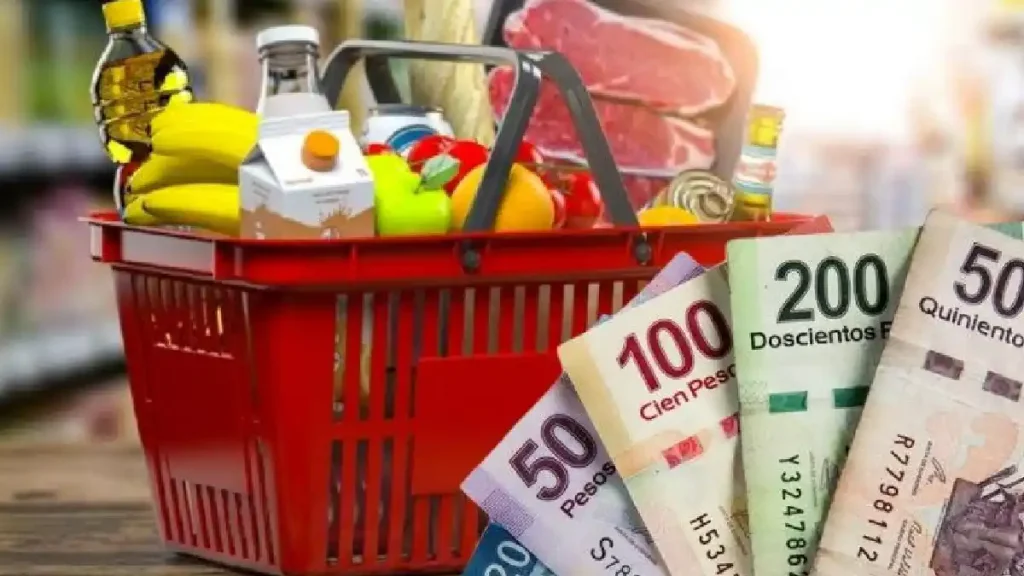
He food price In Mexico, it registers a critical increase of 8.1% at the end of the first quarter of 2026, a figure that significantly exceeds general inflation and raises the cost of the monthly basic basket to an average of $2,339.70 pesos.
You may also be interested in: Welfare Pension payment schedule May-June 2026: dates and amounts
Dynamics of the cost of living and national food budget
The Mexican economy faces a period of profound adjustments where the food price has become the main pressure factor for domestic finances. According to INEGI indicators, while the country’s general inflation stands at 4.6%, the grocery sector is advancing at an almost double pace, eroding purchasing capacity at an accelerated rate.
The investment necessary for basic subsistence shows operational contrasts depending on geographic location. In urban environments, a person today requires approximately $4,940 pesos per month to cover food and services; If the nutritional component is isolated exclusively, the expense is set at $2,571 pesos. For its part, in rural regions, the cost to satisfy total needs is $3,494 pesos. These figures reflect that the food price It not only depends on the value of the product itself, but also on logistical efficiency and access to distribution centers.
Analysis of the inputs with the greatest increases in the market
The increase in prices in the sector is led by mass consumption products that present atypical variations. Tomato tops this list with an annual increase of 126.3%, followed by tortilla, which projects increases of up to $4.00 pesos per kilogram during this month of April. This volatility trend also affects products such as green tomatoes, chili peppers (poblano and jalapeño), instant coffee and cigarettes.
To manage family expenses, it is essential to know the current references of the food price in the main self-service chains:
- Legumes: La Sierra black beans (560 g) range from $14.00 to $21.90 pesos.
- Tubers and vegetables: The alpha white potato is sold for around $58.90 pesos per kilo, while frozen vegetables (500 g) vary between $32.00 and $49.00 pesos.
- Seasonal fruits: Chinese melon maintains an approximate cost of $29.00 pesos per kilogram.
The use of monitoring platforms such as PROFECO’s “Who’s Who in Prices” is vital to identify establishments with the most competitive margins given the current dispersion of values.
The tomato crisis: Evolution towards historical highs
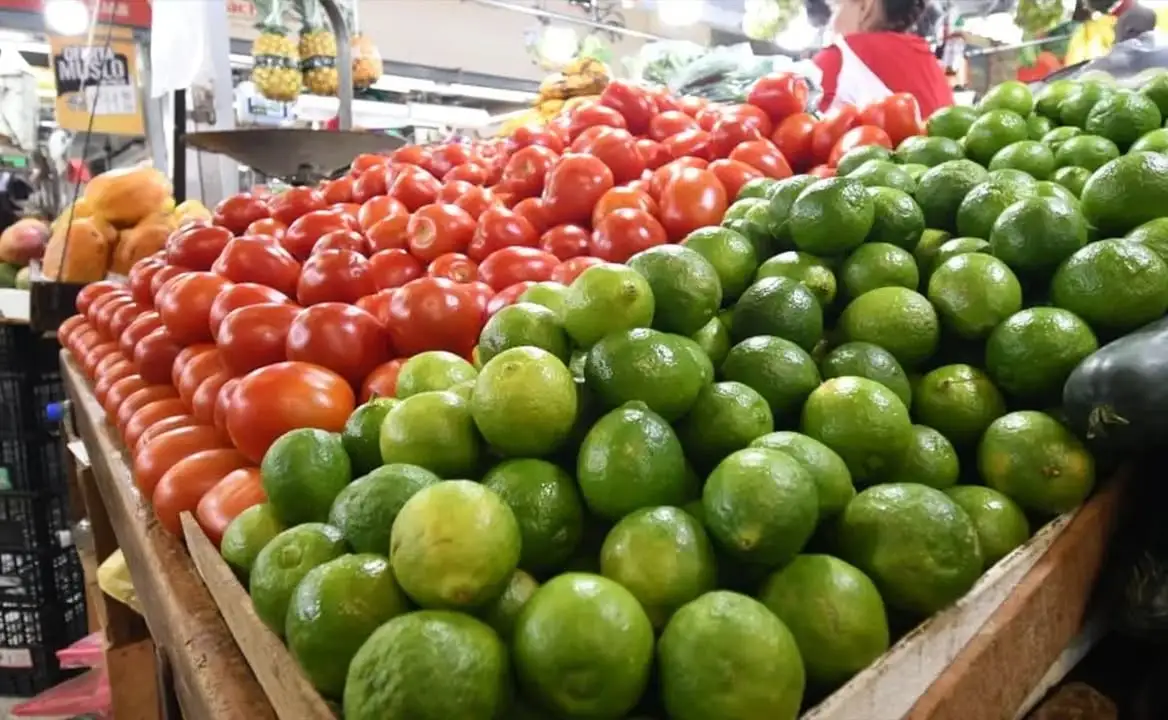
The behavior of the tomato serves as a case study to understand the instability in the food price. After a 2025 characterized by operational stability, where the wholesale kilo remained between $10.00 and $25.00 pesos, the first quarter of 2026 has recorded an unprecedented increase.
Adverse climatic factors reduced production in Sinaloa, bringing the value of the fruit to its highest level in 15 years. In March 2026, the monthly increase was 42.01%, accumulating the already mentioned annual variation of 126.3%. Currently, in April 2026, the final consumer finds a kilo of tomato between $50.00 and $80.00 pesos, reaching ceilings of $88.50 pesos in specific points of Mexico City.
Historical values per kilogram (2025-2026)
- April 2025: $10.00 – $21.00 (Best Offer Period).
- November 2025: $22.00 – $25.00 (Seasonal transition).
- March 2026: $42.92 (Beginning of the critical phase).
- April 2026: $50.00 – $88.50 (Market High Point).
Estimates from the Agricultural Markets Consulting Group indicate that the food price of plant origin, particularly tomato, will remain at these high thresholds until September 2026.
Determining factors in setting agricultural costs
The formation of food price In Mexico it responds to a complex network of external and internal variables:
- Climate Events: Frosts, droughts and unseasonable rains in states such as Michoacán or San Luis Potosí destroy crops and limit supply.
- Production Cycles: Time lags between producing regions create periods of relative shortages that drive prices up.
- Input Costs: The dependence on imported fertilizers and the increase in diesel for transportation make the product more expensive from its origin.
- Health and Pests: Viruses such as the wrinkled fruit virus have the potential to cancel the production of entire areas, generating immediate price spikes.
- External Market: Preferential export to the United States reduces the stock for domestic consumption when international demand is high.
- Intermediation Structure: The passage of the product through collectors and supply centers adds profit margins that increase the final cost in supermarkets and local markets.