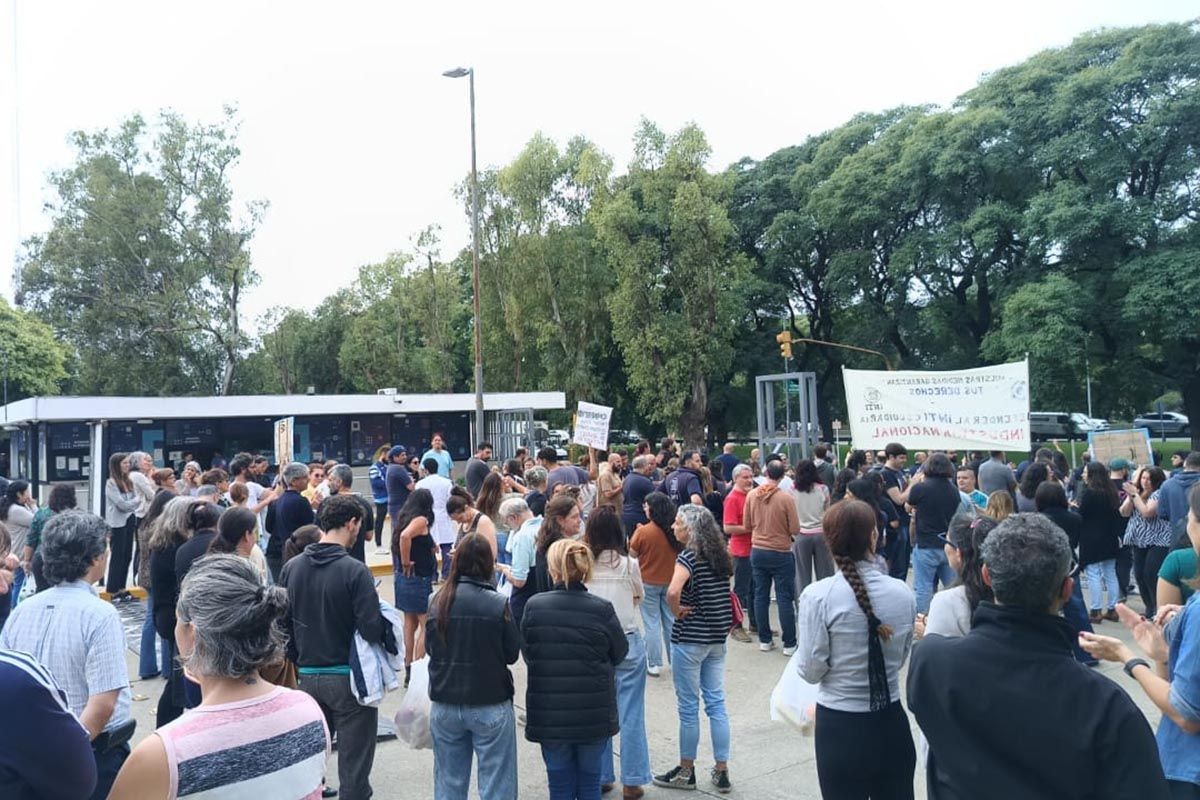
The day that Pami family doctors began a 72-hour strike in repudiation of a resolution that establishes a payment of $2,100 per patient, the Minister of Health –Mario Lugones– He made two public interventions without reference to that conflict: on the one hand, he walked through the Malbrán Institute with Karina Milei to support the denounced Manuel Adorni. On the other hand, launched the “National Health Quality Plan 2026-2030”. A bombastic announcement in the midst of an escalating health crisis.
“Argentines deserve safe and quality care – published the portfolio led by Lugones, through a statement – It is estimated that 4 out of every 10 patients globally suffer adverse events during care and that at least 80% of these events are avoidable. Preventing these damages not only improves patient safety, but also allows optimizing the use of resources by reducing complications, such as longer hospitalizations.” The minister added in his account of X that “Improving the quality of care for Argentines also means managing with order and efficiency.”
A PLAN TO IMPROVE THE QUALITY OF CARE
Argentines deserve safe, quality care. It is estimated that 4 out of 10 patients globally suffer adverse events during care and that at least 80% of these events are preventable. Preventing these damages does not… pic.twitter.com/iflYUZqC2f
— Ministry of Health of the Nation (@MinSalud_Ar) April 13, 2026
The Plan aims to give “guidelines for jurisdictions to improve the performance of professionals and establishment standards. It incorporates patient safety goals, promotes continuous evidence-based training and strengthens information systems and professional records to monitor results and decide with accurate data.”
All this, while the jurisdictions denounce a shortage of vaccines and warn about the impact that the end of the Remediar Program would have; While the Pami crisis strains the service and leaves it on the verge of collapse, the providers who depend on Incluir Salud have not been paid for months and there is an increase in diseases such as coqueluche and tuberculosis.
Two realities
Lugones assured that the National Health Quality Plan implies “a concrete way to optimize resourcesreduce risks and ensure that each peso goes where it belongs: to better care, more prepared health teams and higher quality benefits.”
The announcement reflects that there will be more demands on jurisdictions, whose local services are already strained by the cuts. It is unclear how those guidelines will be implemented. at the national level, nor where the resources will come from for the continuous training and modernization they propose.
In addition, there is talk of “international patient safety goals”, shortly after having removed the country from the World Health Organization (WHO) arguing, among other things, issues of sovereignty.
Lugones’ announcement occurred almost in parallel with a lapidary diagnosis by the Buenos Aires Minister of Health, Nicolás Kreplak, about the general state of the Argentine health system.
“We are reaching a very delicate point. Without a national State that assumes its responsibility, what is at risk is not only the functioning of the system, but also the access to health of millions of Argentines,” he said this Monday.
The health system in Argentina is going through a critical moment. Not due to lack of capacity, but due to the absence of the national government in investment, planning and presence in care and attention. pic.twitter.com/FMTDiJGyoK
— Nicolás Kreplak (@nkreplak) April 13, 2026
He reiterated his concern that “the program Remedy It reduced its deliveries by 55% and only 59 of more than 100 medications were distributed. In vaccines“The flu vaccine reached only 36% of what was expected in adults, and there are shortages of BCG, triple viral, HPV and pediatric COVID.”
He is not the only provincial minister who has been warning about the impact of the Nation’s adjustments on provincial health systems. From a management closer to the ruling party, the head of the Santa Fe health portfolio, Silvia Ciancio, described the situation as “unpublished“Weeks ago, he pointed to the shipment discontinuity of essential medications, high-cost treatments, sexual and reproductive health supplies, and therapies for transplant and oncology patients. “There were no formal announcements or prior planning; we have been facing this situation since 2024,” he summarized.