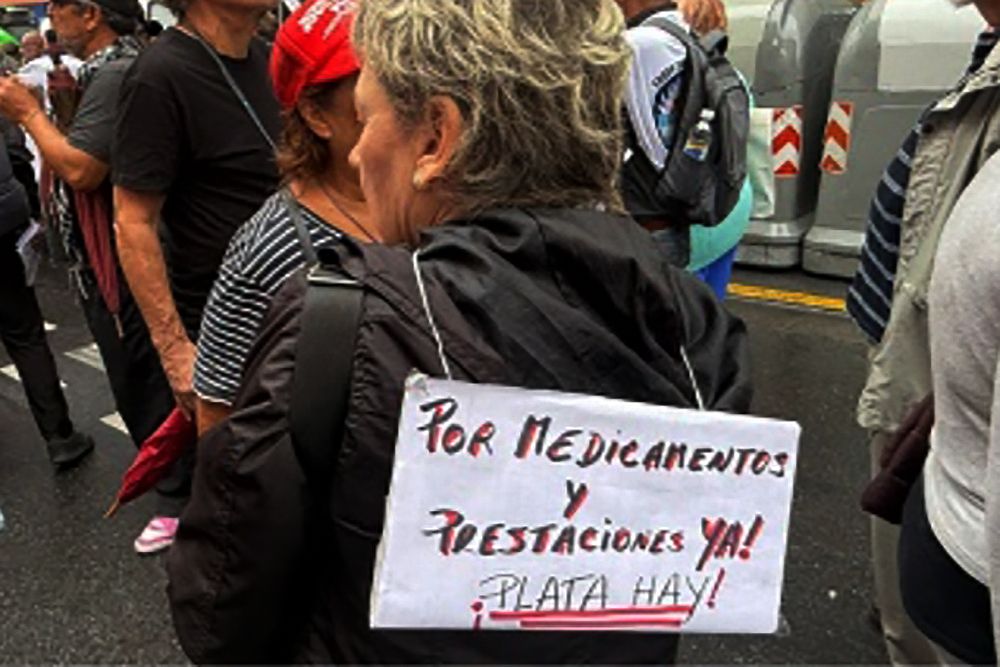
There is a principle of distributive justice which breaks down clearly here: older people are not responsible for macroeconomic management, but they bear the consequences. They have already fulfilled their part of the social contract after decades of contributions; Definancing their access to health implies, in fact, rewriting that contract unilaterally.
It is a problem of public health and basic human rights. The family doctor constitutes the core of the system: he is the one who supports prevention, monitoring and continuity of care. When this link becomes precarious or unviable, individual care deteriorates: the preventive logic collapses and the system moves towards more costly, fragmented and traumatic forms, such as the overload of hospital wards.
In this displacement there is something deeper than inefficiency: An implicit redefinition operates about which lives deserve to be sustained with dignity and which are left to the inertia of the market. What is at stake, beyond the supposed financial sustainability of a program, is the very status of care in an aging society. The discussion is moral and political: if the “space of care” is emptied, what disappears with it is a form of social recognition towards those who sustained collective life before us.
Photo: Edgardo Gómez

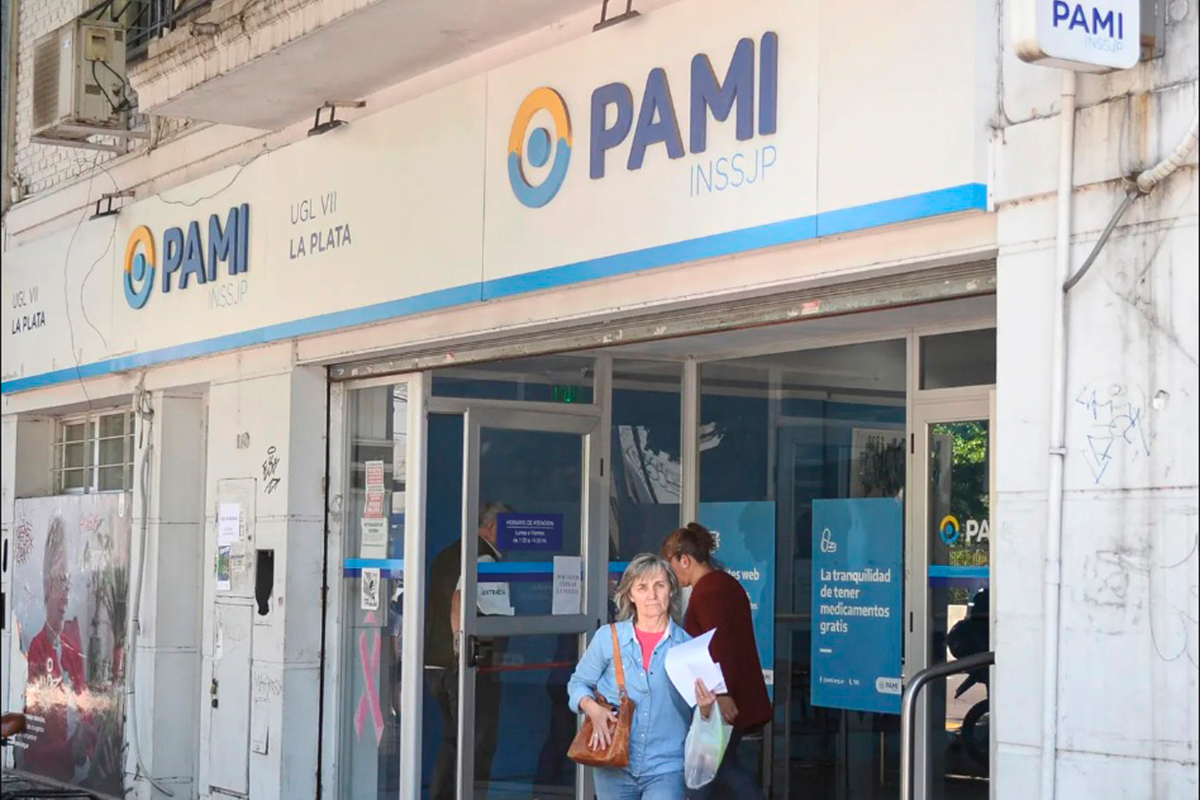
PAMI has more than 5 million members and constitutes the most extensive coverage network in Latin America. Its scale alone defines the balance of the health system as a whole. When coverage deteriorates or the work of family doctors becomes unviable—already identified as the core of the preventive system—those millions of affiliates are redistributed within a system without idle capacity. The first impact appears in the public subsector. Provincial and municipal hospitals absorb displaced demand, increasing the saturation of guards, extending waiting times and forcing episodic care for pathologies that require continuous monitoring.
Prevention loses its centrality, the system reacts late, at greater cost, and institutionalizes suffering as a method of fiscal savings. In parallel, the network of private providers is becoming strained, especially in the interior of the country. Small and medium-sized clinics, whose sustainability depends largely on PAMI billing, face a scenario of economic unviability. The closure of these centers implies loss of services: produces territorial care gaps, where entire communities are left without nearby medical care.

The magnitude of PAMI turns each adjustment into a systemic phenomenon. The contraction of its capacity reorganizes, due to displacement, the entire Argentine health map and deepens an unequal geography of access to care.
Commodification of old age
The transition from a “Social Security” model (where the State guarantees well-being) to results-based management typical of “Health Insurance” (where each benefit must be profitable) constitutes a structural change. If a patient is “not profitable,” the system tends to exclude him or her.
Dismantling of contribution boxes
The PAMI budget has persistently been an instrument of fiscal adjustment. Throughout different administrations—with special intensity since the 1990s and reactivated in recent cycles of macroeconomic consolidation—the reduction of the deficit has been supported by benefit cuts, restrictions on medication programs, and limitations on coverage. Contributions accumulated over an entire working life suffer a expropriation of its social purpose, being reabsorbed by the logic of fiscal balance.
PAMI’s budget is nourished by genuine contributions made throughout an entire working life. Its reorientation to close State accounts or contribute to the reduction of the fiscal deficit implies a diversion of purpose: resources intended to guarantee a prosthesis, a treatment or access to a family doctor are integrated into the general logic of public financing. Health needs in old age are immediate and cannot be postponed: oncological treatment or hip surgery cannot be subordinated to the timing of macroeconomic recovery. In that gap between clinical urgency and fiscal temporality effective access to the right to health is at stake. For retirees, the time is today.
A supporting legal framework
In the Argentine legal system and in international human rights law, the principle of non-regressionwhich establishes the obligation to maintain the levels of health protection achieved. This principle, enshrined in the framework of International Covenant on Economic, Social and Cultural Rights -with constitutional hierarchy in Argentina—, prevents the adoption of regressive measures that affect the essential core of the right to health. The reduction of benefits that affects older people – subject to special protection – falls within the field of violation of rights and expresses a form of institutionalized lack of protection, by displacing resources from the guarantee of care towards the logic of fiscal adjustment. What they express resolutions such as 2026-1107 and the conflict with doctors is the consolidation of a logic where the search for fiscal “balance” orders health practice. In this framework, the daily lives of millions of people are subordinated to calculation criteria, and health becomes an adjustment variable.A regulatory framework that requires
The Inter-American Convention on the Protection of the Human Rights of Older Persons—ratified by Law 27,360—establishes the right to a comprehensive health system, aimed at active and healthy aging, and prohibits all forms of age discrimination in access to care. On the internal level, Law 19,032 defines PAMI as an entity created to guarantee medical benefits from the contributions of its beneficiaries.
In this framework, definancing and restriction of coverage imply a deterioration in the provision of the service, and the alteration of the legal mandate that organizes its existence, displacing the Institute from its original function of ensuring comprehensive care and emptying of content the obligations that the system itself imposes.
The State and PAMI have a specific obligation to guarantee health benefits. When the primary care doctor stops providing care due to non-payment or the medication does not arrive, the continuity of treatment is interrupted and members are exposed to serious and irreparable harm. The current degradation of PAMI services constitutes a systemic ethical crisis and an undoubted violation of the constitutionality block. This setback ignores the Principle of Non-Regression and violates the rights enshrined in the Inter-American Convention on the Protection of the Human Rights of Older Persons (Law 27,360), transforming the guarantee of well-being into a structure of institutionalized lack of protection.
The State maintains the legal and moral responsibility to guarantee the continuity and quality of medical care.
Under the logic of fiscal balance, the affiliate objectification: The retiree, after a lifetime of contributions, is reduced to a balance sheet figure. This transfer of health risk to the individual and his or her family environment expresses a form of bureaucratic violence that institutionalizes exclusion and fractures the integrity of the healthcare system