The local and international analysts They once again outlined their monthly projections for the Argentine economy for the remainder of 2026, focusing on two key variables: the dollar and inflation.
In a context characterized by structural reforms and changes in the global financial scenario, the estimates allow us to anticipate the macroeconomic direction for the coming months. This is clear from the latest report of FocusEconomicsthat published his survey to more than 40 economists from international banks and consulting firms.
The forecasts reflect a path of moderation for both the exchange rate and inflation in relative termsalthough with tensions in the short term. In particular, analysts warned that prices could register new pressures in the coming months, driven by external factors such as rising energy prices.
What will happen to the dollar, according to local and international economists
The market consensus projected an exchange rate of $1,699.2 by the end of 2026which represents a downward correction compared to the previous forecast of $1,713. By 2027, meanwhile, the trend is expected to continue, with an estimated dollar at $1,956.6just above the $1,947 that were calculated a month ago.
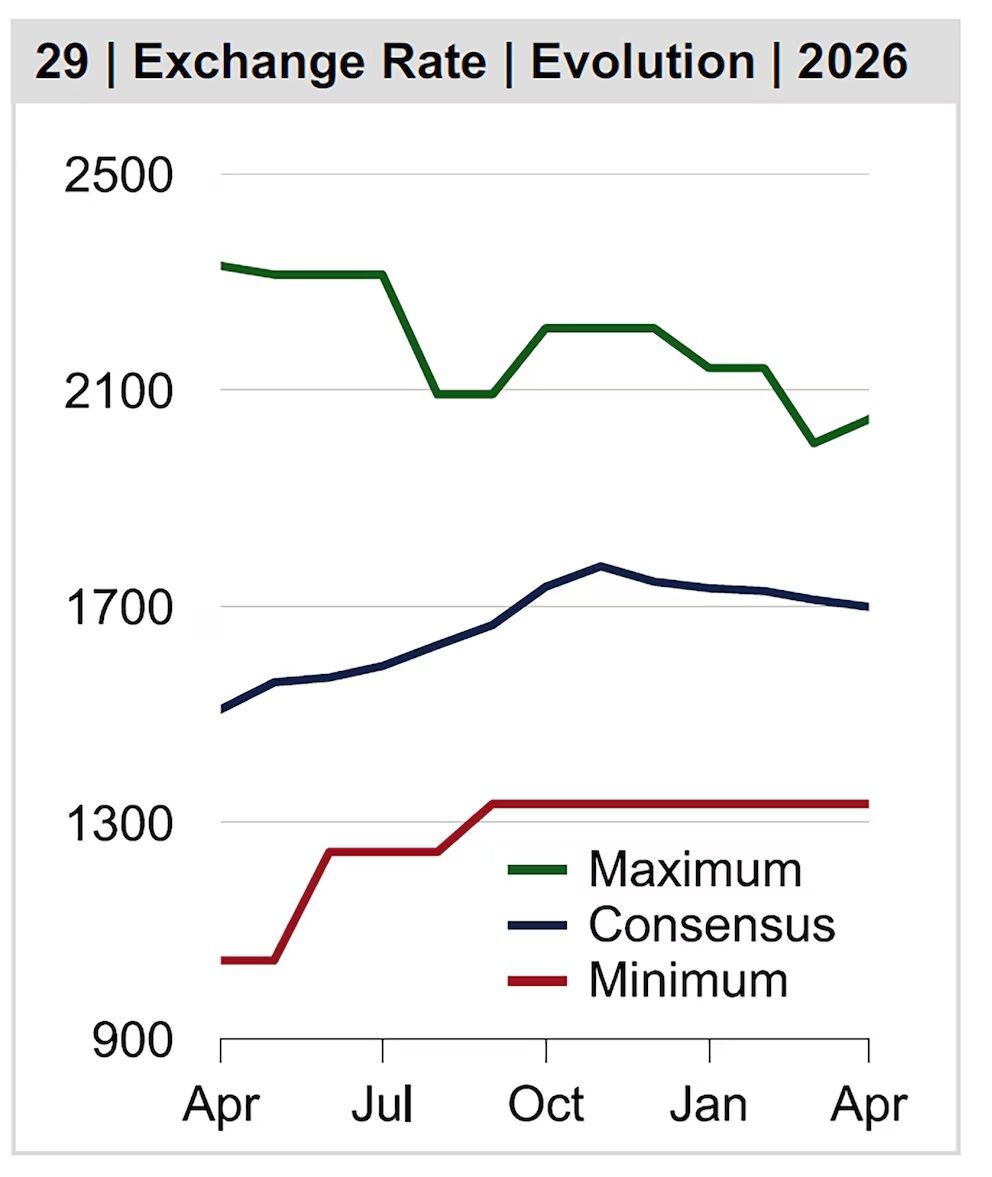
Analyst expectations for the dollar in the coming months
On the exchange front, the current scheme of moving bands – adjusted based on past inflation – seeks to avoid sudden jumps in the exchange rate and maintain some stability in real terms. However, in practice, the dollar price showed limited variations in the short term.
For example, this Thursday the wholesale dollar fell $1 to $1,358 for sale and scored his eighth nine-wheeler rollback. Thus, the distance with the ceiling of the exchange band, today in $1,680.65, now stood at 23.8%.
Meanwhile, the contracts of future dollar They operated with widespread losses of up to 0.9%. The market “prices” that the exchange rate will be at $1,366 by the end of April. During the day, some US$1.3 billion were operated.
For its part, in the segment retailthe dollar fell $5 and It was quoted at $1,380 at Banco Nación.
Beyond these movements, the market consensus maintains the expectation of a gradual depreciation towards the end of the year.
What will happen to inflation, according to experts
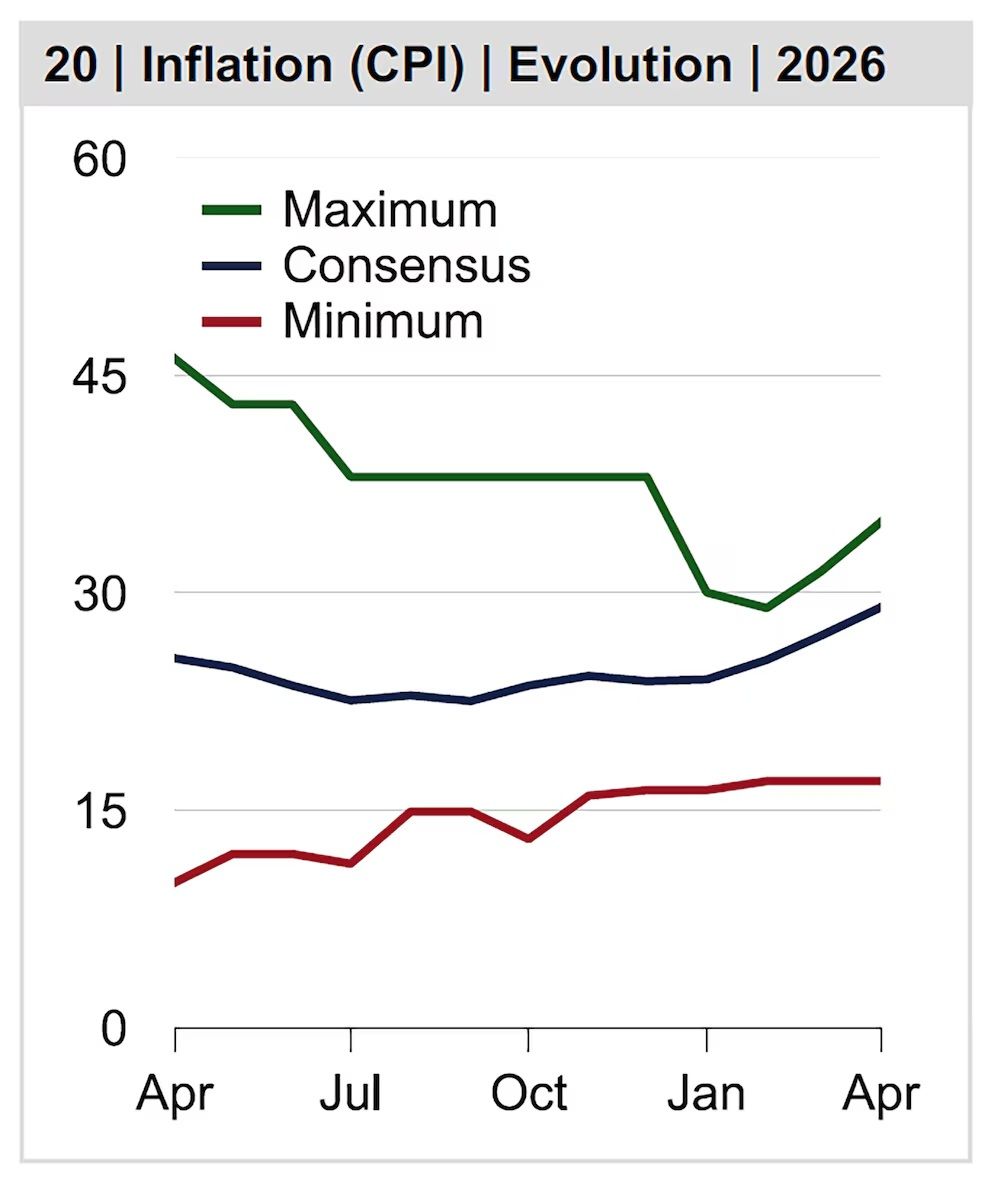
Inflation by the end of the year will approach 30% year-on-year, according to experts
In inflationary matters, the forecasts showed an upward adjustment. Analysts estimated that average annual inflation will be 29% in 2026two percentage points more than in the previous survey.
For December, meanwhile, They projected a price increase of 25.8%, also above the 23% previously estimated. Even so, the Latinfocus average continues below the REM calculation, which anticipates inflation of 29.4% by the end of the year.
For 2027the scenario points to a slowdown compared to 2026, although with somewhat higher levels than previously expected. The projections They place the December CPI with an increase of 16.2%while the annual average would be 18.7%.
Regarding recent inflationary dynamics, the latest data showed a slight acceleration. In March, year-on-year inflation was 32.6%, after a jump of 3.4% monthly, its highest level in a year.
According to different analysts, This rebound could generate greater inertia in the coming months, especially if the pressure of external factors such as the conflict in the Middle East continues. However, they also pointed out that the disinflation process could be resumed if monetary and fiscal balances are maintained, although they warned that this path will not be linear.
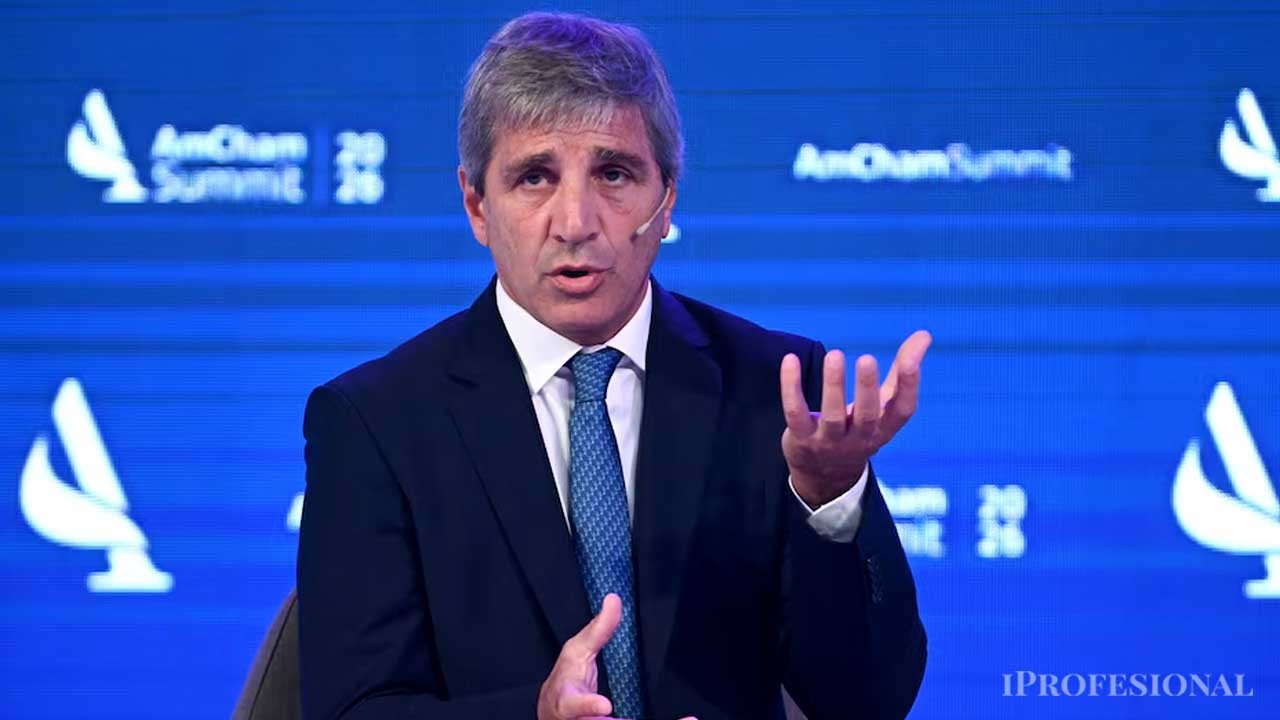
After knowing the March data, President Javier Milei assured that inflation will tend to fall in the coming months. “In March, what has to do with the war had an impact. And obviously, due to a seasonal issue, meat and Education. That is what this jump in the inflation rate implies. We are purging what was the fall in the demand for money in the second half of 2025 and the specific effect. This is not inflation, The price level jumped, but inflation has long converged to the international level. The long-term balance that we are looking for has not changed. What changed is how it moves in time. It is a very important first point. If we take the basic food basket, it is at 2.2%. Or the total basic basket 2.6%. The effect of education, war and meat is clear,” he added.
“Once these effects are overcome, the inflation rate will fall“said the President when participating in the Amcham Summit.
How interest rates and economic activity will evolve
The interest rates They appear as another central element within the projected scenario. After the legislative elections in October, a sharp drop was observed: the Badlar rate went from levels close to 50% to around 25% in early April.
In this framework, the FocusEconomics consensus foresees that it will continue decreasing to 20.63% at the end of 2026 and 15.61% in 2027which could favor investment.
In parallel, economic growth estimates also accompany this scenario of relative stability. The consensus places GDP expansion at 3.2% by 2026 and 3.1% by 2027.
The report also puts the economy’s recent performance in perspective. In 2025, Argentina grew 4.4%, the highest pace since 2022, driven by pro-market policies, lower rates, the dynamism of agriculture and the expansion of the energy sector, although partially conditioned by a restrictive fiscal policy.
Already at the start of 2026, activity showed positive signs: in January it grew 0.4% monthly, sustained by a good agricultural campaign, greater political stability after the legislative elections and progress in the reform process.
Added to this is the approval in Congress of measures aimed at making the labor market more flexible and reducing business costs, with the labor reform, along with tax incentives for SMEs. In addition, the rebound in international energy prices since late February contributed to improving export earnings and reserves, although it also introduced new pressures on inflation.
In this context, Projections indicate that the Argentine economy could grow above the regional average in the coming yearsleveraged on structural reforms, greater investment in strategic sectors and an improvement in business confidence.