COELSAa company that clears bank and fintech transfers, announced last week a novelty that redefines the payments board in Argentina.
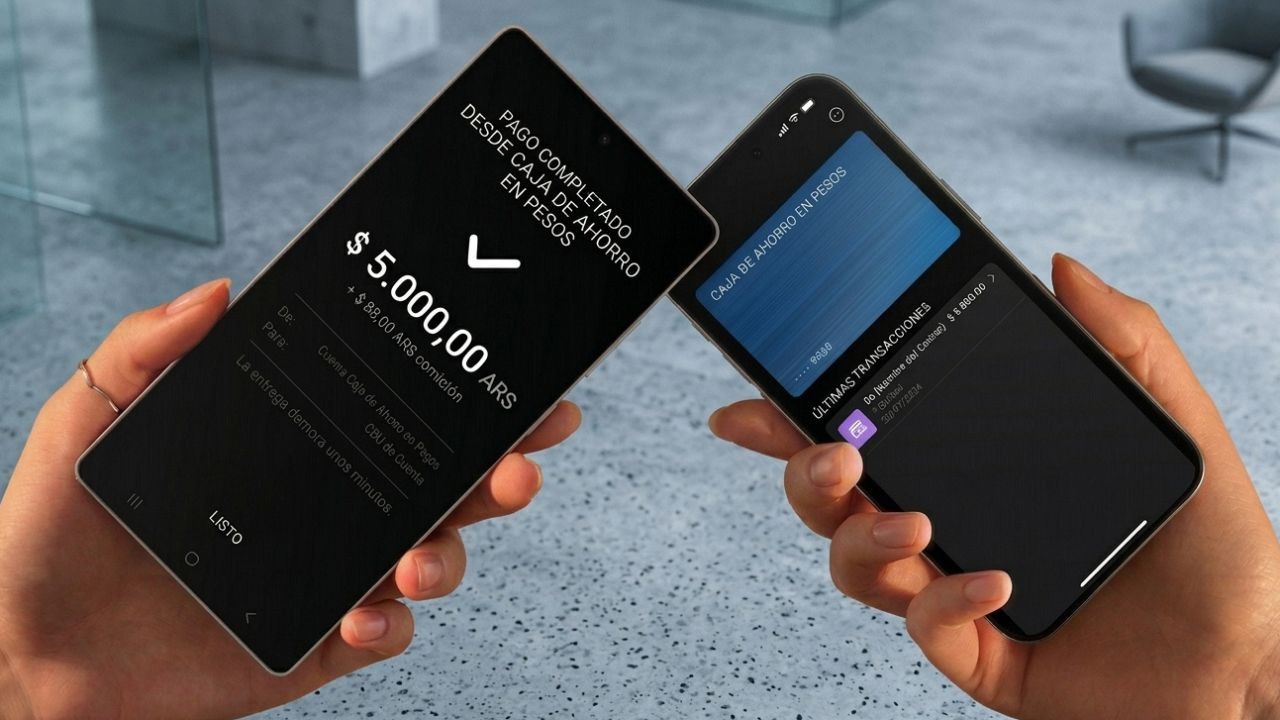
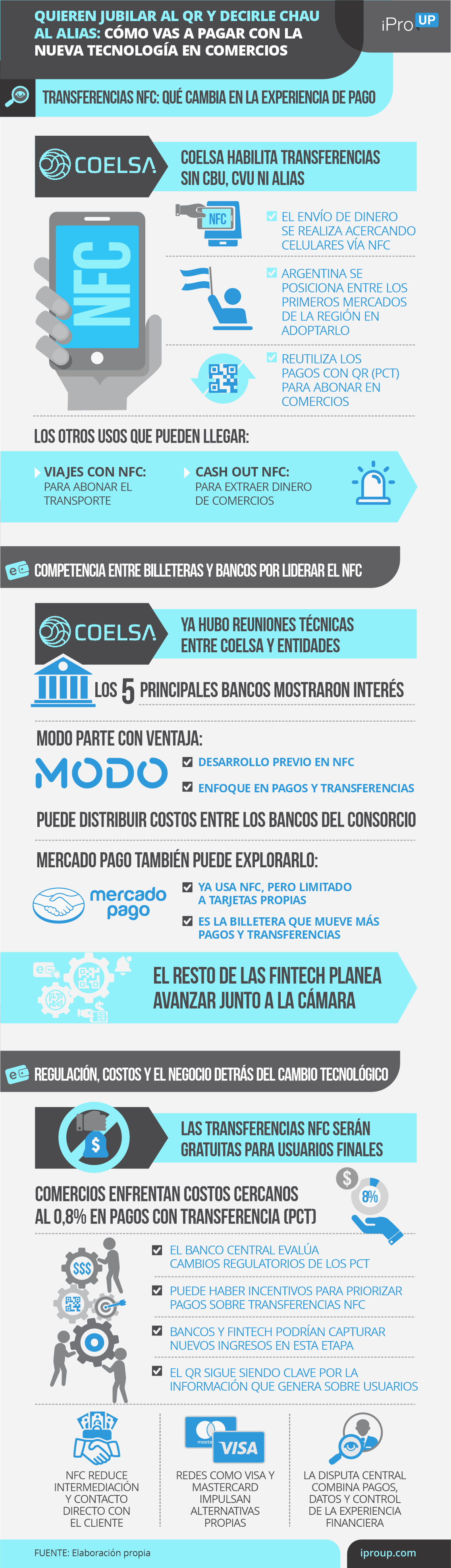
He made available a solution so that money transfers with bank or fintech accounts do not require entering CBU, CVU or aliases: directly, cell phones will be brought together and money would be sent between users. Some players want to be the first to have it.
Transfers without aliases or CVU/CBU
The novelty was a bombshell in the financial industry. Account-to-account (A2A) transfers using the NFC chip cell phones are a reality in some countries, but they have just debuted in the region. In fact, Argentina would be the first Latin American market to adopt them.
In addition, the entity has several applications of this technology in the pipeline, transferring the uses of QR to NFC:
- Payments with transfer: the usual payment with QR but with NFC
- cash out transfers: the possibility of withdrawing cash, supporting the cell phone
- Travel with Transfers: to pay for public transport fare, a longer-term project
The interested entities maintain foolproof seals: there are technical and regulatory aspects to take into account. However, they have already started to move their chips.
As confirmed iProUPCOELSA held technical meetings with banks and fintech last week to begin deployments. According to an industry executive, the firm confirmed that “the same messaging as QR payments and QR capture method via NFC” will be used.
The keys to NFC transfers
The race for NFC transfers
In the sector they are already anticipating the applications that will come out first. For now, MODO, the banks’ wallet has several advantages to go out and play before the rest:
- The app already has NFC payments to compete with Google Pay and Apple Pay, despite the fact that its priority is the QR
- The cost of integration is prorated among the almost 36 players that are part of the consortium
Industry sources warn that it has already taken its first step. “Following the news, MODO began to explore account tokenization as if it were a card with Thales and pay tokenized with the balances,” he confides to iProUP a long-standing manager in the sector. The aforementioned firm is a leader in cybersecurity and digital identity.
Mercado Pago is the other wallet that has the NFC function included, but only for its own prepaid and credit cards.without the possibility of enrolling third parties as with the QR. But one of its main rivals is advancing further.
In the sector they do not rule out that Mercado Pago incorporates a “closed circuit” solution to transfer between NFC. In fact, some managers sense that when transfers are made between MP users, the funds pass even faster without waiting for official compensation, as if they had their own clearing.
No wonder, according to the Central Bank’s Retail Data Report: The unicorn concentrates 71% of the balances and 84% of the money invested in funds, which allows us to estimate a volume of around $6.9 billion.
The other one that sounds strong is Orange X, which today is the unicorn’s most robust rival: According to the BCRA, it has more than $3.3 trillion in deposits and 26 million accounts, compared to 25 million MP users. It is expected to play alongside the rest of the fintech industry.
Regulation, costs and business
COELSA assured that NFC transfers will have no cost for the user, nor does it receive commissions for the operations. But there may be some fine print in the implementation of the entities.
In parallel, the Central Bank will hold its usual weekly board meeting on Thursday, the agenda of which includes a possible revision of the Payment with Transfer Regulations (PCT).
This is the mechanism through which QR payments are made using balances in bank or fintech accounts.. In short, it comes into play every time you pay at a cash merchant without cards.
But this incorporates an extra expense for businesses, especially for neighborhood ones, which usually have the alias written on the counter to avoid them.. This fee is around 0.8%, which is shared between the application that initiates the operation and the entity from which the funds come.
Speculation suggests that this economic incentive hurry up to payments before transfers between userswhich are instant and free by regulation. If this first phase exists, banks and fintech will have more to gain than cards and even Mercado Pago or MODO.
Both wallets are betting heavily on QR, since it offers them another layer of information to better profile users and build loyalty with promotions.. Cards – and even NFC – are more of a touch and gowhich only uses them as an intermediary and reduces the relationship with customers.
On the other hand, cards prefer fewer intermediaries. Mastercard already announced the Tap-To-Pay in the country and Visa has its VisaDirect system for account-to-account transfers. The latter had even criticized the Transferencias 3.0 system that inaugurated the interoperable QR.
The rest of the wallets hope to act together with the Fintech Chamber, which usually acts as a hub of information and guide of steps to follow to soften the landing of its members.
The entity is undergoing a change of authorities, after Mario López, CEO of Poicenot, completed his term as president. The “exit word” suggests that Paula Arregui, COO of Mercado Pago, will succeed him.
He will occupy the top seat of the Chamber for two years, in which –possibly– the NFC can take some ground from the always profitable QR, in a race for payments that combines money, data and user experience in high doses.