The National Institute of Social Services for Retirees and Pensioners (Pami) “it is not in crisis, it is being organized.” He Remedy Plan “It is not eliminated, it is modified.” The National Center for Diagnosis and Research of Endemo-epidemics (Cendie) is not closed, it is “merged” with the National Institute of Parasitology. For the Government, the effects of the adjustment on public health seem to be summarized in a semantic question.
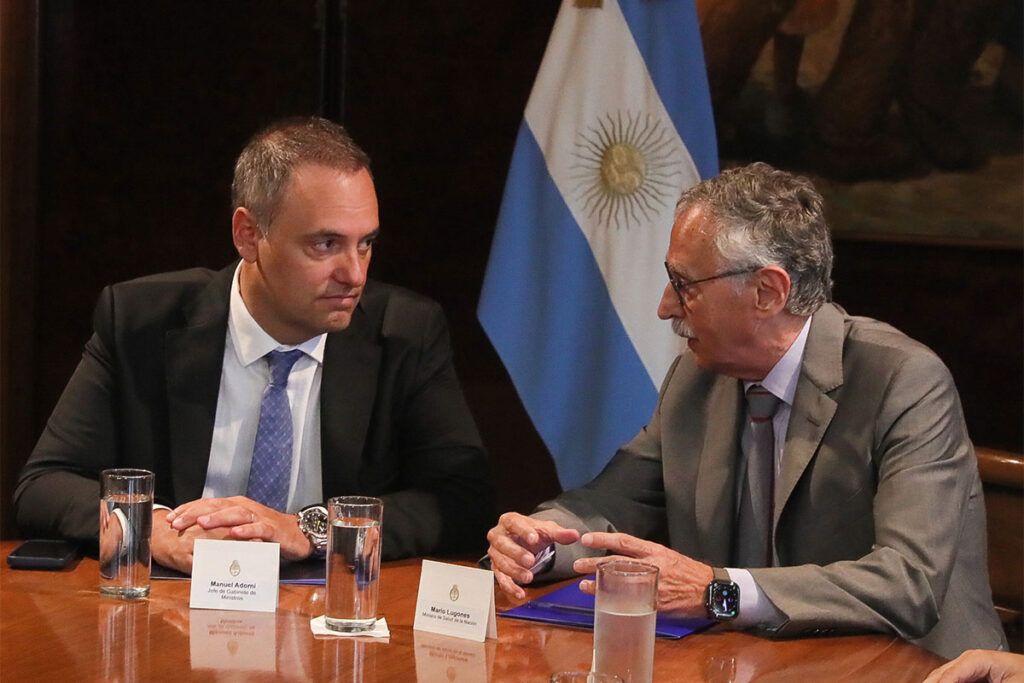
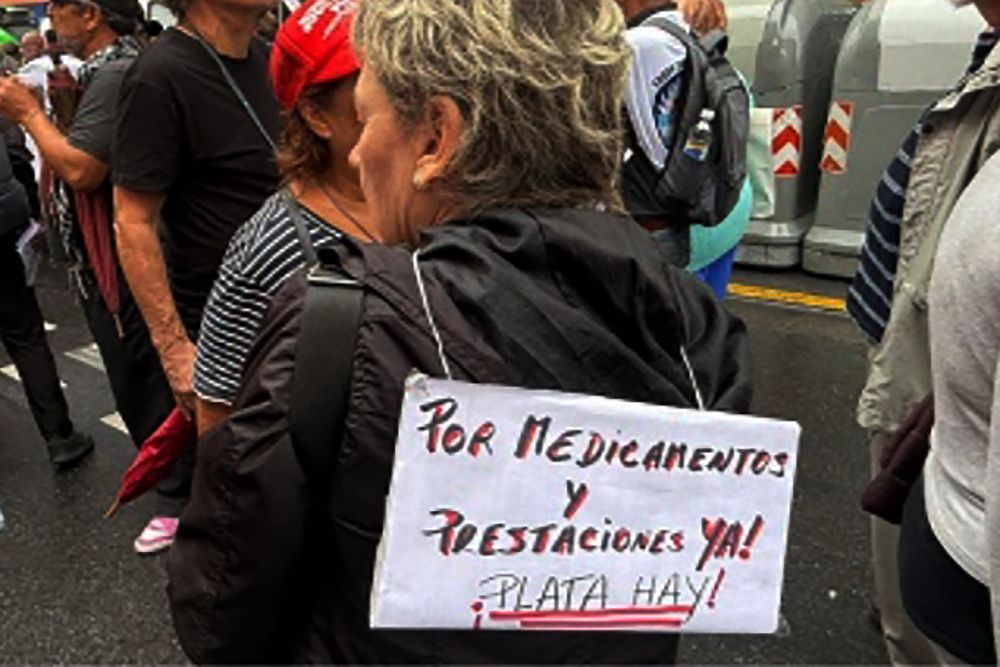
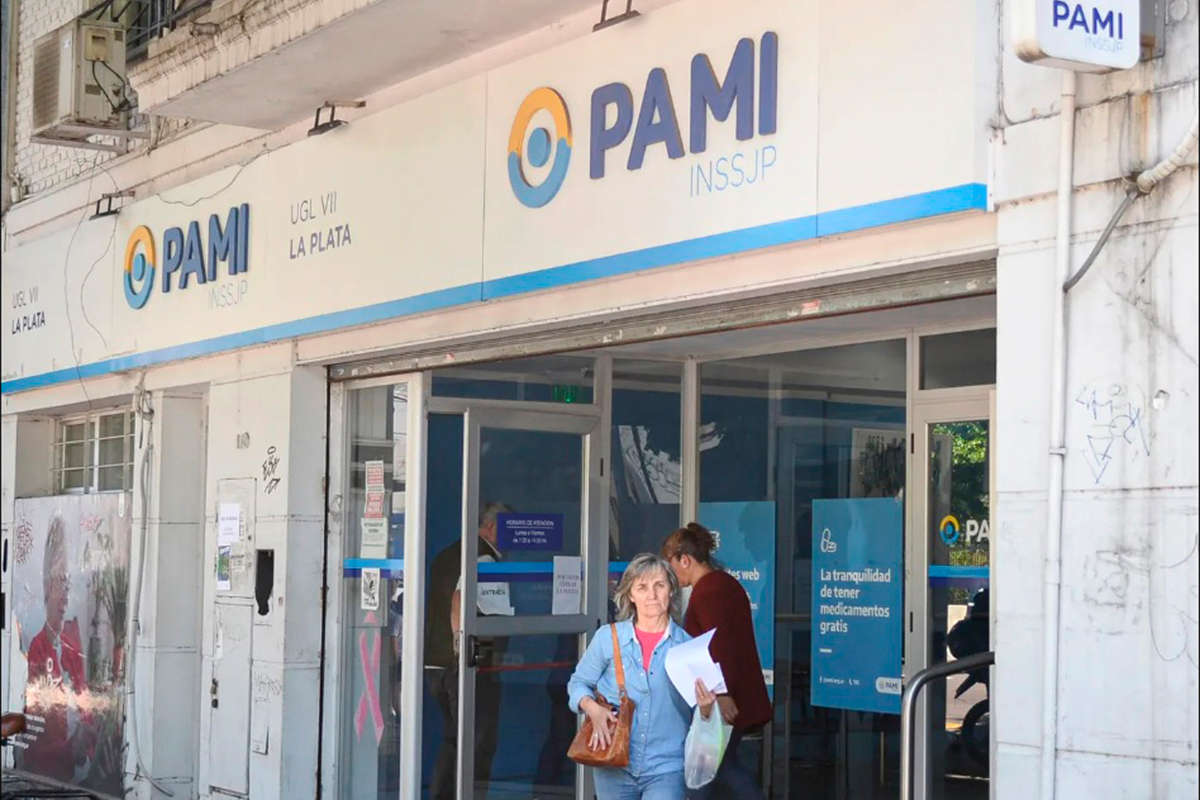
Retirees from different parts of the country are responsible for giving testimony to make it clear that the dismantling of the health system is real and palpable, as much as having to choose which of the prescription medications to buy, because it is impossible to access them all. “Pami has around one million people over 80 years old out of the five million beneficiaries (…) It is a very big burden“, argued the Minister of Health, Mario Lugones. PAMI’s debt exceeded 500 billion pesos. In recent days, when the conflict escalated, there were disbursements of around 150 thousand. The Government promises that it will pay the remaining 350 billion. This week GPs went on strike for three days: They complain about the resolution that sets the payment per patient at $2,100. It means charging up to 50% less.
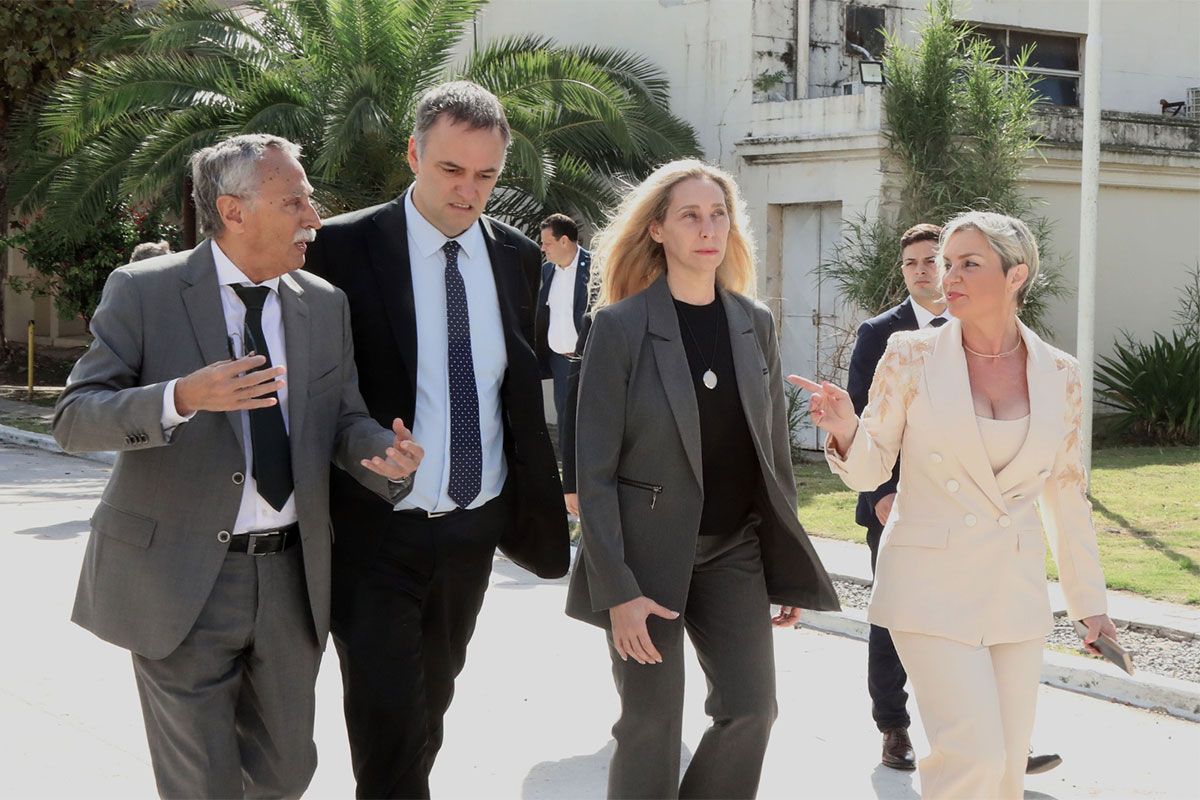
Lugones’ last public interventions were to justify the situation of PAMI and to support the denounced Chief of Staff, Manuel Adorni. With him he shared a tour of the Malbrán Institute, with the excuse of inaugurating a maximum security laboratory that, according to the staff, had already been inaugurated before. Despite the lock operation, ATE managed to submit a petition denouncing “the critical deterioration of the institutionreflected in the loss of purchasing power of the salary of 45%, a budget restriction of 25% and the loss of 15% of the staff.” On that stage, Lugones posed smiling alongside Adorni and the Secretary General of the Presidency, Karina Milei.
PAHO/WHO is to blame
The claims for vaccine shortage They joined the scene in recent days. The issue is not new and had already been reported from the Province of Buenos Aires, but it worsened after statements by the Secretary of Health and Human Development of Córdoba, Liliana Montero, who assured that the Nation “officially announced that the shipment of calendar vaccines” such as Triple Viral, BCG and HPV is being cut. All weeks before the peak season for respiratory diseases begins.
In response to the query of Timethe Ministry of Health responded with a note from the Pan American Health Organization (PAHO) warning that “The crisis in the Middle East continues to generate significant impacts on global logistics“and produces “average delays of approximately one week in delivery times.” The note was issued on April 4. Almost a month before, on March 11, the Buenos Aires Minister of Health, Nicolás Kreplak, published his first message about a shortage of vaccines. In recent days Municipalities such as Escobar and San Martín came out to warn residents that they had no more flu doses left because Nation had stopped sending.
Last Thursday, the debunking Official Response Office called Montero’s statements false but admitted that “The Ministry of Health of the Nation redefined the delivery schedule and advances in local acquisition alternatives“given the delays reported by PAHO. An organization that is part of the World Health Organization (WHO), from which Javier Milei’s government chose to leave to imitate the steps of the United States. Everything has a cost.
Late on Friday, the Ministry of Health issued a “joint statement” with PAHO and reported that both organizations “agreed to present a delivery plan that will be updated periodically with estimated dates.” The delays and lack of shipments were true.
Joint statement from the Ministry of Health of the Nation and the Pan American Health Organization pic.twitter.com/19xqLG4hPh
— Ministry of Health of the Nation (@MinSalud_Ar) April 17, 2026
Both Kreplak’s first claim and Montero’s last also referred to the lack of pediatric Covid vaccinewhich although it was not included in the National Calendar – despite a recommendation from the National Immunization Commission (CoNaIn) in that sense in 2024 – is recommended by the Argentine Society of Pediatrics (SAP) for babies from six to 24 months – the same as the flu – and for childhoods with risk factors. There have been no doses available for months of the Moderna vaccine, for children under 12 years of age, in vaccination centers in the country. Lugones’ portfolio responded that “there is a current contract with Pfizer”, which does not provide vaccines for children under 12, and that “jurisdictions can buy (as happens with Dengue).” There was no answer as to whether they will buy the pediatric Covid vaccine again.
Without protective barrier
This newspaper reported last week that after the “merger” of the National Center for Diagnosis and Research on Endemo-epidemics (Cendie) with the National Institute of Parasitology, within the framework of a process that involved 39 dismissals of directors, researchers and administrators from Malbrán, 42,000 vinchucas were left adrift. They are at the Colonia Santa María de Punilla Hospital, in Córdoba, headquarters of the Vectors and Environment Operational Unit (Unove). The three people who were in charge of maintaining these key insects for research and control on Chagas were fired.
After the dissemination of that note, workers from the Directorate of Zoonoses and Control of Vector-Borne Diseases of the Ministry of Health contacted Time to warn that, there too, the scrapping progresses. The sector has a central technical team, which brings together professionals with a high level of training, and 26 operational bases in 14 provinces, with a particular presence in NOA and NEA. Agents in charge of controlling dengue, chikungunya, Zika, Chagas, malaria, yellow fever, leishmaniasis, equine encephalitis, among others, work there.
Since January of this year there was 34 layoffs in the sector, with a total of just over 200 workers. “The majority were field technicians from remote places. In Salta, where the chikungunya outbreak started, we had two technicians. They fired one, in the middle of the outbreak“said one of the workers who remains in the Directorate. Until last week, Salta registered 572 cases and the first was fatal: a 68-year-old man.
From one of the bases in the north, another Vectores agent warned that the layoffs are compounded by the working conditions of those who remain: “In some of the bases there is no electricity, water, or internet due to lack of payment; there is a lack of provision of personal protection elements; the maintenance of the vehicle fleet and machinery is being supported, in numerous cases, by the agents themselves; They are not paying travel expenses to go to the territories.” Meanwhile, workers receive average salaries of only $800,000.
From the Vectors Directorate they speak with fear. Both those who remained and those who no longer have a job. For fear of reprisals that translate into losing what they currently have or not getting other jobs, especially in the bases of small towns, big hells. “Agents are the first containment barrier to mitigate the expansion of outbreaks -highlight those who work in the territories-. In the Ministry it is vox populi that the Management is going to be decimated because The intention is that the Nation only acts as steward, nothing concrete in the territory. Here there are technical personnel with specific knowledge who are responsible for training provincial teams. “If everything is deleted, it will not be able to be recovered”. «
Disability: “The system is failing and no one is responding”
Just as complaints from different provinces due to lack of vaccines have increased in recent days, they also come due to the situation in the Disability sector. The governor of Misiones, Hugo Passalacqua, asked the Minister of Health, Mario Lugones, “for the urgent regularization of the payments owed corresponding to six months – for a sum greater than 2.5 billion pesos – to the specialized centers that provide assistance to people with disabilities within the framework of the Federal Include Health Program”.
From Córdoba, Governor Martín Llaryora stated that “leaving grandparents abandoned, leaving disability institutions abandoned, seems wrong to us.” immense cruelty«. He announced an “assistance plan” for the sector of 450 million pesos. But he warned that the Province “cannot cover everything forever.”
Despite the sanction of the Disability Emergency Lawwhich should have meant relief for one of the sectors hardest hit by adjustment policies, the delays in payments from Incluir Salud and Pami translated into interruption of benefits and people without access to therapies and treatments. The system has already collapsed, according to various actors in the network.
Next Wednesday the organizations grouped in the Permanent Disability Forum will cessation of tasks and mobilization to the Ministry of Health. “Unpaid invoices. Frozen tariffs. This cannot be sustained. The system is falling and no one is responding,” warned the Association of Transporters for People with Disabilities.