On Friday, March 10, the Supreme Court of Justice of the Province of Buenos Aires confirmed the fines we applied to delivery companies for having unregistered workers while I was Minister of Labor of the Province of Buenos Aires. In recent years, many have insisted to me that the delivery drivers themselves do not want to be employees, or that their work time is free and that is not contemplated in the Employment Contract Law and that you have to make a statute or something like that with just some basic features.
I have a lot of respect for other colleagues who face the path of providing improvements to a group of people with whom we have become disconnected. I also feel that this disconnection has to do with the fact that, when we say dependency relationship, people see that formal work is poorly paid (and many are afraid of earning less in hand), the schedules are sold as fixed and the bosses are horrible.
The problem is that they are already in a dependency relationship. Just as they are today. That’s what we found from the Ministry of Labor, that’s what the courts said and those were the rulings ratified by the Court. Recognizing this does not mean getting a salary, setting schedules and hiring bosses. Quite the opposite.
There is a relationship of dependency because there is subordination: the company organizes work to maximize exploitation and thus its profit. Then it is up to the company to face the same thing that we ask of any SME: take charge of contingencies (illness, accident) and health and safety at work, collectively negotiate remuneration, make contributions to social security and provide something as simple and as strong as a pay slip. And above all, establish a commitment to provide work.
Since the company organizes, and takes the profits, what we want when we demand that they recognize this relationship is to add salary to the workers (in hand and also indirectly with retirement and social work), is that all working time is paid fairly and is that they can continue receiving orders from an algorithm without anyone puffing up their kumquats, but someone standing in their face when things go wrong. And if they are sent to pedal like crazy to climb the ranking, that someone is obliged to put a bathroom somewhere, provide drinking water, deliver the work items with which they advertise for free, pay if they have an accident working for them and not leave them behind if they get sick and can’t deliver.
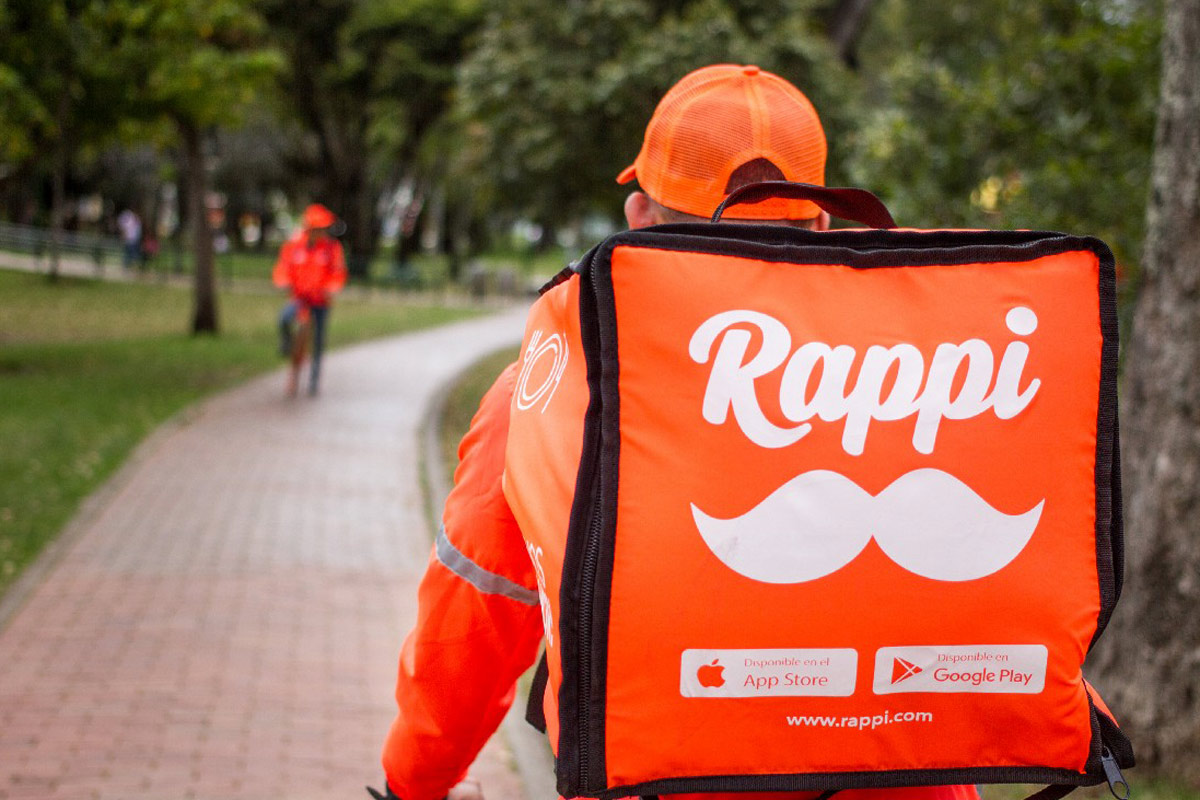
Companies are not intermediaries. Nobody thinks when they ask, “I’m going to hire a delivery person through the app.” We all say “I’m going to order a rappi or I’m going to order in orders now”. The order was canceled and you can’t even talk to the delivery person you supposedly hired. The company sets the delivery price, assigns orders, establishes behavioral guidelines and can apply sanctions and even fire (disable) workers. And regarding time flexibility, through an algorithm that studies the demand and behavior of workers, it makes a control almost like a science fiction book, if not horror. Establish a regime of days and hours through rewards in terms of price and order assignment frequency. That freedom does not entirely exist, but it can also hardly be guaranteed without breaking the business model for something very obvious: it is no use for a company that distributes food to have people on a Tuesday at 3 in the afternoon, it needs to force everything to have people on Saturday night.
That said, there is obviously a demand on the part of the worker to be able to decide when to work and the organizational model allows for greater flexibility. You have our attention and we need to find a solution to this demand. In the first inspections we carried out, this demand was closely tied to the need to be able to work beyond the legal hours. We cannot solve this by saying “ok, drive a motorcycle 12 hours straight 6 days a week, nothing happens.” I don’t know when savage capitalism made us go back 100 years and fight to work longer hours instead of being able to work a reasonable schedule and be paid enough to live well.
What needs to be done is to pay more per hour. And for that, we not only need to recognize the dependency relationship, we need collective bargaining. It is the only way for the salary in hand to go up, not go down. And about that, the contributions and contributions. And you have to pay for the time you are available! We also have to think about obvious licenses, which are often behind the request for flexibility. Basic things like being able to go to the doctor have to be considered a general normal (and not just for this job!)
In the latest research and surveys, it appears that there are now more people who do it as a secondary job, just a few hours. And who also values being able to come and go, perhaps even not working for a week or a month. I am quite sure that, with a good, innovative collective agreement, these schemes can be implemented. And if it is necessary to slightly modify the legislation, think about a special social security regime for these cases of high turnover, great, let’s do it. But let’s start with the worker having all the rights and then we see what doesn’t fit. Not the other way around.
The new law does not change anything. If they are employees in a dependent relationship, they are not independent. This is not established from a law but from the principle of reality. And if you want to force it, it is simply unconstitutional, because you cannot take something that workers have the right to (even if it is not fulfilled) and give them nothing.
All this that I share and sorry if I extended it, I say it in a personal capacity. I do not believe I am the owner of the truth, and I support and support everything that improves people’s lives. My values tell me that I still have to continue insisting, no matter how unfriendly it may seem, not on a whim, but because if we continue to individualize ourselves, and play this game of every man for himself, it will not go well for the one who tries the hardest, it will go well for the strongest, who in this world is the one who has the most money. And the majority of us are going to continue descending, living worse and worse while a few enjoy the efforts of everyone. And I want work to occupy us, not worry us.
So I’m going to continue insisting, chatting and trying to convince.