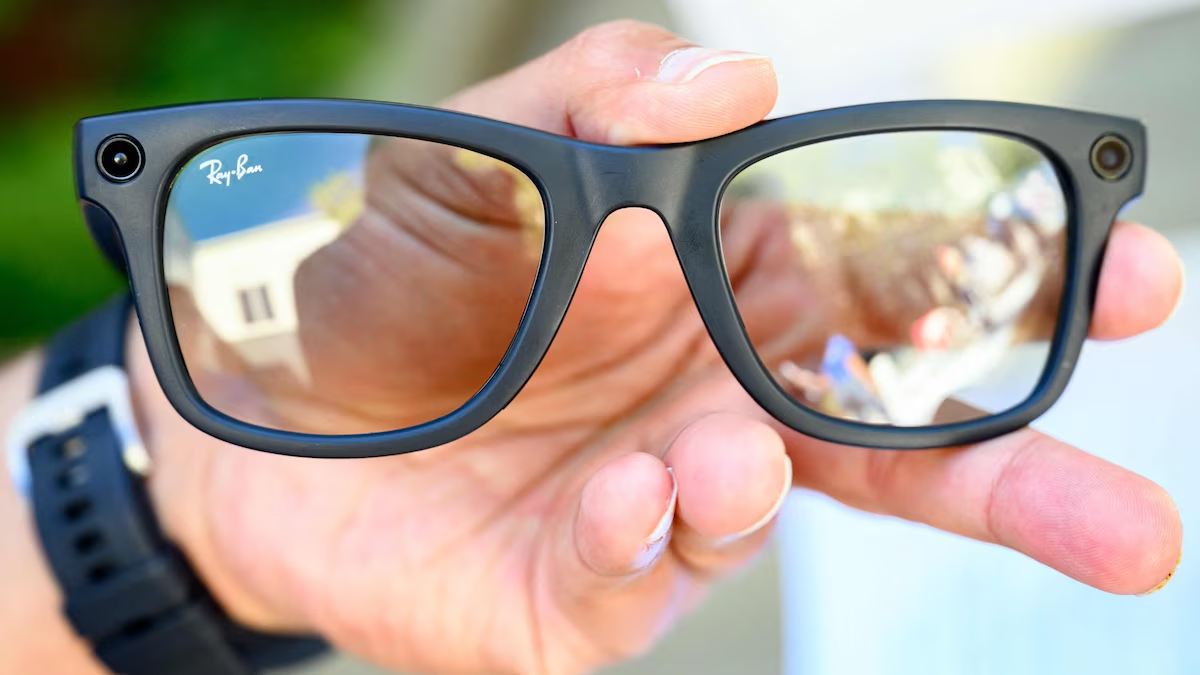
A set of 75 organizations defending consumer rights and privacy have written a joint letter to request that Meta “immediately” suspends its plans to implement facial recognition functions in its Ray-Ban and Oakley glassesincluding the ‘Name Tag’ function.
The company led by Mark Zuckerberg has already considered including a facial recognition system in its smart glasses in 2021, an option that, after internal debate, ended rejecting due to problems around the legal aspects of using this technology.
However, in May of last year Meta began to reconsider this technologydeveloping new facial recognition software for their glasses with which users can scan people’s faces and, thereby, identify their identity in real time. Later, the internally called function ‘Name Tag‘, which is scheduled to be implemented in Ray-Ban Meta and Oakley glasses this year.
Within this framework, a total of 75 civil rights organizations have joined together to send a joint letter to Meta, requesting that immediately suspend your plans to implement these facial recognition functions in its smart glasses, claiming that it is a technology that “profoundly undermines civil rights and liberties.”
Specifically, as they explained in the letter, this is because the facial recognition technology will be integrated into discreet-looking consumer glasses that anyone can use on a daily basis, so may identify users without their consent, in public places and without their knowledge of this, posing a threat to society, in particular, to “historically marginalized and vulnerable groups.”
Thus, organizations have focused on how this technology can affect the victims of domestic violence, people sexually harassed, religious minorities or people from vulnerable groupsamong others.
It must be taken into account that, in the case of ‘Name Tag’ technology, Meta proposed using the facial recognition system with certain limits, such as that it can only identify people known to the user themselves. because they are friends on a Meta platform, such as Instagram or Facebook, or because they have a public account on one of these services.
However, the organizations in charge of the letter have assured that The safety concerns of this technology “cannot be resolved through changes in product design.”opt-out mechanisms or incremental security measures.” For example, because users have no way to consent to being identified.
Therefore, they have denounced that plans to introduce facial recognition technology in widely available consumer products “constitute a red line that society must not cross” to guarantee a “free society.”
“People should be able to go about their daily lives without fear that stalkers, scammers, abusers, federal agents, and activists across the political spectrum are silently and invisibly verifying their identities and, potentially, matching their names against a wealth of easily accessible data about their habits, hobbies, relationships, health, and behaviors,” the organizations stated in the letter.
Specifically, with the participation of organizations such as the ACLU, the Electronic Privacy Information Center, Fight for the Future or Access Now, among others.
Taking all this into account, what organizations request from Meta goes beyond introducing security measures, directly They ask that you not launch any facial recognition function, including ‘Name Tag’, on the market for Ray-Ban or Oakley glasses, as well as for any other wearable device or product from the company.
On the other hand, they also ask that Meta publicly reveal any known cases of uses of its wearable devices for harassment, harassment or domestic and sexual violence, as well as explain the measures it has taken in this regard.
Following this line, the organizations have urged that it also disclose any conversations or collaboration plans with law enforcement agencies, including ICE in the United States, regarding the use of Meta wearable devices by government agents.
Finally, they have asked the technology company to commit to collaborating with civil society, affected communities and independent privacy experts, before making any decision about the integration of biometric identification functions in consumer devices.
“A technological approach that privatizes benefits and socializes harms entails irreversible consequences for the security, freedom and civil rights of people,” the organizations have concluded.
With all this, it is worth remembering that a project carried out by two students from Harvard University (United States) in 2024, has already concluded that smart glasses with facial recognition technology can reveal the identity of people on public roads in real time, confirming this risk for people’s privacy and security.
In this case, by capturing a person’s face on a public street, it was possible to obtain their name, their home address, their publications on social networks or their family members, information that was received practically instantly on the mobile phone.