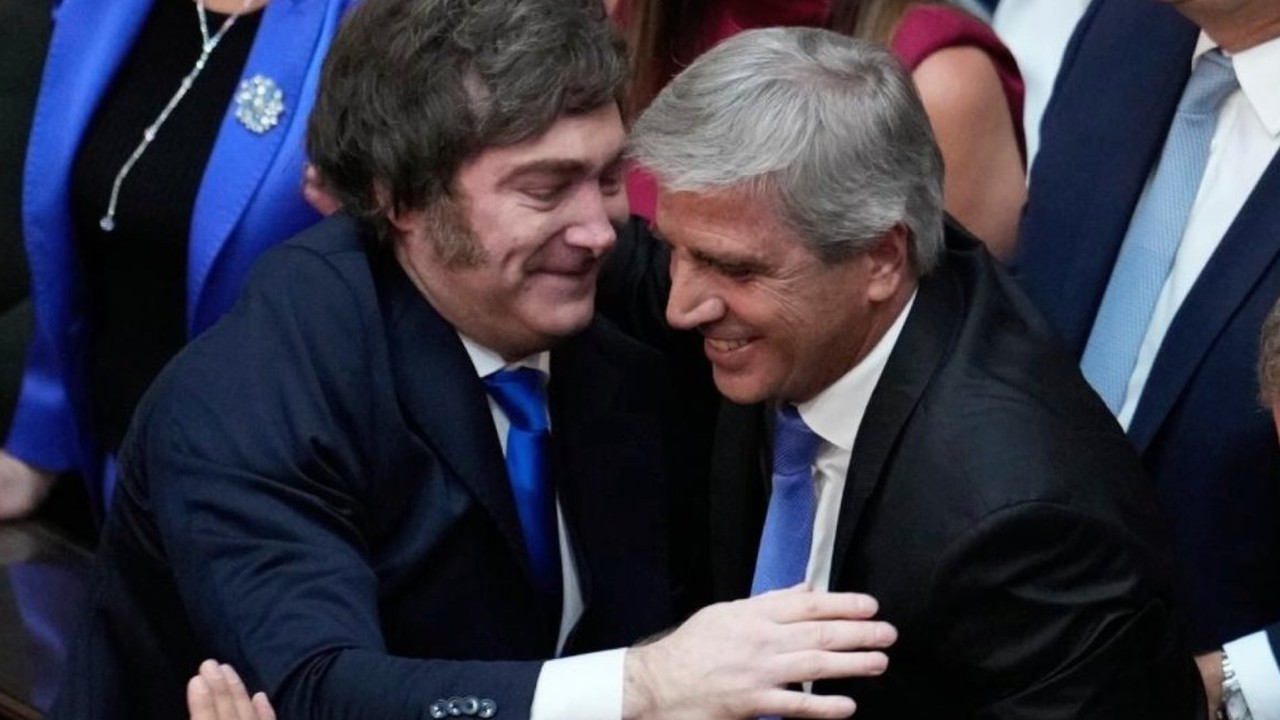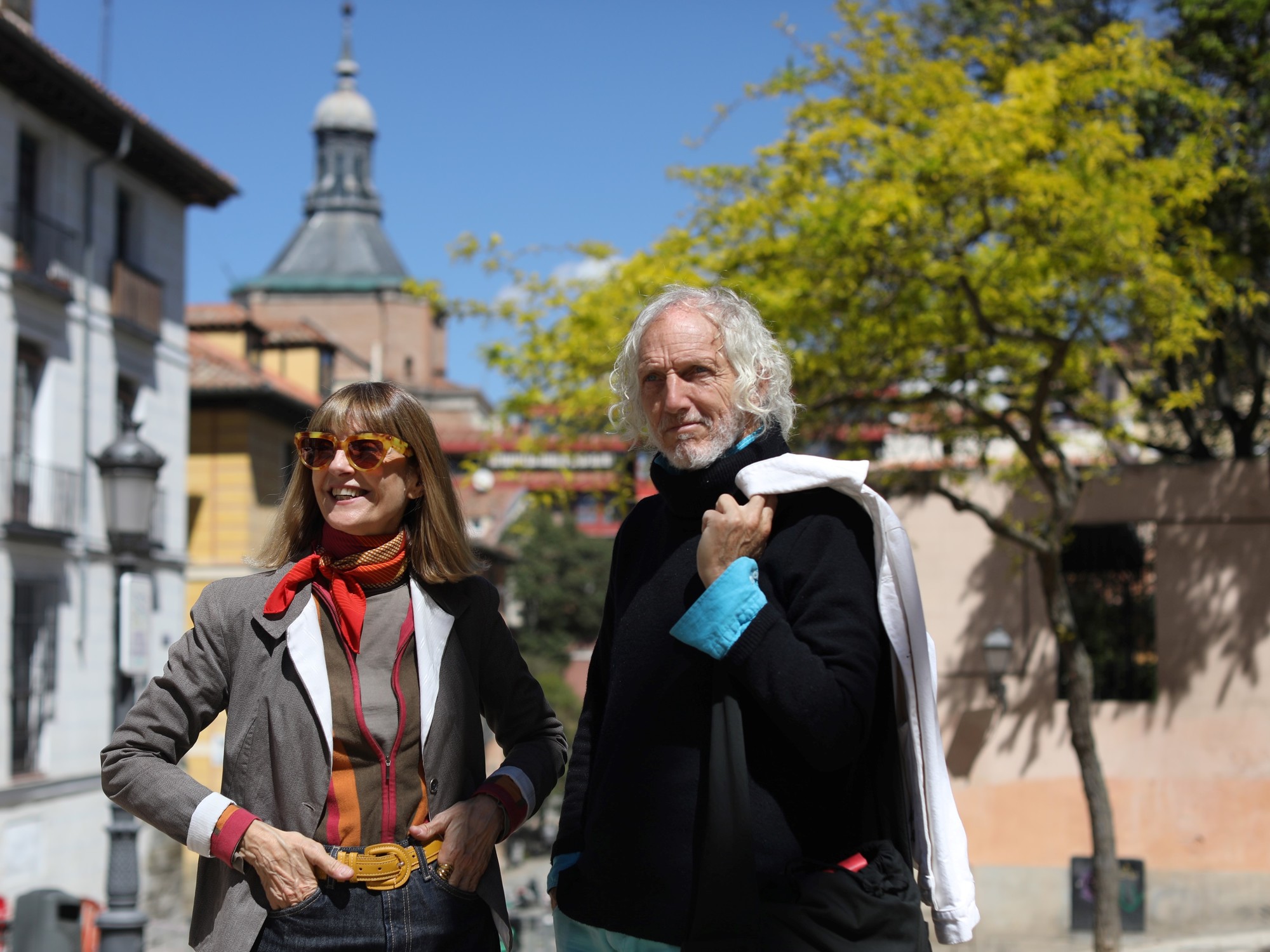
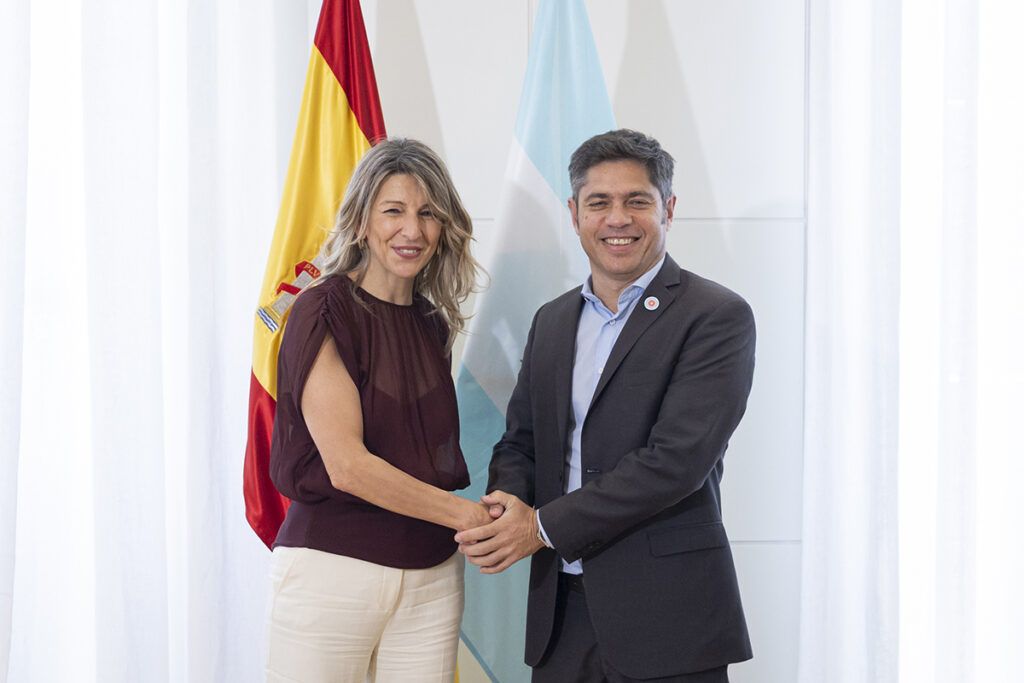
Axel Kicillof’s first public activity in Madrid showed him hugging with the second vice president of the government of Spain, Yolanda Díaz. The host, also Minister of Labor, received him warmly: pats, handshakes and an atmosphere that seemed relaxed. The gestures of those who show themselves at ease, with common values. The Buenos Aires governor gave him a copy of his book “From Smith to Keynes”; Díaz reciprocated with an art book, bound horizontally, that reproduces Picasso’s “Guernica.”
Among several issues, they talked about a very topical topic, there and here: labor regulations for platform workers, what in Spain is known as the “Rider law.”
Spanish vice president and this Thursday host of Kicillof, Díaz is the author of the law approved in 2021 that established the so-called “presumption of employment” in the Iberian territory. The standard also established another requirement for the activity of delivery people: “the transparency of the algorithm.” This principle implies that the workers of delivery They have the right to know how the algorithm organizes and distributes work.
For Kicillof, the reality of platform capitalism is part of his Spanish tour; For the province of Buenos Aires, it is even an agenda item: this week a ruling by the Buenos Aires Supreme Court was announced that established that distributors who provide services for rappi They have an employment relationship and are not individual entrepreneurs.
It was a unanimous ruling. It was signed by judges Hilda Kogan, Daniel Soria and Sergio Torres plus a fourth vote, coinciding with the previous ones, from judge (ad-hoc) María Florencia Budiño, of Criminal Cassation of the province. On the other hand, the question of delivery It was among the announcements that Kicillof made at the last opening of sessions of the Legislature.
In that session, held on March 2, the governor announced the presentation of a bill to regulate work on digital platforms in the PBA. The initiative – whose content is aligned with the ILO – proposes creating a mandatory Provincial Registry for all platforms; In addition, it establishes the duty to contract mandatory insurance and guarantee health coverage.
Regarding the meeting with Díaz, other topics addressed were the application of parental leaves and the recognition of workers in private homes. Furthermore, given the current situation in Argentina – with the permanent destruction of companies and the loss of jobs – Kicillof dedicated a chapter to the measures taken to avoid bankruptcies and mass layoffs: Crisis Preventive Procedures. There was also talk of the implementation of sectoral Productivity Roundtables, with the participation of unions and companies; the same regarding teleworking and its regulation.
The stay in Madrid also included another activity, important for foreign investments. At the Meliá Princesa Kicillof hotel she led a meeting with Spanish transnationals from the food, technology, and energy sectors. As far as he could know Timethe company representatives wanted to hear him first-hand: to know his view of the current situation of the PBA and, above all, his projections about the immediate future of Argentina.
As on other recent occasions, Kicillof made a “productivist” speech. He said that in the face of stagnation and the record collapse of consumption, the priorities to come will be to implement “a reasonable model that promotes production and employment.” And when referring to Javier Milei’s program, his definition was drastic: “Your model has already failed,” he conveyed to them.
Kicillof’s presence in Madrid aroused interest in the Spanish media: his arrival, it is worth remembering, occurred fifteen days after the ruling of the Second Circuit Court of Appeals in New York, which ruled in favor of Argentina in the trial for the expropriation of 51% of YPF’s shares. This Thursday, for now, he gave interviews to the SER network The Diary Is.
Another activity on his agenda in Madrid was to present his book on Adam Smith and John Maynard Keynes (21st century) at the El Ateneo cultural center in the Las Cortes neighborhood. There he spoke with the political scientist Pablo Simón. One of those attending the presentation was the doctor in Political Sciences Juan Carlos Monedero, essayist, communicator and one of the founders of Podemos.
In a telephone communication from Madrid, Monedero analyzed and put context to Kicillof’s visit: he compared it with similar invitations received by other political figures in the region.
“It implies a recognition, from Spain, Europe and many places in Latin America, that the natural relief corresponds to Axel Kicillof. His invitation to this event is very similar to when (Gustavo) Petro was invited when he was mayor of Bogotá, or when (Andrés Manuel) López Obrador was invited when he was mayor of the Federal District,” Monedero said.
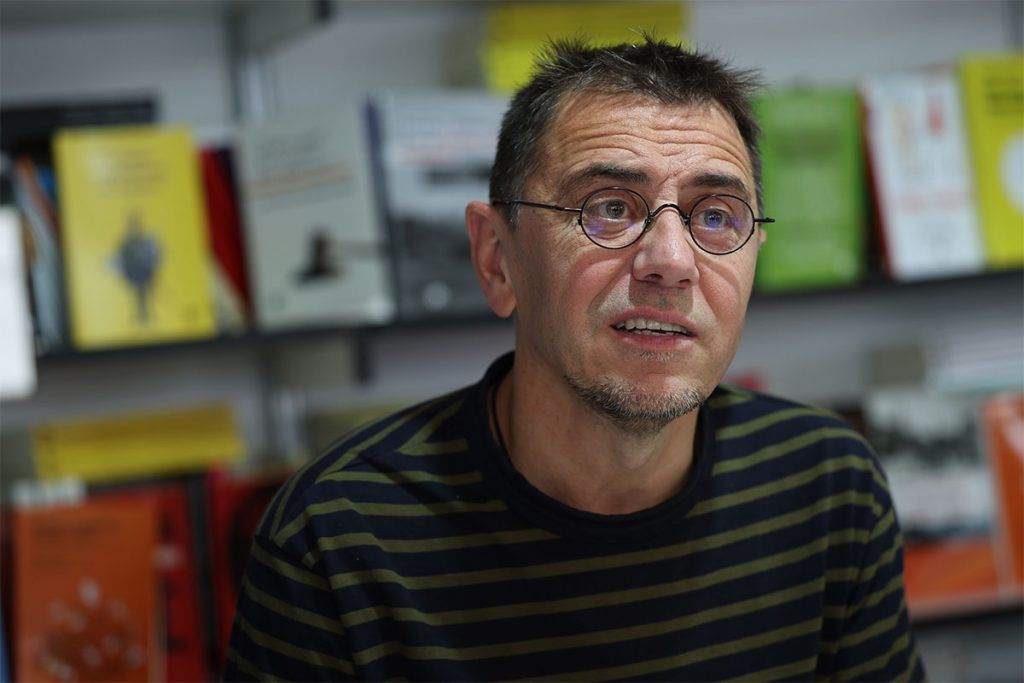
Photo: Isabel Infantes / Europa Press
Barcelona and progressive rearticulation
The governor traveled to Madrid – this Friday and Saturday he will be in Barcelona – on a scheduled flight (stopover in San Pablo) along with a fairly limited delegation. It is made up of the Minister of Government Carlos Bianco, the advisor to the Buenos Aires Ministry of Economy Cecilia Nicolini and the Minister of Communication, Jesica Rey. In the Catalan capital he will meet with the mayor of the city, Jaume Collboni; also with the president of Catalonia, Salvador Illa.
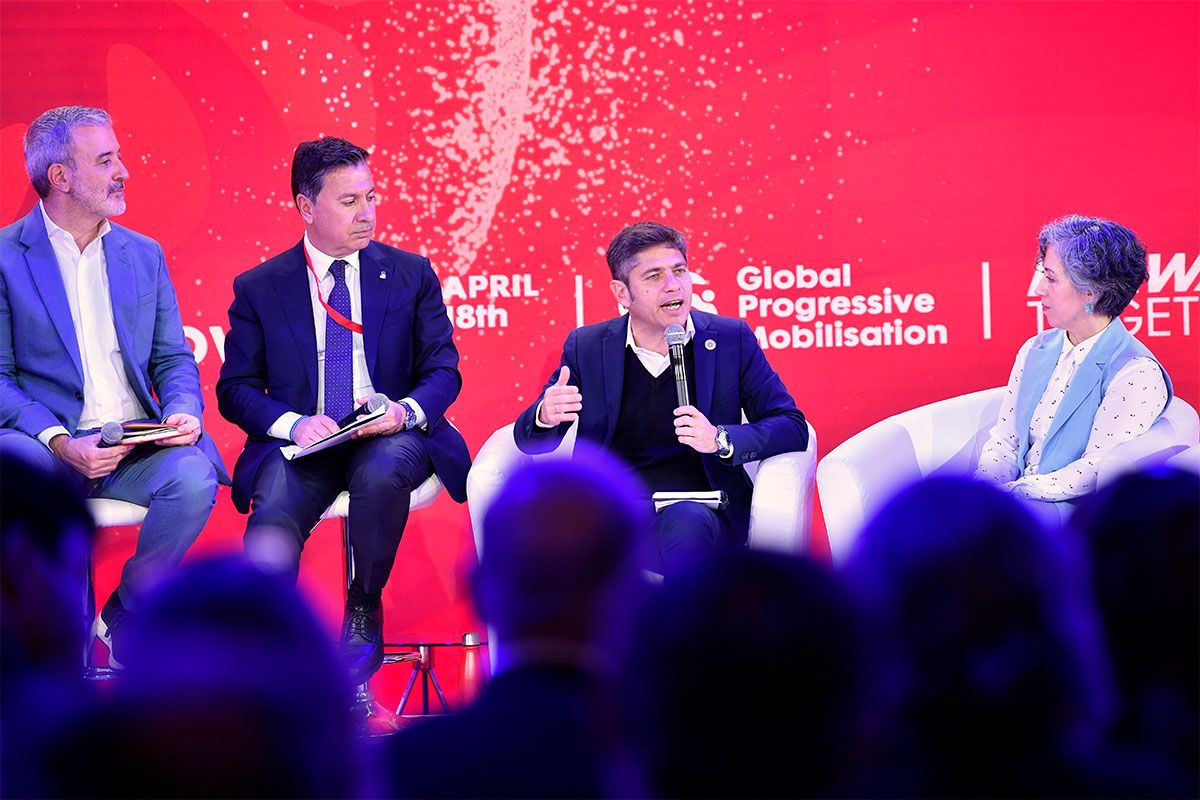
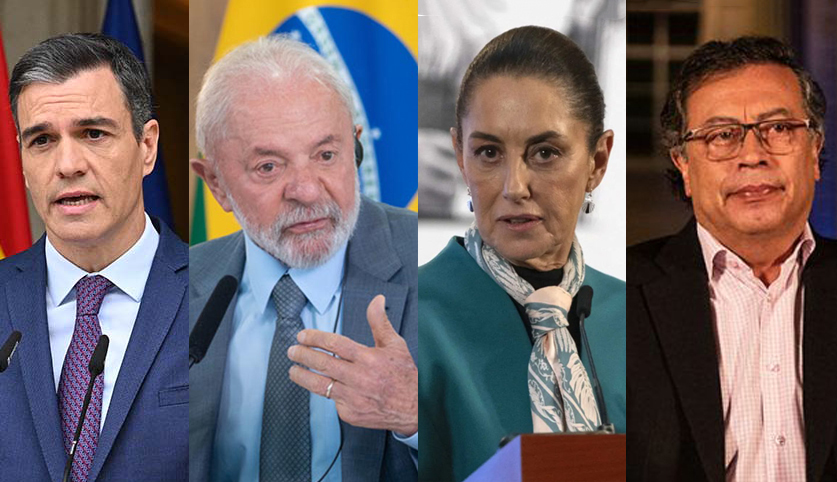
The most important thing, according to those close to him, will be his participation in the Global Progressive Mobilization (GPM) platform. This is a forum designed by the Spanish president Pedro Sánchez that will bring together about ten presidents of the ideological arc of the so-called “democratic left” (comparable in Argentina to the progressive and/or national-popular space) from different parts of the world, although with a strong presence from Latin America.
In a telephone conversation from the capital of Spain, Bianco denied that Kicillof’s visit should be understood as a tour that seeks to consolidate his projection as “presidential.” “It is a mistake to read it like that,” he said, adding that in any case the trip “has many edges.” “Our central agenda is the search for investments; then the institutional agenda and then there is the political, with participation in the forum, which has taken on a very important volume with seven or eight presidents from around the world of the progressive arc,” he remarked to this newspaper.
Among the leaders participating in the summit are confirmed the Mexican Claudia Sheinbaum, the Colombian Gustavo Petro, the Brazilian Luiz Inácio Lula da Silva and the Uruguayan Yamandú Orsi. In addition, the presence of another delegation of Argentine leaders, closely linked to Cristina Fernández de Kirchner, is planned. They are the national senator for the PBA Eduardo “Wado” De Pedro and the mayor of Merlo (also secretary of International Relations of the PJ) Gustavo Menéndez, among others.
“We are going to tell about the resounding failure of the Milei government, who is applauded at extreme right-wing meetings and who is repudiated more and more every day in Argentina,” De Pedro told the (Spanish) EFE news agency. Among other sensitive issues – such as the war in the Middle East and the growing resistance to Donald Trump – the Barcelona summit will also fly over the Latin American electoral schedule.
In South America – it is known – there are two central elections coming up for the dispute with the extreme right: on May 31 Colombia will elect Petro’s successor (if there is a runoff, on June 21) while Lula will seek his continuity in Brazil in a hyper-polarized duel with the lawyer Flávio Bolsonaro. The election will be on October 4 (it is assumed that there will be a second round, which is scheduled for the 25th of the same month).
Among the Argentine participants at the summit in Barcelona, according to what was learned Timea rather crude diagnosis that they heard from Brazilian leaders of the PT still resonates: they were told that the election was very close. And they said that the police operation that left more than one hundred dead in Rio de Janeiro at the end of October 2025, ordered by Governor Cláudio Castro (PL, Bolsonaro’s party) to act against the Red Command and other drug trafficking structures, generated an electoral movement (favorable to Bolsonaroism) in sectors of public opinion with popular roots. Voters who demand security and order.