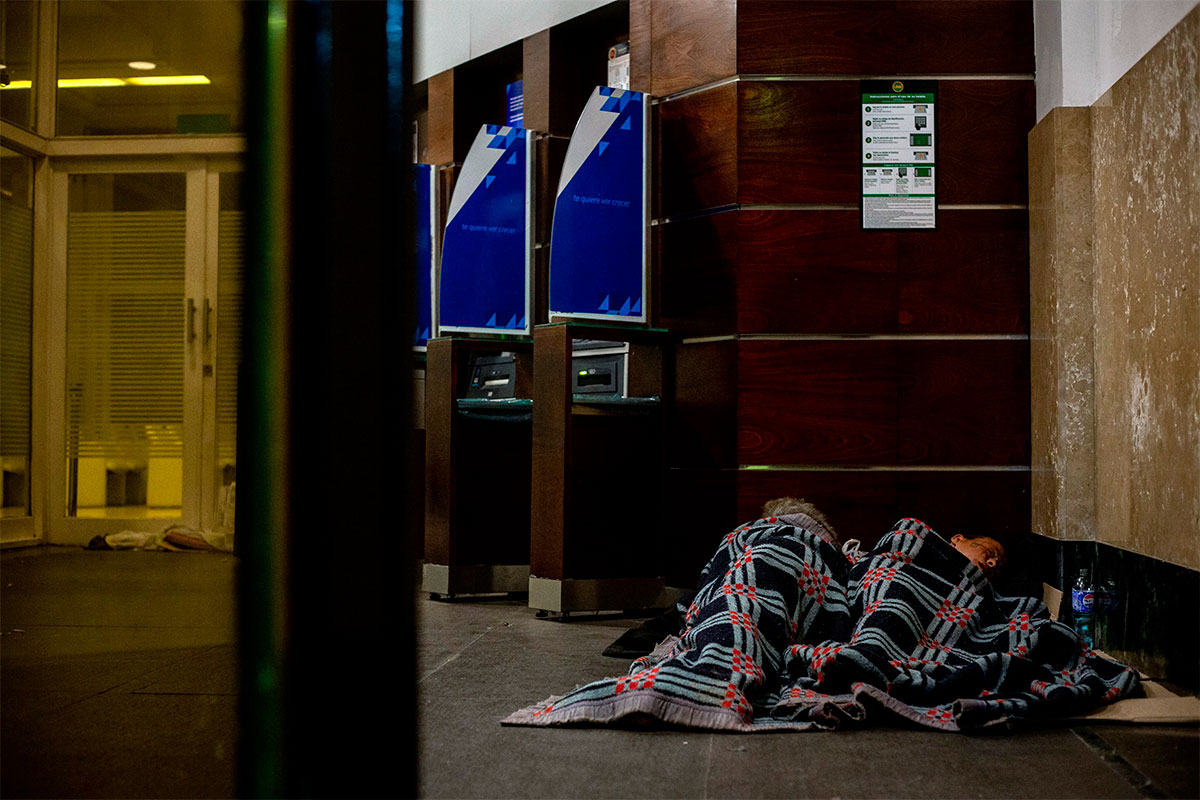
In mid-2025, the Third Popular Census of Homeless People was carried out, which surveys the homeless population only in the capital district. It gave the figure of 11,892 people. Last week, The Ministry of Human Capital announced the results of its first National Survey of Homeless Peoplecarried out in 19 of the 24 Argentine provinces. The number that emerged was 9,421 people out in the open.
The contrast is also striking with the data from the City Government itself. According to the official survey of the Ministry of Human Development and Habitat of Buenos Aires, in November 2025, 5,176 people living on the street. Only in CABA.
The information released by the portfolio led by Sandra Pettovello was soon questioned. “We are not 9,421,” expressed the Proyecto7 group People in a street situation.and denounced that “once again the National Government lies and deceives public opinion and the media with lying figures that distort the reality of the most vulnerable population that exists in Argentina.”
“The final number is impossible to believe”they say from the National Observatory of Public Policies on Homeless People created in 2023 from the National University of Tres de Febrero (Untref). “It is an identical number to that given by ReNaCalle (National Survey of Homeless People) almost three years ago, and obviously the crisis has worsened. Therefore, an equivalent number is impossible,” the Observatory points out. In December 2023, this registry recorded 9,440 homeless people in 11 cities in the country.
“That number is short even for the City of Buenos Aires”says Mónica De Russis, from the civil association Amigos en el Camino. “From the Association, which is a member of the Popular Assembly for Homeless People, we do not have accurate information about what is happening in the provinces. But we can say that day by day we see more people on the streets. That residents of the city, from different neighborhoods, contact each other saying that in places where there were none there are beginning to exist. Obviously the number is much higher. This is what the organizations that walk the streets at night feel. The number increased greatly. “All of us organizations are quite collapsed.”
De Russis recalled that almost a year ago, in May 2025, he participated in the census of people on the street that was carried out only in the Commune 1. There, only in the limits of those five Buenos Aires neighborhoods, 1,483 people were counted.
Doubts about the methodology
Capital Humano released its results last Friday. The survey was carried out through the Secretariat of Children, Adolescents and Family. According to official information, the five provinces that did not participate chose not to do so. They were the Province of Buenos Aires, Santiago del Estero, Formosa, Tierra de la Fuego and La Rioja. CABA participated “with its own system, although in line with the general methodological criteria”as indicated.
The operation “deployed national and provincial teams to conduct interviews and data registration through DataCalle, the Social System (SiSoc) module that was specially designedand that represents a technological advance by allowing the loading of data from an offline application and with geolocation,” said Capital Humano. He added that the survey was carried out “both in public spaces (streets, squares, central or peripheral areas), and in accommodation devices (shelters, inns or transitional centers), allowing us to obtain a complete and updated x-ray of the situation in each territory.”
Government sources specified that the survey was carried out between the months of November and December 2025, within the framework of the methodological guidelines established by Resolution 589/25. But Each jurisdiction organized its own operation: in some cases it lasted a few days and in others it lasted longer, within the established framework..
“Each province had its own access to the survey App and the real-time dashboard, with the objective of having for the first time a comprehensive, precise and federal map on this problem,” they described the process, with “guiding role by the national government and execution by the provinces.” The number of personnel for each operation, per case, was defined by each jurisdiction.
Project 7 warned that it is an “incomplete” record and questioned: “We cannot in any way call this count ‘National Census’ nor do we even believe that it reaches a serious survey, The methodology used is not clear, nor the times that were used, nor is it clear what the logistics were. put into operation to do so (mobile phones, personnel traveling territorially and jurisdictionally through the provinces and cities, etc.).”
From that space they also denounced that the Government fails to comply “with articles 8 of the Duties of the State and 13 of chapter IV of National Law 27,654, which specifically say how this Census should be carried out and that it must also be with the participation of social organizations that work on the problem and specialists on the subject, it does not reveal the two figures that the Law says should Reveal what people are effectively homeless and at risk of being homeless.”
Proyecto 7 assured that, according to its own estimates, “there are no less than 370,000 people living on the streets in the Argentine Republic.”
The Observatory also pointed out that in Human Capital “they worked with organizations that respond to them. This is impactful because a good part of these organizations do not have territorial work and that conditions the ability to register. In fact, the number that is being given is very similar to that of social organizations only in the City of Buenos Aires.”
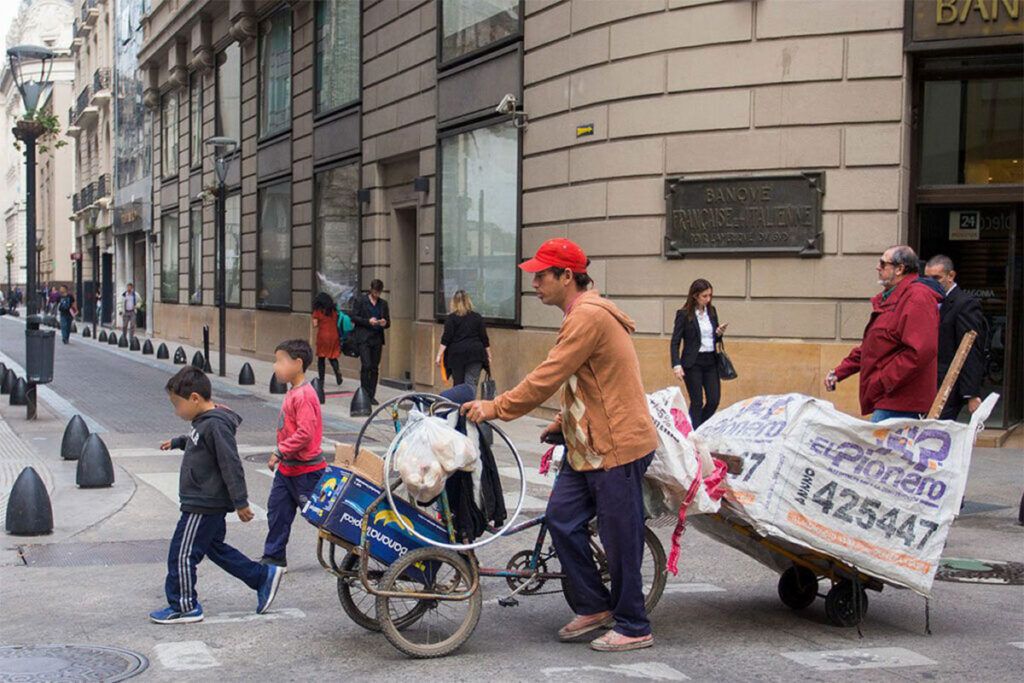
68%, with less than two years on the street
The report released by Capital Humano shows that 84% of the people surveyed agreed to answer a questionnaire on educational level, work activity and living conditions. Of these 7,894 people, 52% have completed primary school but incomplete secondary school; 53% carry out some work activity, 56% receive social transfers, 30% have pension income and 8% receive other income.
Pettovello’s official portfolio numbers reflect that 68% of the people who responded said that they have been homeless for less than two years. That is, it was not a homeless population before Javier Milei’s government.
“The data demonstrate the complexity of this problem, evidencing profiles with DNI, informal employment and partial income, but also with broken family ties, prolonged trajectories of exclusion and health problems or problematic consumption,” Capital Humano summarized, and assured that the operation carried out complies with Law No. 27,654, which establishes the creation of a federal diagnosis of people experiencing homelessness and those who are at risk of being homeless.
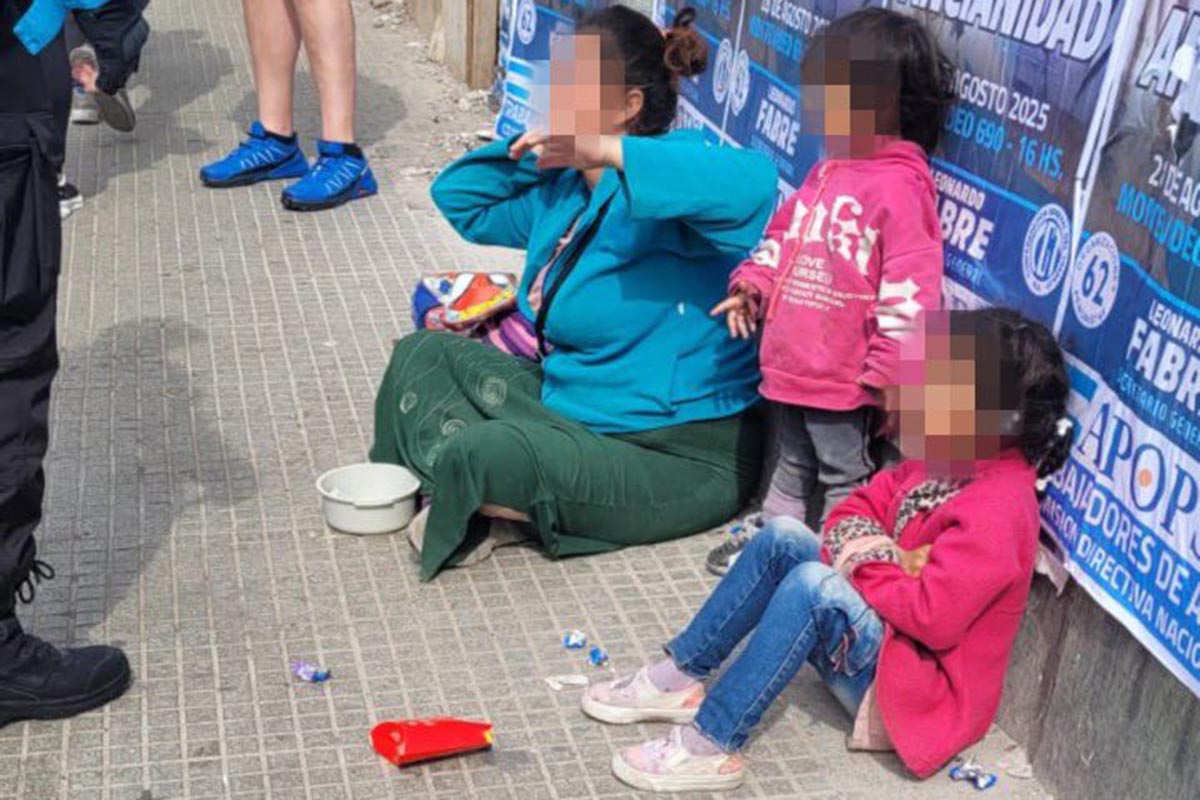
A rejected mapping
From the National Observatory of Public Policies on Homeless People, a mapping of social organizations dedicated to working with the homeless population was carried out in 2023. A registry to access those who have territorial work on the subject. That report was made for the then Ministry of Social Development of the Alberto Fernández government. After the change in management, the new Ministry of Human Capital rejected it.
“From the Observatory we had done a first census of national organizations. They didn’t take any of that. The work was already finished, it was paid. And they did not even want to upload the information generated to the new Ministry’s own website,” they lament from the Observatory. “The only contact they had with us was to supervise how we had executed the economic items, from a place of distrust. “They were never interested in capitalizing on the work done in continuity with the previous ministry.”
After the new survey, questioned for its scope and results, they point out that “It’s another missed opportunity. It is the same thing that happened when Indec generated a first annex of homeless people, doing things in a hurry and poorly, and that is why it under-registered this population (the 2022 Census data showed only 2,962 cases). So There is no accurate diagnosis to generate public policies for people on the streets.”.