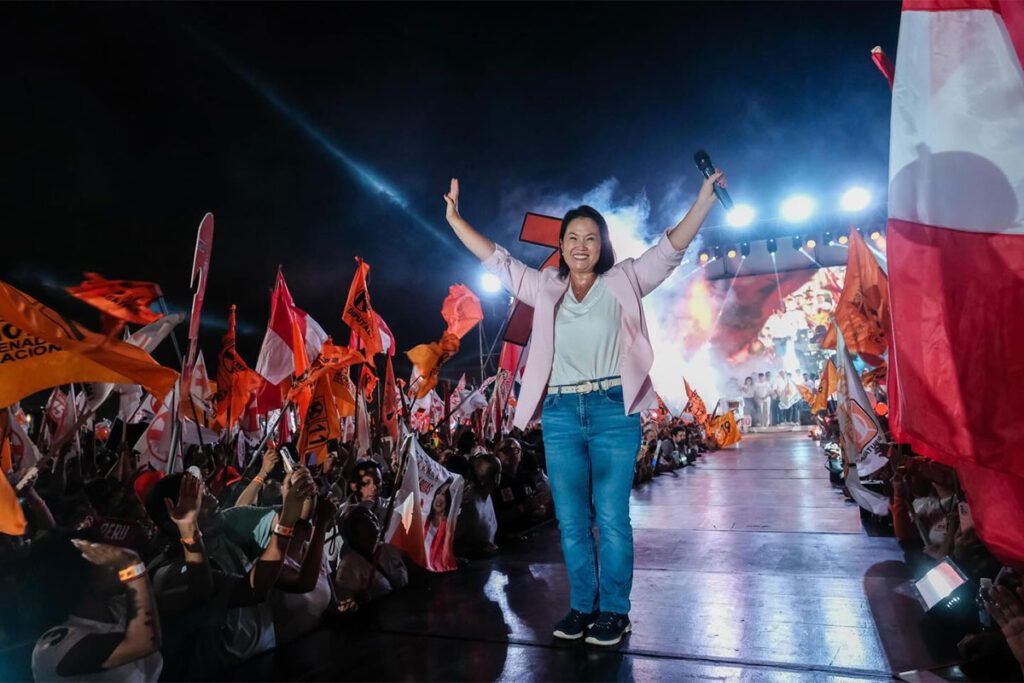
The same event can be unprecedented in its history and at the same time repeated like an endless loop. In Peru, yes. This Sunday, Peruvians are called to elect their tenth president in ten years, in a spiral of institutional instability that has not stopped since the time of Alberto Fujimori, with the particularity that 35 candidates are presenting themselves. A record amount in the electoral registry of the Andean country. Displayed on a sheet ballot approximately half a meter by half a meter, a handful of candidates barely reach 15% of voting intention in the polls and the rest do not exceed five points. History also repeated in Peru, which reflects another crisis of representativeness manifest in party fragmentation. Also that the final result must be settled in the second round on June 7. Beyond what the figures say, it is also clear that there can be no certainty about who will reach the podium of the first two places. The consultants give Keiko Fujimori (Fuerza Popular) as their favorite, and that is nothing new. The daughter of the former president convicted of crimes against humanity, maintains an electoral base that allowed her to reach the runoff in the two previous elections, but lost, even in the last elections of 2021, by a few votes against Pedro Castillo, then a “cover” who had not been registered by the statistical radars.
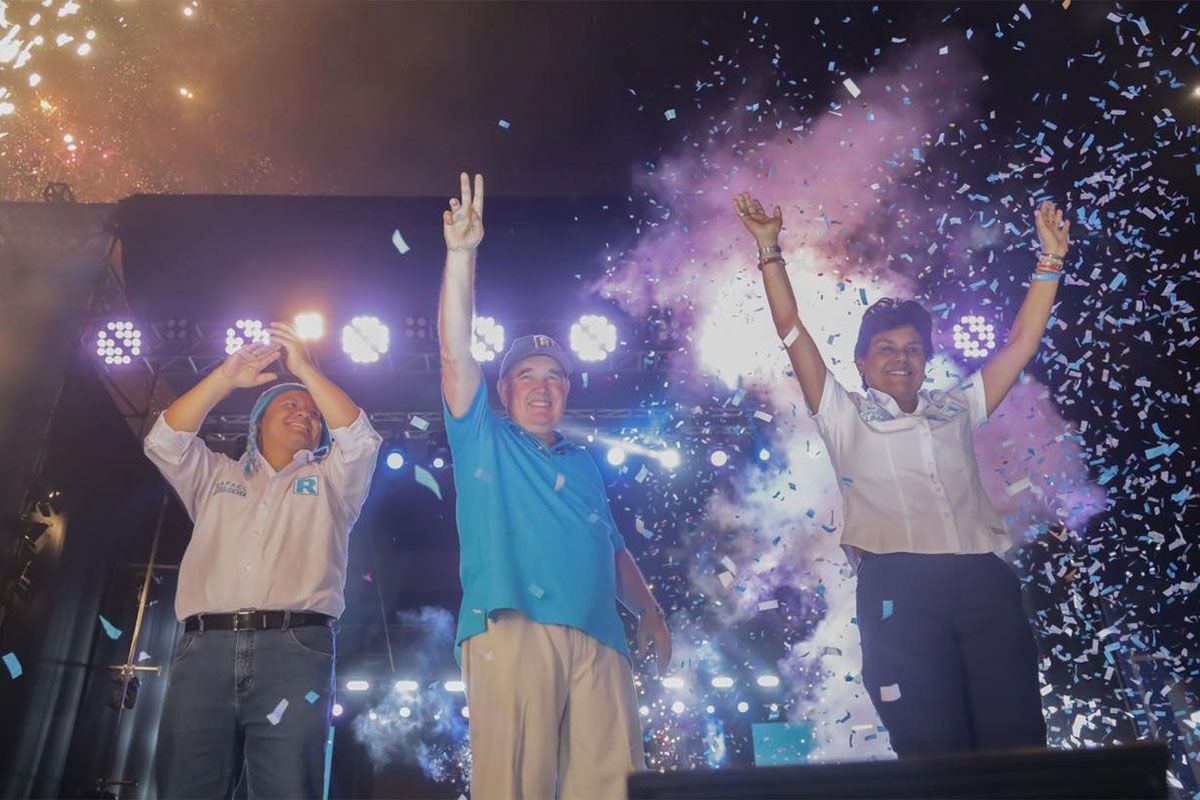
This opportunity, as usually happens, it is the ultra-conservative candidates who lead the preferences. After Fujimori with 14.5%, with 10% of the support is Carlos Álvarez (Country for All), a well-known TV comedian turned politician. His profile is that of the classic “outsider” who seeks to channel discontent through witticisms and punitive demagoguery. Álvarez reached out to the former mayor of Lima, Rafael López Aliaga (Renovación Popular), representative of the traditional right, who, like the comedian, used a heavy-handed speech.
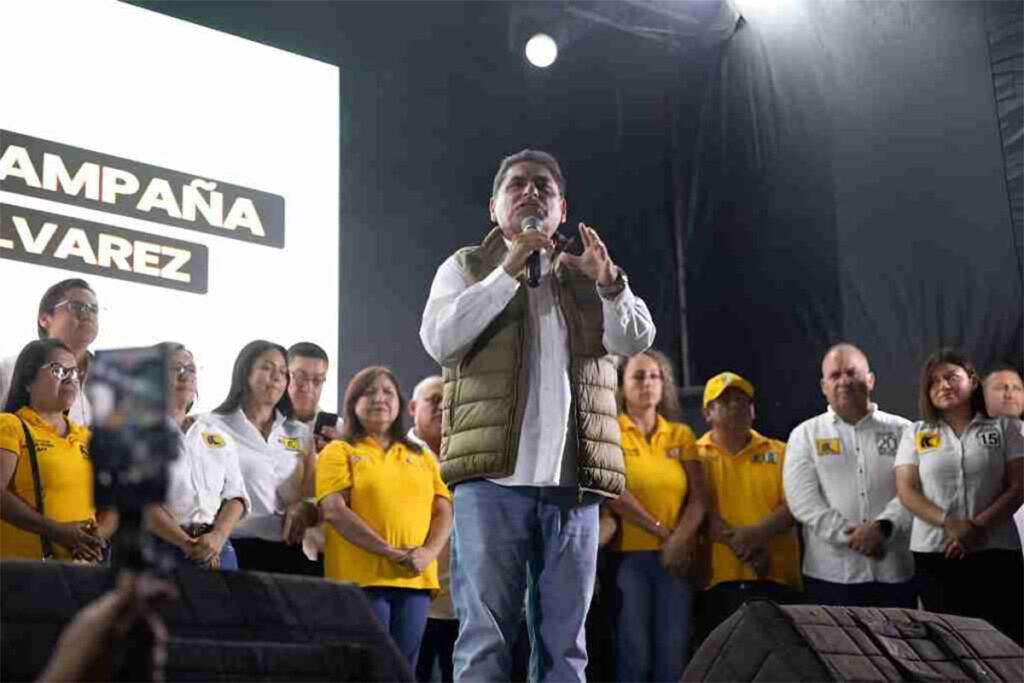
Four candidates appear behind, who despite having lower voting intentions, maintain a certain competitiveness to sneak into the second round. Among them, the first options on the left, such as Roberto Sánchez (Together for Peru), with 4.9% and an agenda that includes greater rights, strengthening services and the pardon of former President Castillo. Sánchez presents himself as the strongest option to capture the dispersed vote of those who felt represented by Castillo, since the president of Peru Libre and candidate, Vladimir Cerrón, failed to gain intentions and the interim government of José María Alcázar (he came from his party), failed to attract votes, rather the opposite: he remained at a distance. In addition, Cerrón is considered a fugitive by justice for a case initiated for alleged “collusion” during his departmental government of Junín. The Ombudsman’s Office, in any case, warned that Cerrón will be able to vote without risk of being arrested, despite the interpol order requesting it.
The former rector of the National University of Engineering and former director of the Central Bank of Peru, Alfonso López Chau ( Ahora Nación ) and former minister Jorge Nieto ( Good Government Party ) constitute other options from the center-progressive spectrum that compete in numbers with Sánchez, along with the communicator Ricardo Belmont ( Cívico Obras ) who displayed his machismo and homophobia on several occasions. The rest, many of them complete strangers, barely exceed, at best, 4% of support.
Other unprecedented aspects for these elections are the fact that the electoral roll increased the registry by 8%, and that voters will elect, in addition to 130 deputies, 60 members of the Senate, which is being replenished after 32 years of a unicameral assembly. More than 10,000 contenders registered to enter Congress, also a record number. The latest polls indicate that the Chamber of Deputies will be made up of five parties. Fujimori’s Fuerza Popular would be the main bench, with up to 39 seats. Popular Renewal (30), Together for Peru (29), Now Nation (23) and Good Government Party (9) would complete the parliamentary arc. This is also an expression of the institutional instability that Peru has been going through for years, since if Fujimori becomes president, she will have a minority Congress, and if instead a progressive candidate who arrives with few votes in the first round wins, she will have the entire right wing turned against her.