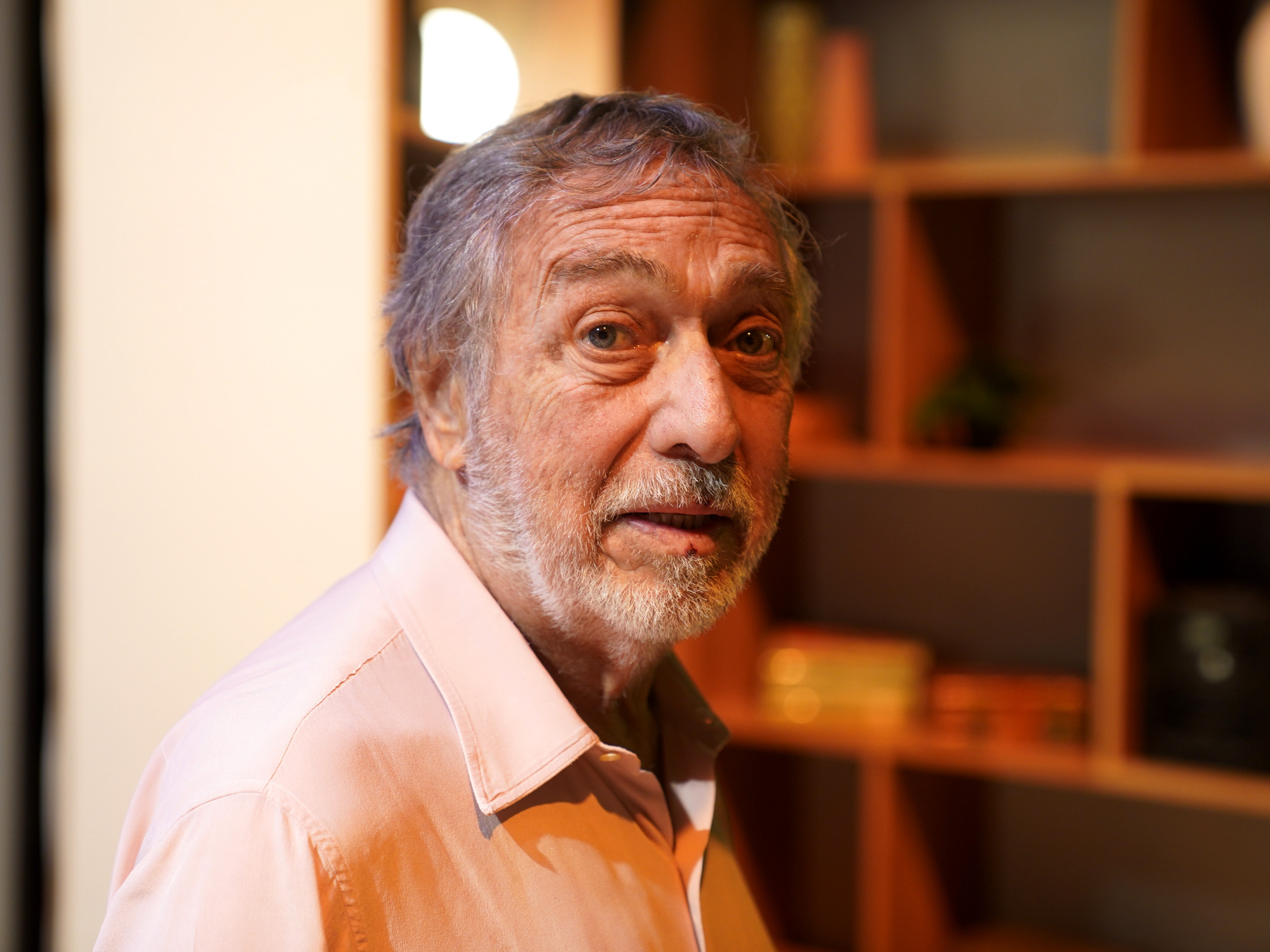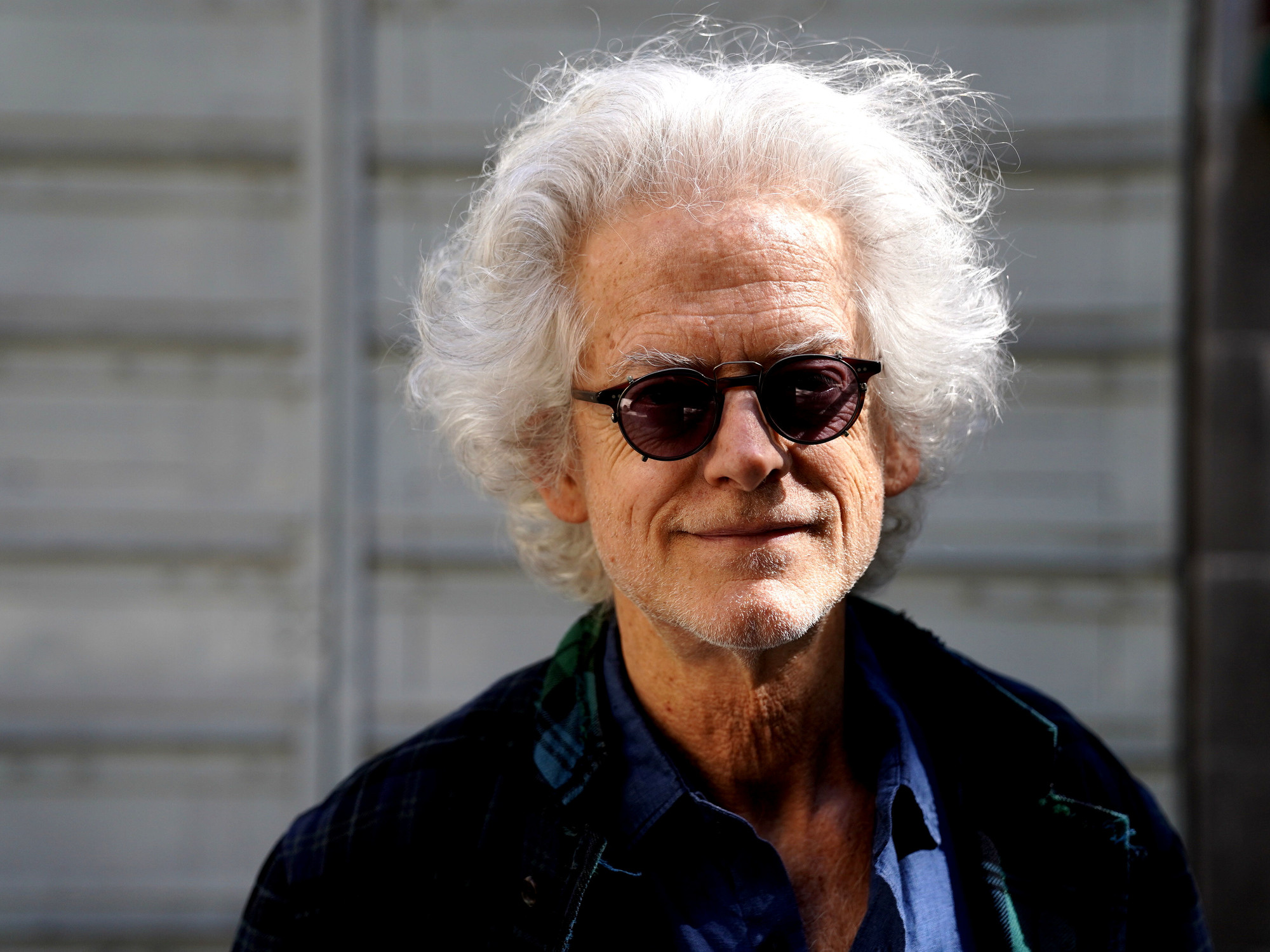
With one foot in France and the other in Argentina, Santiago Amigorena He moves easily between directing, screenwriting and literature. Based in Europe, he arrived in the country to present at the third edition of the French Film Festival the film he wrote with Cédric Klapisch, The colors of timeand his book There is only one love. “Identity is something that moves all the time. We should not try to capture it in a few words,” he says in dialogue with Clarion.
Amigorena emigrated as a child from Argentina to Uruguay, when during the Onganía dictatorship his parents could not practice psychoanalysis. With the advent of the de facto government in the Eastern Republic in 1973, they crossed the ocean and settled in France, when he was 11 years old. “Both times it was for political reasons and both times we didn’t leave running, but we left in the worst circumstances,” he says.
Amigorena is part of a culturally relevant family. He is the cousin of the journalist and writer Martin Caparrosfrom the actor Mike Amigorena and the director Miguel Sapochnik, brother of the scientist Sebastián Amigorena and nephew of the writer Viqui Rosenberg. His family tree somehow synthesizes two of the tropes that run through his work: art and family, captured in his more than 10 books, his two directed films and his almost 40 written titles.
-How do you feel the double bond with Argentina and France?
-I am very clear that I am a French writer. I write in French. In France I don’t like it when they say that I am a Franco-Argentine writer. Afterwards, there are a thousand things why I am totally Argentine. Both football and meat are things for which I have no doubt about my Argentinian identity. But obviously those things are mixed with many other feelings. Very often I feel much more Greek than everyone else because I care a lot about Greece culturally and also because I have been going to a place there for 50 years. And also, not very often, but sometimes, I feel Jewish.
 Amigorena writes in French, but “both football and meat demonstrate my Argentineness.”
 -You have a book about your grandfather.
-Yes, I and my cousin Martín (Caparrós) wrote two books that talk a lot about our grandfather Vicente Rosenberg. And very often I also think that when I am in Buenos Aires it is the place where I feel least Argentinian because obviously I see everything that is not Argentinian about me. It is not painful, it is simply a fact and it is part of that very strange mix that each person is. I really like the idea that what human beings have in common are not those identities that move and that fail to make sense to me; What we really share are things like childhood, like language. And that can give us some kind of hope in a community.
 He first emigrated to Uruguay, and then to France.
-I was just reading “A common destiny”, by Lucrecia Martel, and she thinks something similar: she sees identity as something that closes you, that cuts you off.
-I took it up in my book The inner ghettobut Martin described it very well in his book about grandparents: when the Nazis began trying to define what a Jew was, it was simply to put an end to the Jew. To determine an entity is to end it, and that is what happens today in France when someone calls someone an Arab for racism. Trying to lock a person into a single identity is a way to kill.
A life of writing
Amigorena had already written a letter at the age of 6, but she identifies her beginning in the world of letters at the age of 10, when she made a diary of a class year, while she was still residing in Uruguay. As a teenager, his friends wanted to make films, but he wanted to be a poet. He ended up writing scripts for them. “I had to make money and the choice at that time when you wanted to make writing profitable was to be a journalist or write scripts.” One of those friends was the future director Cédric Klapisch, with whom he has collaborated for more than thirty years.
 Amigorena wanted to be a poet, but he became a writer simply to start earning money.
The auteur theory, so emphasized by the most famous French film magazine, Cahiers du Cinemastill had a deep impact, so Amigorena became one of the few screenwriters commissioned by the French industry. Among the renowned directors with whom he collaborated is director Hugo Santiago (Invasion), whom he considered a great influence and with whom he made The loup of the Western coast (2002). “I wrote only one movie that he filmed, but I helped him as best I could also with the ones he didn’t write with me. And we wrote at least a couple more scripts that he didn’t manage to film,” he says.
-As for identities, you manage yourself in a script register and also in a literary one. Do you feel that sometimes these jobs overlap?
-For 10 years or so, around my 20s and 30s, I complained a lot about the fact that writing screenplays to make money prevented me from writing literature. And at 30 I decided one day that I was going to wake up in the morning and, no matter what, I was going to write literature in the morning for a couple of hours. And I have been doing it for more than 30 years, every day. Then I have other personal techniques: I write the literature by hand and the scripts on the computer. It’s also a way to very clearly separate the two things. But now I have fun going from one to the other. The fact of directing films at some point also made me see that in cinema there was also a form of involvement that could be like the one I had in literature. But I don’t miss directing, unlike writing.
 For more than 30 years, he has sat down to write every morning.
-Do you see it as something more vital in you?
-Yes, when I don’t do it I feel bad. I don’t know why. It bothers me to say that it is vital, all that emphasis that is placed on the act of writing. It’s what I normally do: I wake up, have a mate and write. My life is that. I never understood people who suffer, who don’t know what to write, who have a block. I never met him.
-You have known the director Cédric Klapisch since you were teenagers.
-We are friends of the Lyceum, since we were 15 years old. We went to the movies a lot together as a teenager and then we started writing. The first film he directed was written with another screenwriter because he thought it was unprofessional to write with me. Then we started writing together and the first film (The young man either The danger of youth1994) premiered more than 30 years ago. Writing with him is very simple, because we both write with a single computer and we never fight. When there is something that one of us doesn’t like, we put it aside and move on to something else.
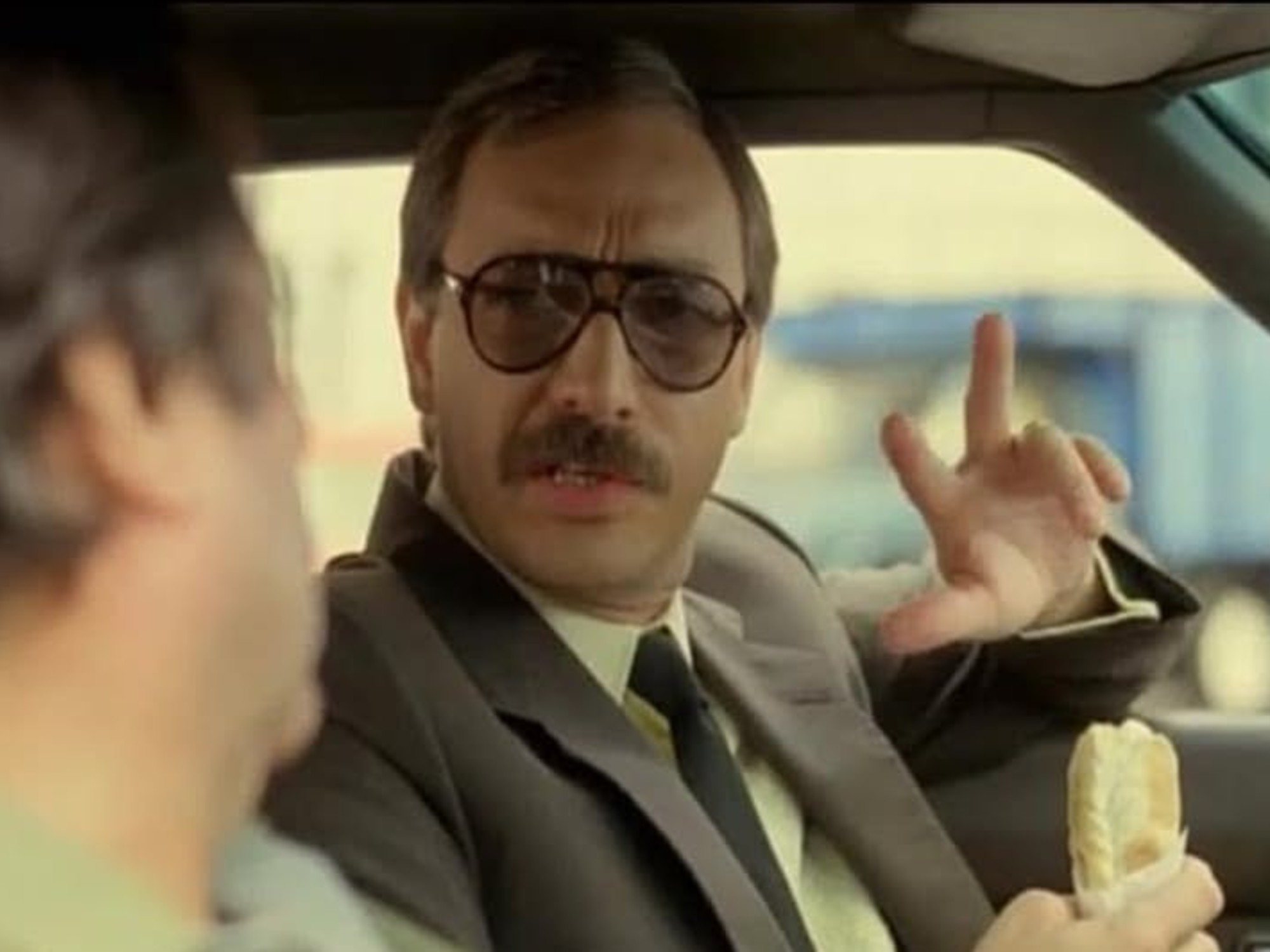
 “The Colors of Time”, the film by Cédric Klapisch, “friends since they were 15 years old.”
 Behind “The Colors of Time”
The colors of time It is the seventh collaboration between the director and the screenwriter. The film takes place in two times: the present day, in which a company seeks to destroy an abandoned house to occupy the land with a shopping center, so 30 heirs are summoned to enable entry into it, and the past in 1895, where the life of that ancestor is explored, while she goes to Paris in search of her mother.
influenced by Midnight in Paris and for Barry Lyndonthe film explores the Belle Époque from its incipient photography and the rise of impressionist painting. Names like Monet or Félix Nadar are part of a fictional plot, built from the interstices that the imagination can open up in the lives of those characters and the zeitgeist of an era.
The parallel montage dives between Adèle (Suzanne Lindon) and Seb (Abraham Wapler) through a nineteenth-century Paris and a current one, creating a warm and immersive coming-of-age, which in turn reflects on modernities, links and art.
-How did the initial idea for “The Colors of Time” come about?
-Almost always what happens with Cédric is that he doesn’t have an idea of a story, he has a desire to make a film on some topic or to film with an actor or in a certain place. From that point on, we go around and around. Here it was to circle around his initial desire, which was to talk about the beginning of photography and the moment where painting stops being realistic. And when he feels like starting a new film we go away from Paris for a while, we live together, we study painting, literature, we go to museums and suddenly something a bit unexpected appears, an abandoned house not far from the hotel where we were staying. Every time we passed by he said, “What a great place to start a movie.”
 Amigorena tells how the genesis of her scripts with Klapisch emerged.
-From what I saw in other films, they work a lot on both the family and the artistic. What is your connection with photography, with art and with the family?
-It’s funny because now it seems very simple to me to see that he has many more links with photography and I have many more links with painting. I studied art history, what interested me most was always painting, especially the Renaissance, until the 17th century. And he is a very good photographer. He collects photographs, he has a huge library. It was a bit natural for those two things to mix. Art and family clearly occupy a lot of both of us all the time, in everything we do. Maybe not all human beings: my father hates family, for example. But it is also a way of taking care of the family, hating it. It doesn’t mean that the family doesn’t exist. And when you do anything artistic, not talking about art is difficult, right?
-Art always ends up filtering within art, it’s true. It is interesting in the film how the modernity of that moment is portrayed and the contrast with this modernity.
-Yes, that’s a good way to say it. I hadn’t thought about it like that, but the idea was more… Cédric seems to have said a few times that he didn’t want the film to be nostalgic. It has to do with that, that the two eras are treated as modernities, not as a better past.
 My dear Buenos Aires. Santiago Amigorena is based in France.
-Why were you interested in making that counterpoint?
-It seems to me that it was simply respecting the initial desire to talk about that moment in art history, but it could have been a totally contemporary film as well. In the end Cédric really liked making a partly historical film. He had a lot of fun. But it seems good to me that it’s not all in the past. But above all, at a certain point it was very simple: we realized that what we liked the most and what worked very well was being in a space and having a character from another era pass by and we would go with him.
-To conclude, future projects?
-We are already finishing writing the next film that Cédric is going to film in September. It’s going to be about the filming of a series; It is a film that talks about making series. And the next book is published in October in France. It is a fiction, a novel about a friendship that takes place in the eighties.