A video of a high school student being beaten by four classmates after school went viral days ago on Chinese social networks. The case was shocking due to the level of violence of the adolescents and, furthermore, due to the negligent attitude of the school in the city of Dali, Yunnan province, which tried to hide what had happened months before, specifically on December 11, 2025. No one knows how to measure, even today, what caused the most outrage.
What does seem to be clearer is that the public commotion unleashed by the scandal was used in political terms to accelerate the entry into force of the Negative List for the Management of Basic Education 2026, a program that aims to organize the educational issue, with 20 new red lines that schools and teachers should not cross even in their dreams.
The blacklist, as the Chinese media called it, represents a harsh regulation that has been evolving over the years, taking into account that the current version of 20 prohibitions constitutes an expansion of the 16 in 2025 and the scarce 12 in 2024.
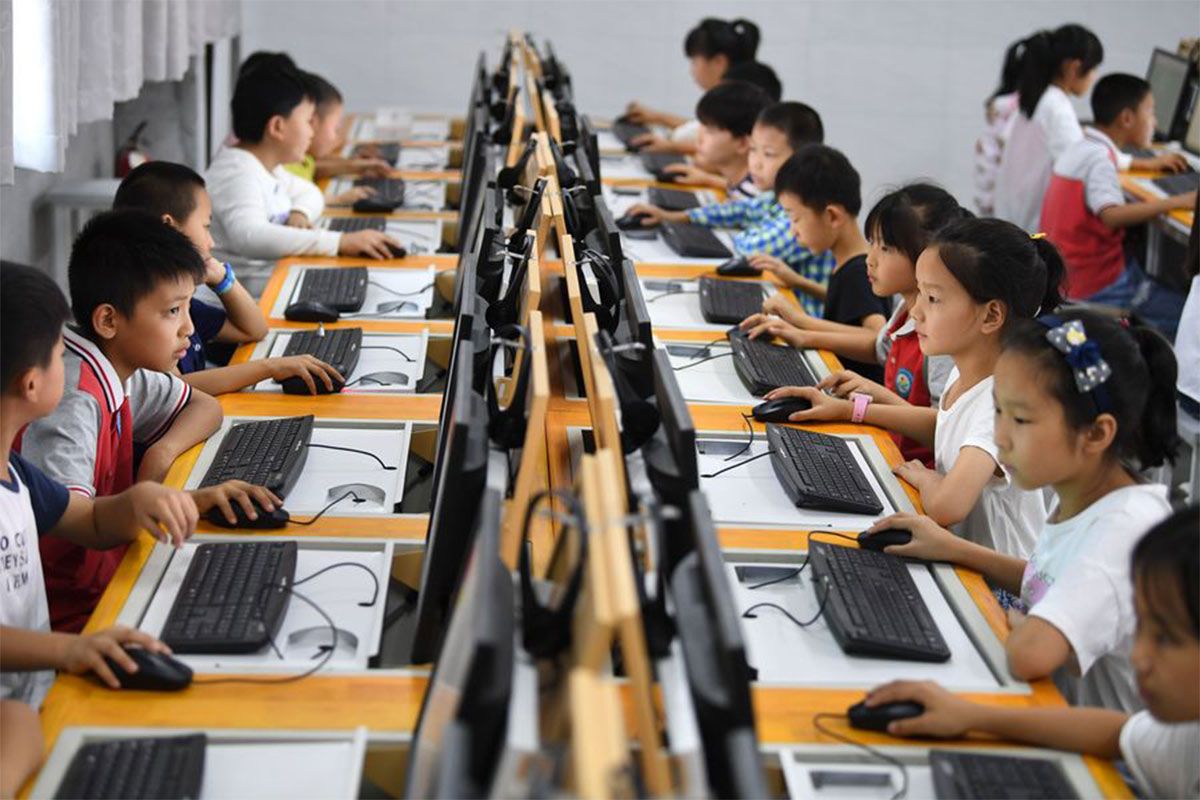
The strict regulations aim at a double objective: to relieve pressure on students and to nip in the bud certain entrenched irregularities in kindergartens, primary schools and the first years of secondary school. “The rules draw very precise limits, in a range that goes from transparency in management to the security that must be guaranteed throughout the school environment,” the Ministry of Education stated.
red lines
Prohibitions are not interpreted as a regulation. They read like an x-ray. Of what is left over, of what is missing and, above all, of what is endured.
The first concern is overload. For years, studying in China was a test of endurance. Now, at least on paper, that should change. No more content outside the official curriculum, no more classes that are stretched, nor weekends converted into extensions of the classroom.
Schoolwork is no longer punishment, an innovation in itself, and recess is once again recess: no one should be trapped in the classroom while the mandate is to rest outside. Even subjects that the obsession with exams had sent to the chest of memories, such as art or physical education, regain a place that they should never have lost. The question, of course, is how much of this will survive China’s culture of extreme performance.
Other regulations direct all their missiles to the classroom battlefield. Or, more precisely, what happens behind closed doors. The list prohibits what, strictly speaking, should never have been allowed: violence between students, physical punishment, public humiliation or verbal abuse. It also points against discrimination, although not all its forms are equally visible.
Added to this is a strong ethical warning: teachers will not be able to monetize their position, whether through live broadcasts, payment platforms or any shortcut that turns teaching into a cycle of commissions or an entrepreneur’s story. Teaching, the norm seems to say, should not be a side business.
Another difficult issue to resolve is the competition that arises with student income. Schools will not be able to take admission exams or select students based on certificates, awards or external courses. In other words, an attempt is made to dismantle, at least formally, a meritocratic machinery that makes each registration an anticipated race of pressures and frustrations.
Nor can families be pushed to buy books, devices or materials through “suggested” channels, a practice as widespread as it is discreetly lucrative. Compulsory education should not come with additional hidden costs.
As is often the case with China, there are also regulations that are more difficult for a foreign observer to assimilate. It’s not about how much students study, but what they can think or, more precisely, what they shouldn’t. Any content that questions the Communist Party of China (CCP), socialism, its leaders, or the official historical narrative is prohibited. The format does not matter: classes, exams, books, forums or digital platforms. Everything follows the same logic. For the West, the word that comes up quickly is censorship. In China, on the other hand, it is presented as a form of order. And, above all, explicit educational coherence.
Approved, but…
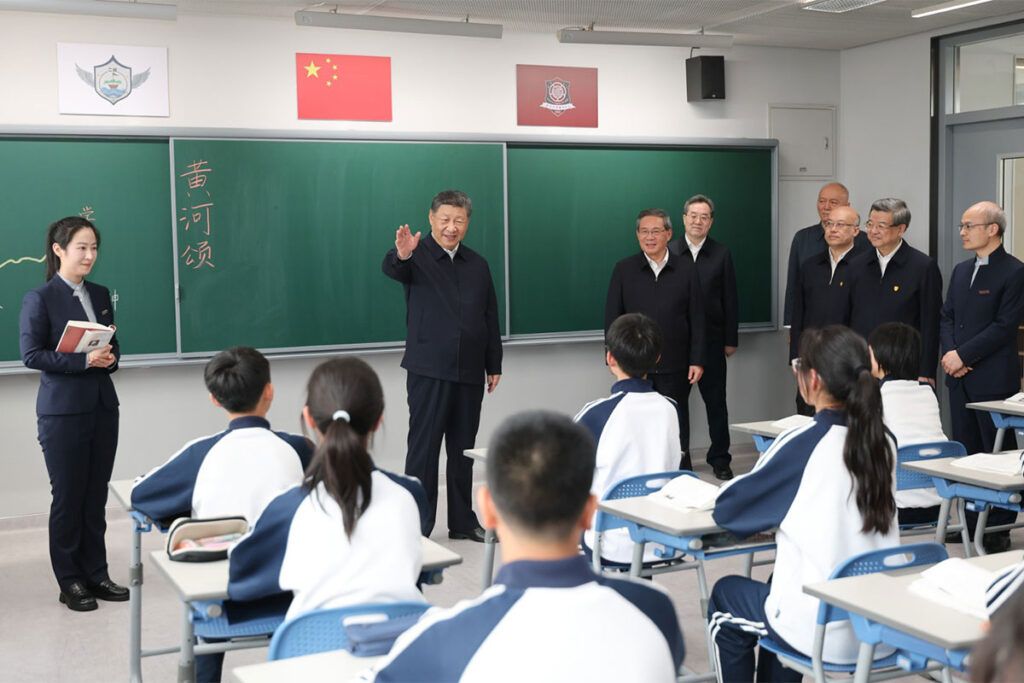
Although the 20 prohibitions constitute an implicit recognition of problems, China arrives at this new cycle of reforms with an approval in educational matters, as highlighted by the minister of the area, Huai Jinpeng, when presenting the results of the XIV Five-Year Plan (2021-2025).
“On a global level, China’s education system is the largest and highest quality, which firmly guarantees that the younger generations have equitable access to education,” declared Huai, after recalling that the country has 440 thousand schools of all levels, 280 million students and 18.7 million teachers.
Chinese basic education – the ministry reported – reached the average level of high-income countries, and 2,895 localities at the district level achieved balanced development in compulsory education. The gross enrollment rate in preschool education climbed to 92%, exceeding the 90% goal set for the period, while higher education reached 60.8%, also above the 60 percent goal.
In terms of social investment, the State expanded subsidies for needy students, granting more than 1.2 trillion yuan (about $169 billion) to 630 million beneficiaries between 2021 and 2024. Chinese universities, for their part, trained more than 55 million people in that period and received more than 75% of national awards in natural sciences and technological innovation.
Minister Huai especially highlighted the original advances achieved by higher education institutions in fields such as life sciences, quantum technology, artificial intelligence, materials science and space science. China has also built the world’s largest smart education platform, providing high-quality services to more than 170 million users in more than 200 countries and regions.
Internationally, the country established educational cooperation with 183 nations and regions, signed mutual agreements on degree certification with 61 countries, and collaborated with 42 nations to operate joint educational institutions and programs. UNESCO also established its International Institute for Education in STEM (science, technology, engineering and mathematics) in Shanghai in September 2025, an explicit recognition of Chinese leadership in these disciplines.
Beijing, then, is not starting from scratch. It reaches 2026 with impressive statistics, with an educational system that is the envy of many and with a handful of officials accustomed to displaying record numbers. But the case in Dali, that of the teenager beaten in a school who looked the other way, reminded us that cold numbers do not save anyone.
Therefore, the 20 bans are not a simple technical adjustment. The blacklist is a declaration of war. And in China, that is never a metaphor.