The government of the province of Buenos Aires faces the moment of greatest demand for food. The families’ need for help sets up a scenario that, in this regard, borders on “a situation of collapse” in several of the 135 municipalities, as described to Tiempo desde La Plata. The need increasingly includes middle-class Buenos Aires residents who are in debt and cannot make ends meet.
The government faces this record demand with a basic obstacle: for two years it has been denouncing that Javier Milei’s Executive is harming the largest and most populated province in the country with a cut in funds estimated at 22 billion pesos. This account includes intervened programs and transfers, paralyzed works, plus the incidence of the continuous drop in revenue due to the adjustment, the drop in activity and ‘industricide’, a product of national economic policy.
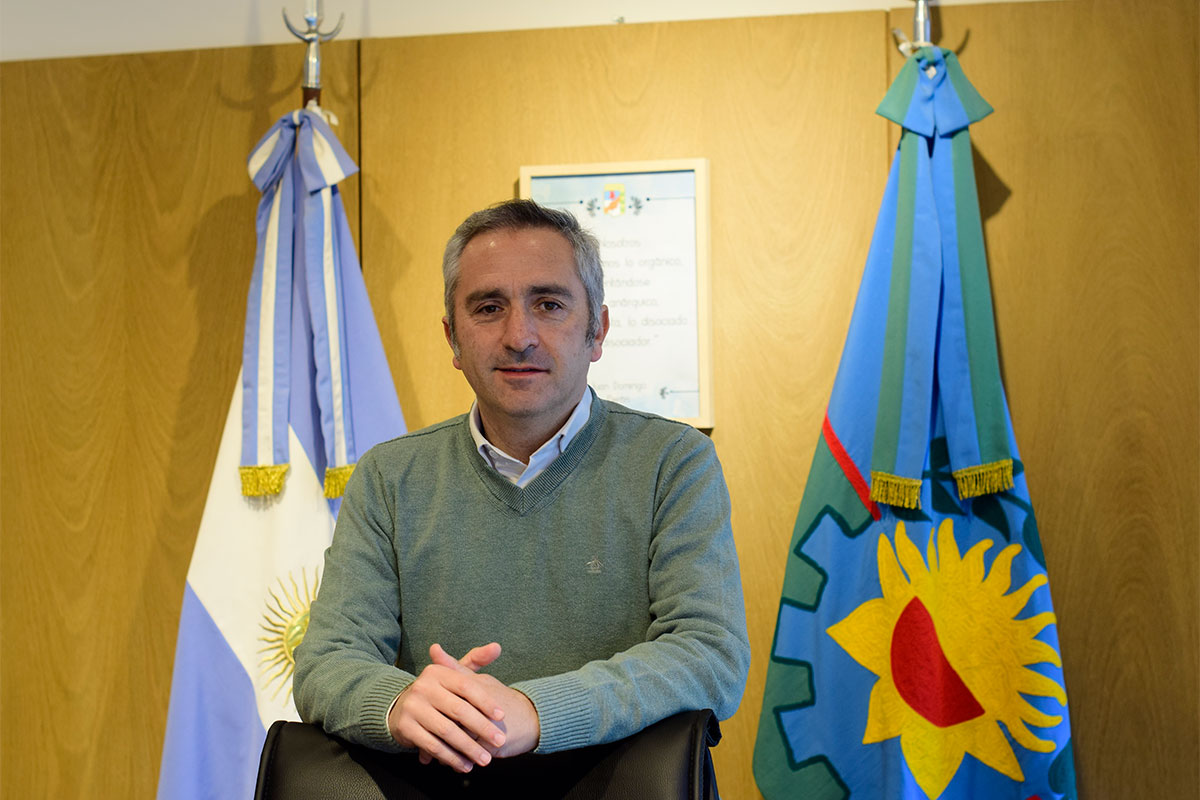
Faced with this complex panorama, within the framework of the PBA’s growing budget restrictions, the Ministry of Community Development of Buenos Aires announced a 30% increase in the amounts allocated to the School Food Service (SAE), in addition to doubling the care programs for children, adolescents and people with addictions. The update of the budgets for the SAE will impact the food assistance received by more than 11,000 publicly managed educational establishments to offer students breakfast, lunch and snacks to 2.5 million students, as reported to this newspaper by the Ministry of Community Development headed by Andrés Larroque.
This Tuesday, Larroque himself made the announcement from his account on the social network
As part of the announcements, there is also a 90-day suspension of a complementary assistance program that had been created in times of pandemic, when there was no school presence: it is the so-called MESA Bonaerense (by the initials of Extraordinary Module for Food Security). Strictly speaking, the MESA consists of a box with packaged foods (generally between nine and fifteen, produced by cooperatives located in Buenos Aires territory) that is regularly sent to publicly managed primary and secondary schools, where families pick them up. The objective of its creation was to “guarantee food continuity” for children in times of collapse in economic activity that affected parents, as a result of health restrictions to prevent Covid. But when the pandemic ended it was decided to sustain it.
The suspension of the MESA program had been anticipated by some media a few days ago. The decision was plagued by political tensions with mileism. Also, despite the sensitivity of the issue, the internal bidding of Buenos Aires Peronism broke out again: provincial senator Mario Ishii, without consulting anyone from the Buenos Aires government, presented this Monday a bill to declare a food and nutritional emergency in the provincial territory. In article 4, Ishii’s project proposes instructing the Buenos Aires Executive Branch to “immediately and progressively increase the budget allocations for school cafeterias, school food services, community cafeterias and direct assistance programs.”
Meanwhile, from the portfolio headed by Larroque they assured that in food matters there has been a procedure agreed upon by the two jurisdictions for years by which the Human Capital portfolio of the national government covers 33% of the budgetary cost of the SAE. However, since Milei took office, these specific transfers have dropped “to 10 or 15%,” they added. This proposal resulted in the Ministry of Community Development sending a letter to Sandra Pettovello herself yesterday to demand “the incorporation of national financing for the MESA program as well as the review and update of the amounts proposed for the financing of the SAE.”
In another paragraph of that letter, Larroque’s portfolio warned that the transfers from the Nation to the PBA for food issues planned for this year run the risk of being liquidated due to an inflationary variation in food that is already close to 30% annually. In that text, the PBA reminded the Nation that “the current national contribution necessary to sustain the level of execution and operational capacity” of food policies “is estimated at approximately 177 billion pesos.”
In contrast, “the current national proposal” that would have agreed to transfer Human Capital amounts to around 80 billion, they objected from La Plata.
Pettovello’s ministry responded to the Buenos Aires letter with a very brief statement: in just three paragraphs they said that the Human Capital portfolio “has no responsibility in the definancing that the PBA has decided on its own provincial programs MESA and SAE” and stated that the distribution of financing for the Buenos Aires programs should be with “20% national contribution” plus the remaining 80% “provincial obligation.”
Finally, they denied that the national government has “any debt” with the PBA.