Reducing the stewardship role of the National Ministry of Health to the mere production of standards and protocols is, and always was, a problematic simplification. Not only because these guidelines are publicly accessible and widely circulated, but because this view ignores—and underestimates—the installed capacity in the provinces, which have sufficient technical equipment and trajectories to identify, adapt and apply the best available evidence.
But, also, This reduction operates as an “as if”: as if the function of the national level could be limited to stating recommendations that anyone can search on the Internet. As if that were enough to organize a complex health system, fragmented and crossed by deep inequalities.
The health leadership It actually implies a double role: technical and political. Not political-partisan, but political in the most substantive sense of the term: guiding collective decisions in a field crossed by interests, tensions and disputes. Since the health system is not a neutral space; It is a terrain where actors with different interests and perspectives come together, with different influencing capacities and where models of society come into play.
Pecking order
In this context, the role of the Ministry of Health is central. Not to impose, but to lead: build agreements, guide wills, generate conditions of coordination and sustain a common direction based on the public interest. Without this leadership capacity, the system tends to fragment, and access to health stops depending on rights and instead depends on the possibilities of the strongest.
It is also necessary to specify what we talk about when we talk about public health. It is not just about the state subsystem, but about the health of the population as a whole, regardless of the type of coverage they have. Public health involves understand how living conditions are inscribed in bodies: inequality, violence, environmental deterioration, income, democratic quality.
From this perspective, the function of public health is not to passively wait for the consequences and then intervene. It is anticipating, alerting and acting on the processes that are causing harm. It is reading in the present the signs of what is brewing and assuming the responsibility of intervening in time.
Impact on health
In this framework, from the Argentine Public Health Association (AASAP) we express deep concern regarding a series of processes that directly impact the health of the population.
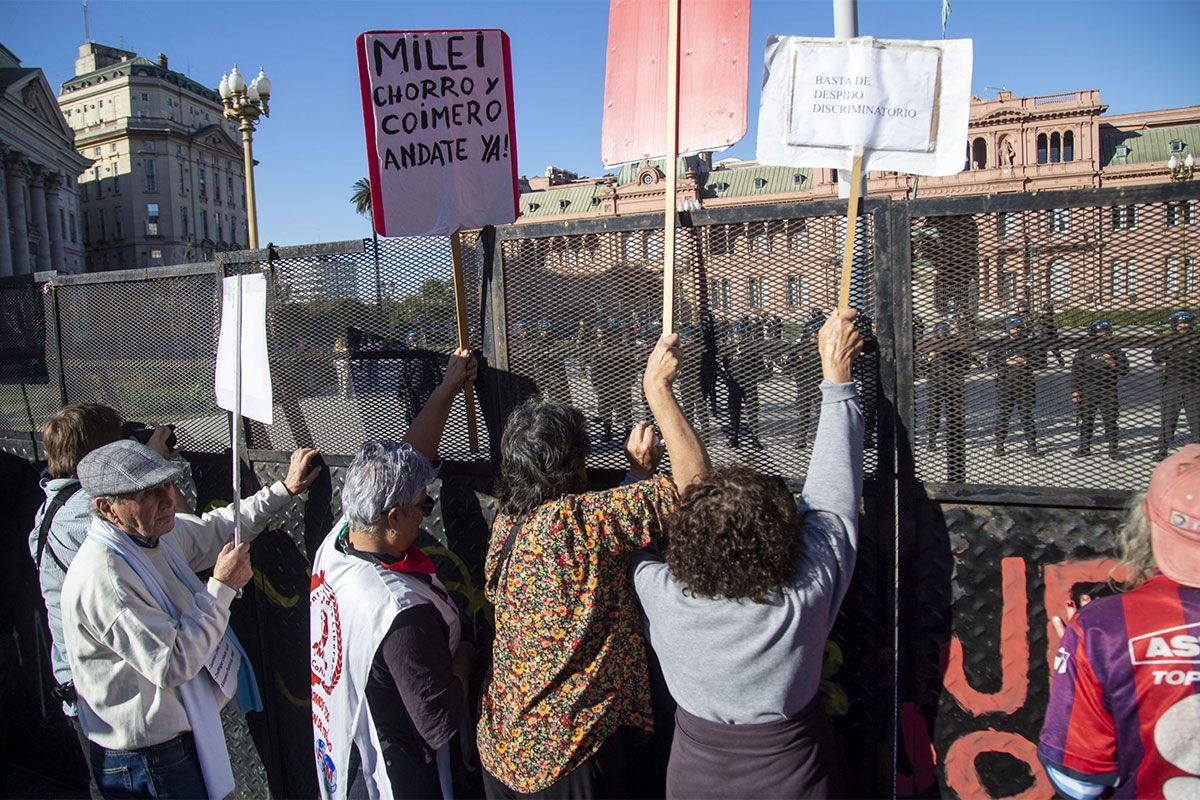
First of all, the multiple forms of violenceboth material and symbolic, which are exercised in different areas. The situation of people with disabilities and the elderly is especially serious: not only because of the conditions in which they are forced to sustain their daily lives—with assets that in many cases do not cover the basic basket—but also because of the violence to which they are subjected when they try to exercise their right to protest. In these same groups, there is concern about the deterioration of ANDIS and PAMI, key institutions to guarantee access to care, in the case of PAMI, for more than 5 million members throughout the country.
Secondly, the policies that affect natural resources —such as the attempts to advance the Glacier Law and the Forest Law— directly compromise present and future living conditions. The evidence is overwhelming: Environmental determinants explain a significant proportion of the disease burdenand its deterioration disproportionately impacts the most vulnerable populations.
Thirdly, we note with concern the impoverishment of public debate. The systematic disqualification and reduction of complex discussions to simplified exchanges—in the best style of television panels—not only deteriorate democratic quality, but also have specific effects on mental health of the population, in an already complex and tense context.
Warning signs
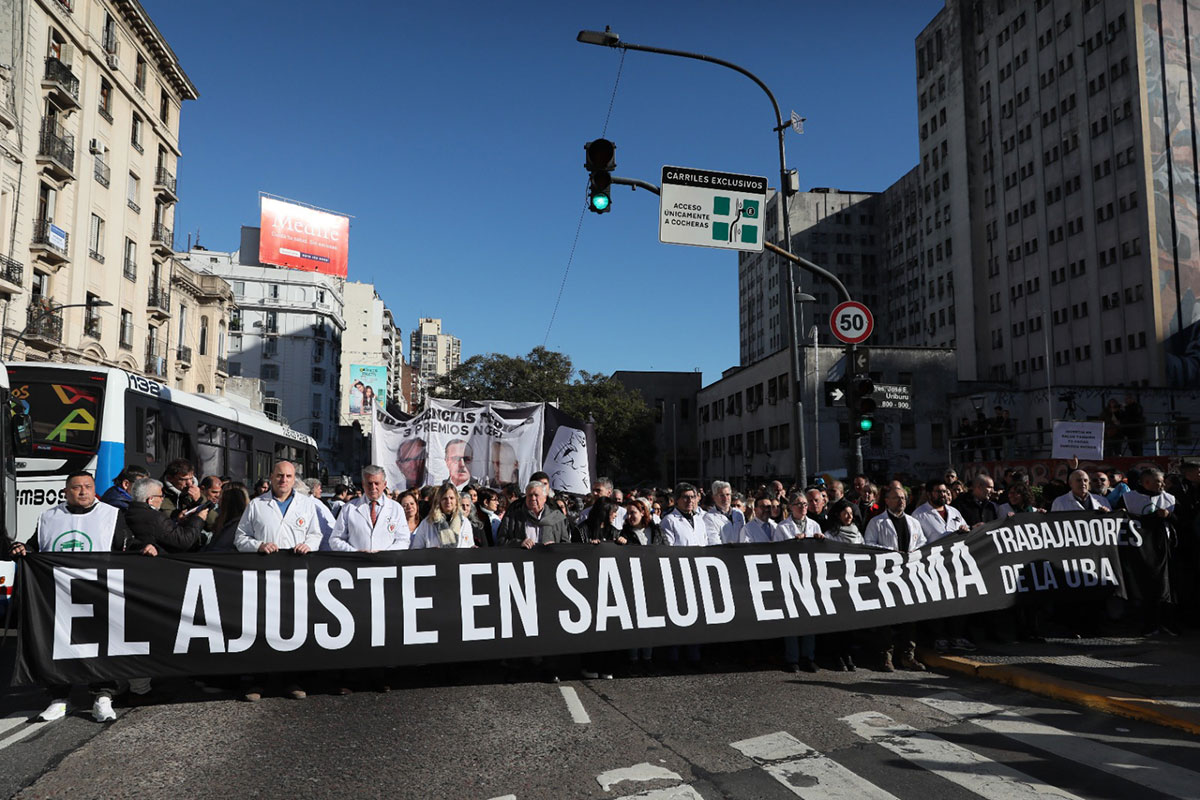
If we focus specifically on the healthcare field, defunding and the continuous threat to strategic programs constitutes an alarm signal. This impacts the working conditions of health teams, the training of professionals—as occurs with residences—, in the infrastructure and in the response capacity of the system.
As an example, programs such as Remediar—which managed to guarantee access to essential medicines for more than 15 million people through the first level of care—are fundamental pieces to sustain accessible and timely care strategies. Its weakening will have immediate consequences in terms of access.
The mental health situation is especially critical. The data available in the Province of Buenos Aires show a increase of more than 60% in hospitalizations for mental health reasons and more than 50% in outpatient consultations in recent years. This growth in demand is not an isolated fact, but rather the expression of a broader social unrest. Faced with this scenario, weakening existing policies and devices is not only inadequate, but also deepens an already serious problem.
Another worrying aspect is sexual and reproductive health. Even when there are regulatory frameworks that guarantee these rights, underexecution or slowdowns in the implementation of policies limit their effective compliance, generating specific gaps in access that, as we said, are inscribed in the bodies, in this case of women.
We could list many other examples. But the key thing is to understand that These are not isolated events, but rather a set of decisions that directly impact people’s daily lives.
Building public policies takes time, it requires the accumulation of capabilities, learning and consensus. Dismantling them is, however, much faster. The challenge—and the concern—is that much of What is weakened today is not easily rebuilt. And, in some cases, it may not be possible to recover.