The start of the week was marked by a renewed rise in tensions in Middle Eastwhich had a full impact on the markets international. The increase in cost of oil It was combined with declines in the main Western stock markets, reflecting investor concern.
Oil rises again and the conflict that puts pressure on supply
Crude oil prices recorded a significant jump: the WTI advanced 4% until the US$85.77while the North Sea Brent —reference for Argentina— climbed 3.1% and reached $93.29. Uncertainty about global supply once again boosted prices.
The trigger was the worsening of the conflict after the failure of diplomatic negotiations. In this context, the United States intercepted an Iranian ship that was trying to circumvent the naval blockade, which prompted a quick warning of retaliation from Tehran: “respond soon.” The episode once again raised alarm bells about the world’s energy supply.
This Friday, the international prices of oil registered a sharp fallwith setbacks close to 12%, after Iran confirmed the reopening of the Strait of Hormuz within the framework of an agreement with the United States and in the midst of the truces in force in the region. The decision to reopen the strait immediately reduced geopolitical tension and alleviated fears about a possible prolonged interruption of global energy supplies, which had a full impact on crude oil prices.
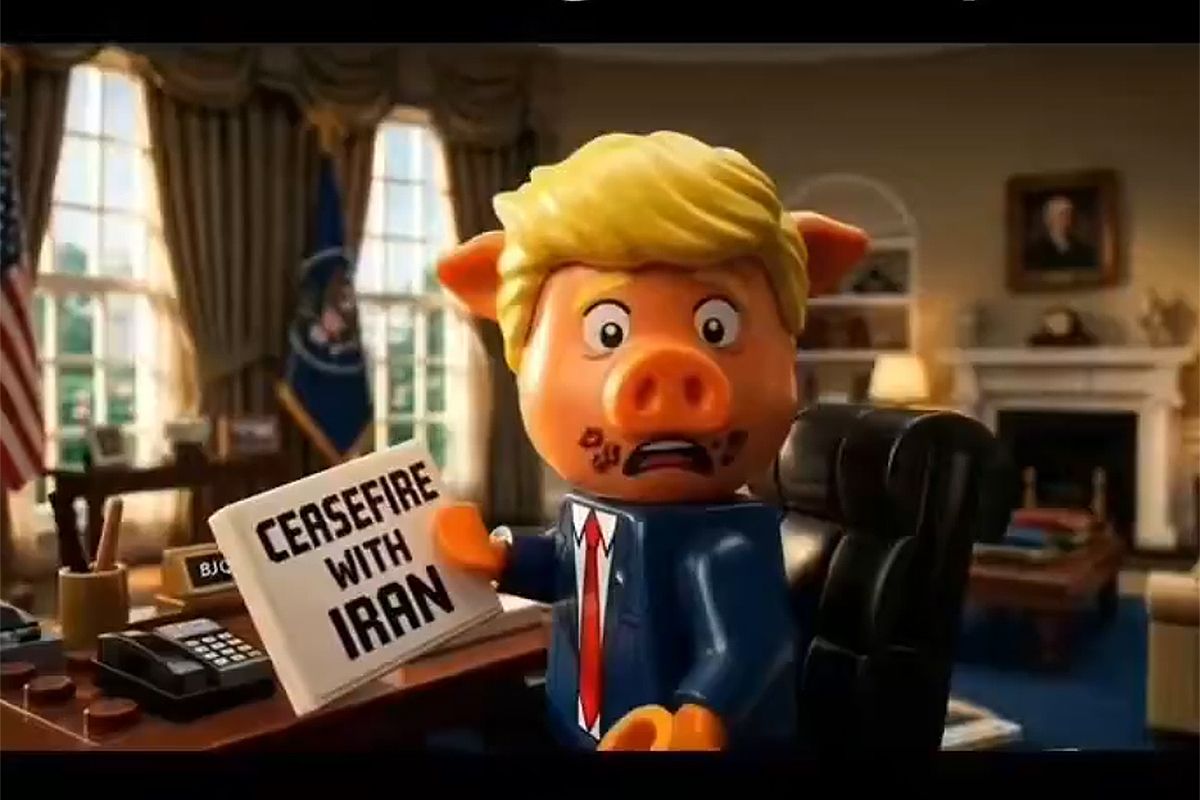
In addition, Donald Trump announced that he hopes to reach an agreement with Iran “within one or two days” to end the war, since “there are no conflict points left.” “The Iranians want to meet. They want to reach an agreement. I think there will probably be a meeting this weekend. “I think we will reach an agreement within a day or two.”he expressed in a brief phone call with the American digital media Axios.
In this context, the barrel of Brent -reference in Argentina- fell 10% to US$90after having exceeded US$97 in the previous hours and US$110 during the first weeks of the conflict in the Middle East. It is one of the sharpest daily declines since the start of the war.
For its part, the crude West Texas Intermediate (WTI)reference in the United States, fell 10% to around US$84 per barrel. Despite the drop, the price still remains above pre-conflict levels, when it was around US$70, reflecting that the market retains a certain degree of caution.
Hormuz, in the center of the scene
The Strait of Hormuz, a vital point for oil and gas transit, remains practically blocked since the start of hostilities between Israel, the United States and Iran. The disruption in this strategic corridor deepens volatility.
The analyst Chris Westonof Pepperstone, said in a report released on Monday that the seizure of the Iranian ship and the warning of retaliation by Tehran will have effects on the markets. “With flows through Hormuz paralyzed, operators reassess the probabilities and schedule for logistical normalizationadjusting their positions following the more constructive assumptions made last week,” he stated.
Wall Street, with mixed results
In New York, theThe indices showed disparate movements. He S&P 500 gave in 0.19% and the Nasdaq stepped back 0.40%while the Dow Jones achieved a slight increase in 0.02%.
Among the actions, the increases of:
- Celanese (+3.65%)
- Stanley Black & Decker (+3.3%)
- State Street (+2.4%)
On the other hand, the most pronounced declines were for:
- Norwegian Cruise Line (-5.6%)
- Fair Isaac (-2.2%)
- Enphase (-3.1%)
Europe in negative territory, Asia resists
European markets operated with generalized falls: he Euro Stoxx stepped back 1.07%he DAX German fell 0.97% and the CAC french fell 0.90%. In London, the FTSE also moved negatively with a drop of 0.46%.
In contrast, Asia showed a more favorable performance. He Hang Seng of Hong Kong rose 0.77%Shanghai advanced 0.76%he Kospi from South Korea won 0.44% and the Nikkei Japanese closed with a rise of 0.60%.
Markets under pressure
The combination of geopolitical conflict and risk over energy supply once again placed the markets in a scenario of high uncertainty, with investors attentive to the evolution of events.