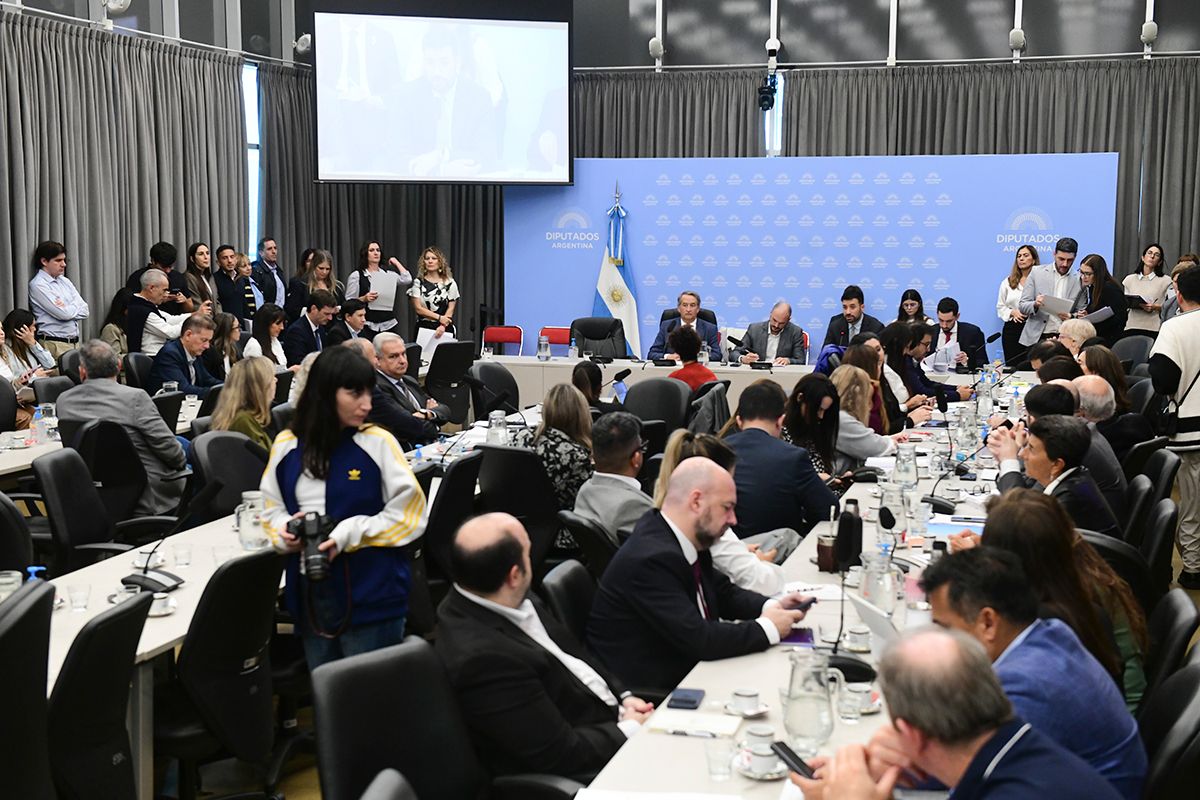
The judicial conflict over pension funds between the province of Buenos Aires and the Nation added a new chapter this Tuesday. The governor Axel Kicillof participated in the hearing called by the Supreme Court of the Nation within the framework of the claim for the debt that the National Social Security Administration (ANSES) maintains with the Buenos Aires district and which amounts to 2.3 billion pesos. During the meeting, the national government committed to bringing a concrete payment proposal on June 10.
The president was present at the hearing alongside the minister of Economy, Pablo Lopez; and to the general advisor of the Government, Santiago Perez Teruelwhile representatives of ANSES participated for the Nation. This is the second meeting convened by the highest court to resolve the claim presented by the Province in April 2024, when the government of Javier Milei cut off the transfers that the pension organization made to the pension funds of Buenos Aires, Chaco, Chubut, Córdoba, Entre Ríos, Formosa, La Pampa, Misiones, Neuquén, Santa Cruz, Santa Fe, Tierra del Fuego and Corrientes.
According to the calculations made in Economy, the undrawn retirement funds from 2024 to date amount to 2.3 trillion pesos out of a total debt of 15 trillion that the libertarian administration maintains with the Buenos Aires State for paralyzed works, discontinued programs, the Transportation Fund and the Fiscal Strengthening Fund, among other obligations. Each debt generated a presentation by Kicillof before the Court. In total there are already eight lawsuits, but this is the first that the judges activate.
At the end of the meeting, Kicillof explained the focus of the discussion and stressed that it involves resources destined for provincial retirement funds. “What we are discussing today is the debt specifically from the untransferred funds, the money of the retirees that the Nation has to transfer to the provinces, which are the thirteen provinces that have their own funds, as the province of Buenos Aires has,” he noted and recalled that ten provinces have already reached economic agreements with the national administration.
The central fact of the hearing was the commitment assumed by representatives of the national government. “There was a commitment for another hearing on June 10, where there must be a concrete proposal from the national government of what the amounts to be transferred would be,” the governor said. And he stressed that the Economy and ANSES officials “committed to bringing us a concrete proposal: they say they are reviewing the numbers, doing an audit, but we have already spent two and a half years where this was not done, it did not happen, and it has already happened in other provinces.”
The president also recalled that there are seven other demands for obligations that Milei is not fulfilling. “The Province has a total of eight claims presented to the Supreme Court of Justice for different debts that total more than $15 billion: it is an immense figure, which represents a third of the budget sanctioned for this year,” he graphed and added: “All this adds up to a very complex context, the product of a national Government that caused enormous pressure on all provinces and municipalities: in addition to cutting off funds since it took office, with its economic policies it generated a crisis that exponentially increased the needs of the people.”

Claim for funds for school meals and social assistance
In parallel, the governor focused on another front of tension with the national administration, linked to the financing of the School Food Service (SAE) amid the growing demand for food due to the crisis. “Today we are also in the middle of another claim that has to do with the school food service. The national government transferred more than 30% historically, but the government changed and now they are transferring a sum that does not reach 15%,” he warned and added that the Province has already formalized the claim through the Minister of Community Development, Andres Larroque.
He also detailed the fiscal effort made by the Buenos Aires administration to support social assistance. “In the case of school cafeterias there is a debt of 220 billion pesos but, despite this, with our own resources we face the increases,” he stated in reference to the 30% increase that the Buenos Aires government announced this Tuesday for cafeterias and other social benefits in the province of Buenos Aires.