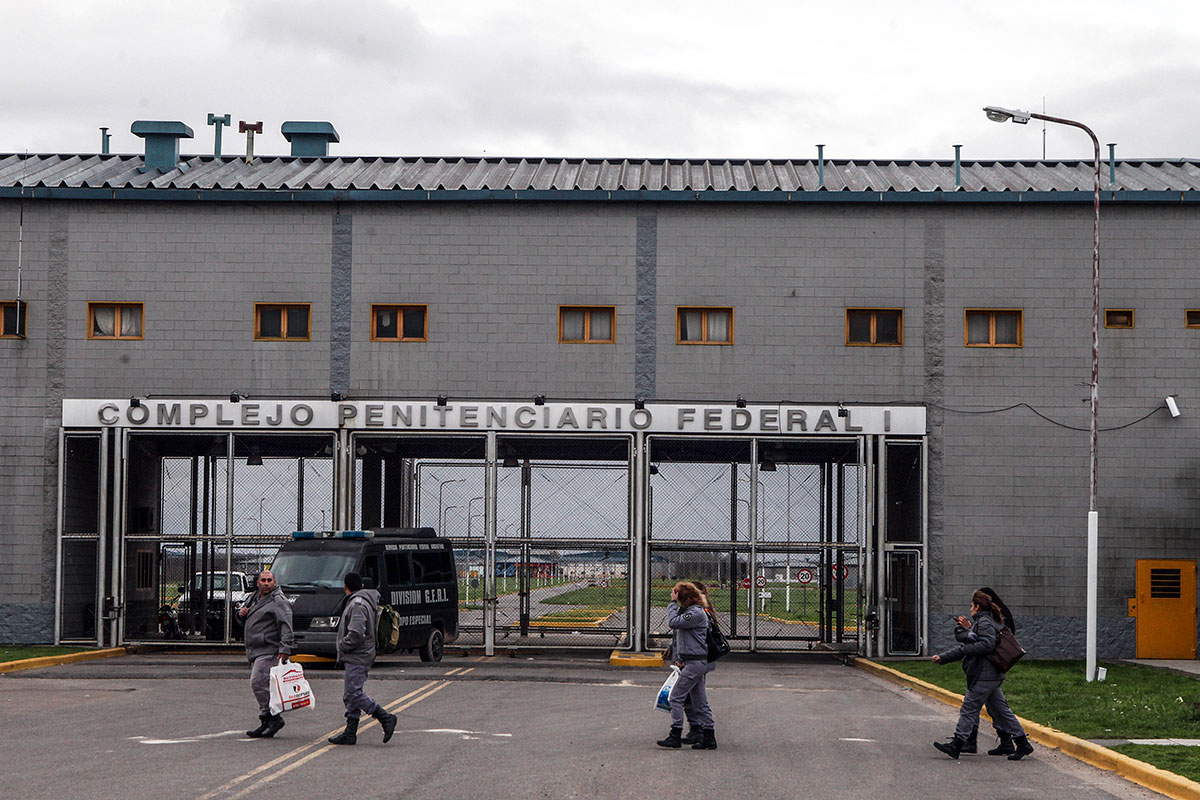
The Institutional Violence Prosecutor’s Office (PROCUVIN) reported – during the last few days – that in the survey they did of the first quarter of 2026 there was a minimum increase of forty peoplewhich means an increase of 0.3% in the population. This means that currently there are a total of 672 people housed above the accommodation capacity available in the Federal Penitentiary Service (SPF).
Furthermore, he revealed that the total population is 12,206 people detained in prisons and that the total overpopulation was 5.8% until the end of March in these establishments. The work carried out is on the penal units and SPF complexes, not the entire population of the National and Federal Justice.
The report was published on the news portal Prosecutors and details that six out of every ten people detained have a final conviction, but that a 3.9% the number of those processed, who still have the principle of innocence before the Law Penaltyl. I mean, Justice still does not know if they are guilty or innocent; There are people imprisoned for different crimes.
It should be noted that PROCUVIN is in charge of the attorney general Alberto Gentiliwho reported -during the last few days- that the population housed in the SPF facilities: «It reached 12,206 people at the end of March 2026». It is the result of a quarterly statistical report entitled “Population deprived of liberty in federal prisons.”
Evolution of the prison population, according to PROCUVIN
This is a work carried out by the Interdisciplinary Analysis and Research Area of the prosecution. The report takes the period from January to March 2026the objective is to produce information on how the incarcerated population in federal prisons is made up and how it evolves.
The analysis details that during the first quarter of the year the federal prison population remained stable and that The increase was forty people, which represents a variation of only 0.3%. But it also points out that at the end of March there was an overpopulation of 5.8%, equivalent to 672 people detained above the accommodation capacity of this area of confinement.
In addition, the report also indicates that six out of every ten people deprived of liberty have a final conviction. In percentage terms, 61.8% – which is 7,546 people – are convicted, while 38.2% – another 4,659 people – remain on trial.
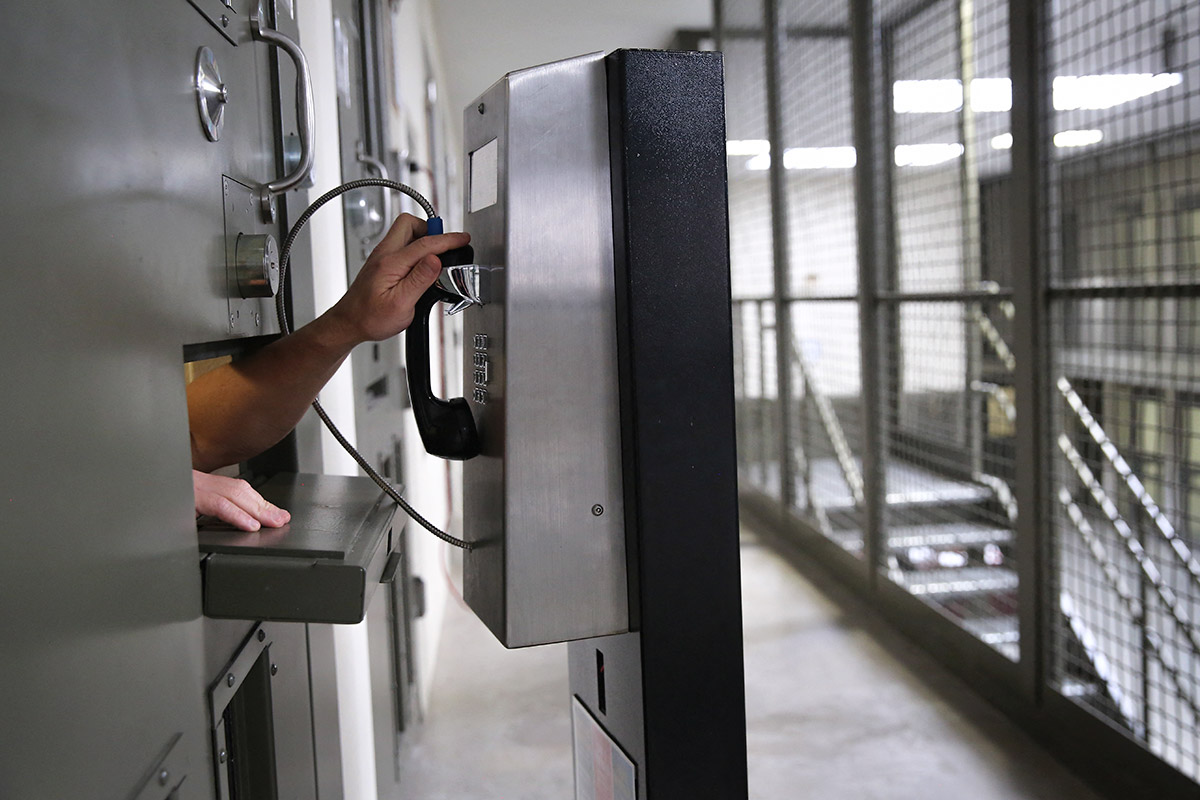
Photo: John Moore / Getty Images North America / Getty Images / Via AFP
Increase verification
However, during the quarter there was an increase inl 3.9% in the number of people detained without conviction, this translates into 174 more people in preventive detention, while the convicted population decreased by 1.7%noted the PROCUVIN report.
The study is carried out by PROCUVIN only on penal units and complexes dependent on the Federal Penitentiary Service. Whereby, It is not the entire incarcerated population that the National and Federal Justice has, because it does not have data on those who are in penal institutions for minors.
Nor from those who are in federal devices, such as the Argentine Naval Prefecture (PNA), the Argentine Federal Police (PFA) and the Argentine National Gendarmerie (GNA), among others. The analysis is based on only a portion of the total captives. The 31-page report also details many other aspects of prison life.
Criminal Execution in La Pampa
Over the past few days there has been a key ruling on Criminal Execution and Human Rights in La Pampa. There the Superior Court of Justice declared unconstitutional the prohibition of access to conditional freedom for people sentenced to life imprisonment, which is stipulated in article 14 of the Penal Code.
The Court argued that any custodial sentence must respect the principle of resocialization of people deprived of liberty. He noted that even in cases of life imprisonment There must be a real possibility of social reintegration. And he stressed that the convicted person has the right to know the temporary requirements to access the liberatory and semi-liberatory benefits that correspond to you.
This is a ruling issued from a perspective of Human Rights. The decision is based on the federal constitutional block and the standards of the Supreme Court of Justice of the Nation. In which the magistrates reaffirmed: «Human dignity must not be lost through convictions. Because punishments cannot be cruel, inhuman or degrading. Furthermore, it is not constitutional to absolutely exclude a person from the horizon of freedom.«.
The recent resolution explains that a sentence without the possibility of review turns life imprisonment into a sanction incompatible with the Human Rights. He maintains that it must be a solid and coherent statement with the National Constitution. Also with the International Treaties and Pacts that reinforce the central axis of the penal system in a Rule of Law. In which the limits that the Punitive Power must have on the person and their human dignity.