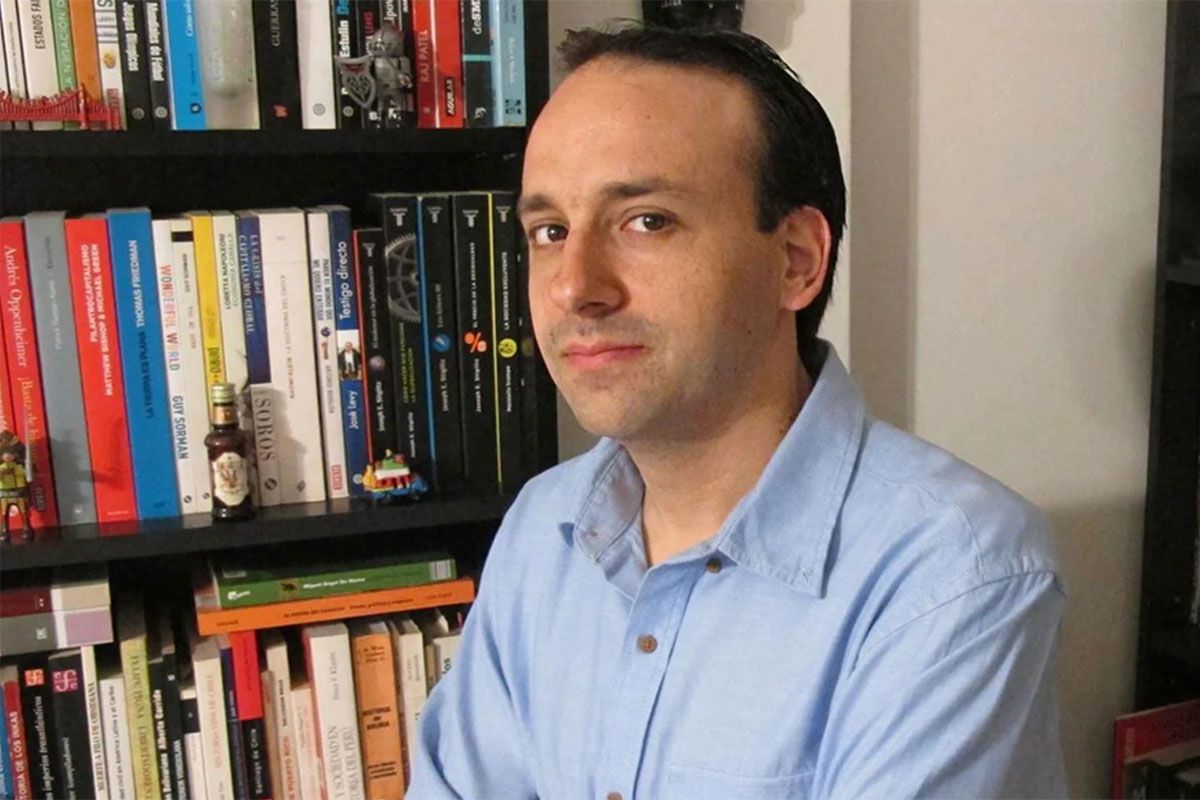
Historically, since the Berlin conference in 1884, the African continent became a kind of colonial spoils for the European powers. Since its formal independence in the ’60s, the new relationship of economic, financial and commercial dependence was conceptualized as neocolonialism. In the current war scenario in the Middle East, it produced effects not only in the oil and gas emirates of the Gulf, but also had repercussions on the global economy. The African continent will not be immune to this. An invisible reality, with serious consequences in famine, destruction and massive displacement of populations, a topic on which the Africanist historian Omer Freixa is a specialist.
-There are different African regions that live in a worrying situation. Many countries, after decades of neocolonialism, live in different forms of democracy, contradicting the Western idea that the common denominator of the continent is a kind of homogeneous country crossed by tribal wars, dictatorships, permanent conflicts and corruption. But it does not mean that there are no serious conflicts in different regions, fueled by the economic interests of foreign powers.
-What are the most significant war conflicts?
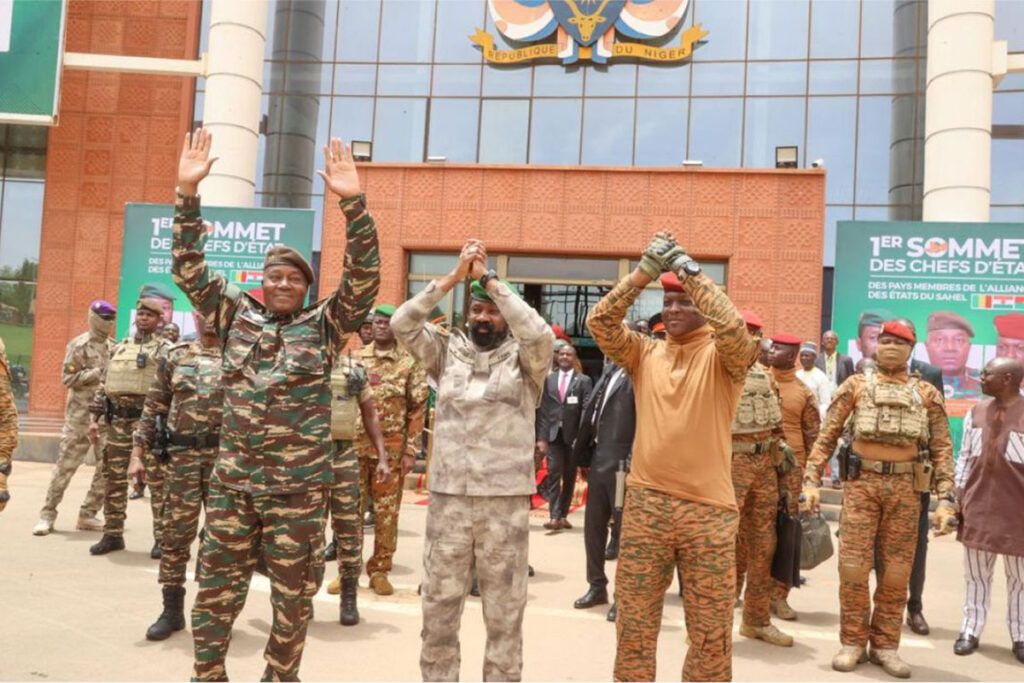
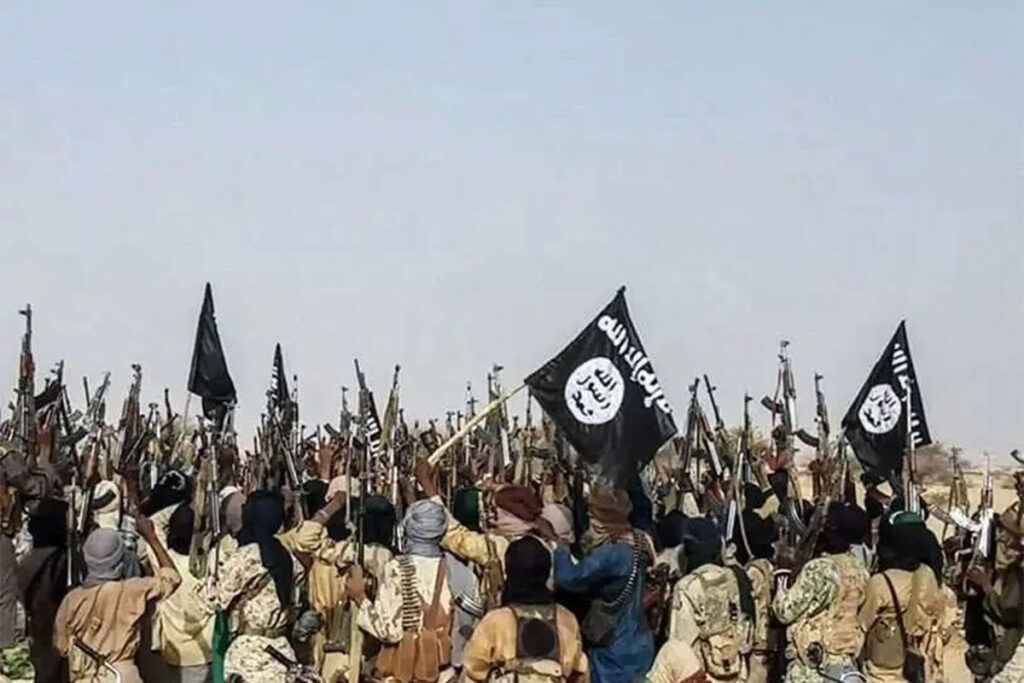
-A very complicated scenario, for security reasons, is the Sahel, a very large region that extends to the south of the Maghreb, with countries such as Morocco, Mauritania, Algeria, Tunisia. Different jihadist groups confront military governments, with new and important popular support: since 2020, in countries such as Mali, Burkina Fasso and Niger. They have formed a confederation in conflict with the French government, harassed by these jihadist groups. Although there have been advances and setbacks, they face the advance of these groups. Another conflict zone is Somalia, in the Horn of Africa, where the All Shabaab group has faced a weakened government since 2011. And for more than 25 years there has been war in the northwest of the Democratic Republic of the Congo, with more than a hundred groups, including the Democratic Allied Forces, which have sworn allegiance to the Islamic State. Going south, there are conflicts in the north of Mozambique, in Cabo Delgado, facing a jihadist insurgency since 2017, still without resolution. In almost all conflicts there are economic interests linked to different resources. The most serious situation is that of Sudan, which is experiencing a humanitarian crisis of unprecedented proportions, the product of a bloody civil war that has lasted for almost three years. Various negotiations have failed. And South Sudan, after a civil war, is born as the youngest country: in just two years there is a spiral of civil war that ends in 2018, but in constant risk of restarting. While the scourge of the enormous number of displaced people persists, more than 14 million.
-To which countries do these displaced sectors go?
-In large numbers to Egypt, Chad, Ethiopia, even South Sudan, which is precisely not a sanctuary of peace. The situation there is on hold. And if the crisis does not subside, it would generate a large number of refugees in countries like Uganda, which is the African country that hosts the largest number of refugees in the world.
-In the Sahel, specifically, there have been a series of military coups, but in conflict with historical French colonialism. According to the interim president of Burkina Faso, Ibrahim Traoré, the French government strengthened the insurgent sectors of jihadism.
-I think not, sometimes this idea of the French ghost was raised, but the expansion of Jihadism emerged in 2015. In 2011 it was not a phenomenon to be taken into account. Even Equatorial Guinea recently filed a complaint that France was destabilizing. It is true that despite not having been a French colony, Guinea has the French franc as its currency and as long as that happens, it is difficult to talk about a total departure from France.
It is true that the joint cooperation of Mali, Burkina and Niger made progress in the battle against jihadism and in the recovery of territory, but the balance is not very positive if you review the death toll figures from jihadism for 2024/25. Nigeria also has its own thing, but it is a different scenario. The big problem for these countries is that jihadism spreads like an oil spill, that it expands to countries with access to the Gulf of Benin, such as Biafra, Benin, Togo and what is the Gulf of Guinea, even Senegal.
-What could be the effects of the US and Israeli offensive against Iran, in allied countries such as Niger and others such as the United Arab Emirates and Saudi Arabia with incidents in Africa.
-I see two possibilities. Let the interference and interest of these great powers, including the monarchies of the Persian Gulf, be punctured by the conflictive war scenarios in Africa. Or, on the contrary, crises worsen and alliances strengthen. In the case of the Sudan War, the support of the dissident side of the Rapid Action Forces, a special body that has the support of the United Arab Emirates, is closely linked to extractivist interests in relation to gold. The ironic thing is that the quartet of countries that are mediators in this conflict is the United Arab Emirates, judge and party. Also the explosion of some jihadist centers favorable to Iran, in Niger and Nigeria, although the Sunnis, the Suna, predominate there and there are also Shiite communities. Likewise, I believe that Iran is for other things, mainly in its resistance to the US-Israeli offensive. An economic impact that affects the price of oil is the closure of the Strait of Hormuz: there remains the strategic alternative of the circumvallation at the Cape of Hope, to the south, and also the Red Sea and the Gulf of Aden. For Iran it is a sensitive issue.
-One of the most dramatic issues, made invisible by the West, is the effect of the war in Sudan and the massive famine that has generated the displacement of millions of human beings.
-Both Trump and the EU installed the idea of the Buffer State, driven by the EU’s migration policies and the management of borders and their expulsive nature. The novelty has been Trump’s sending of Latin American migrants to countries such as Equatorial Guinea or the former Swaziland, today the kingdom of Swatini, where those expelled from US territory are in legal limbo, unable to legalize themselves in countries that have neither tradition nor infrastructure. These third States do the dirty work. The case of the Sudan War, with nearly 50 million inhabitants and more than 21 million suffering from food insecurity, is not new in Africa; famines similar to Ethiopia in 1985 or Somalia in 2011 have already occurred. I don’t see the world looking at that tremendous scourge, it is interested in it. When this happens in Ukraine or other regions, there is greater sensitivity and these dramas overshadow these African scenarios. «