Volker Türk, UN High Commissioner, described attention to the families of missing persons in Mexico as imperative after documenting the persistence of impunity, structural failures in forensic identification and a worrying collusion of authorities that perpetuates the crisis of violence in the national territory.
You may also be interested in: Ariadna Montiel commands the tactical restructuring of Morena towards 2027
Urgent dialogue on the crisis of truth and justice
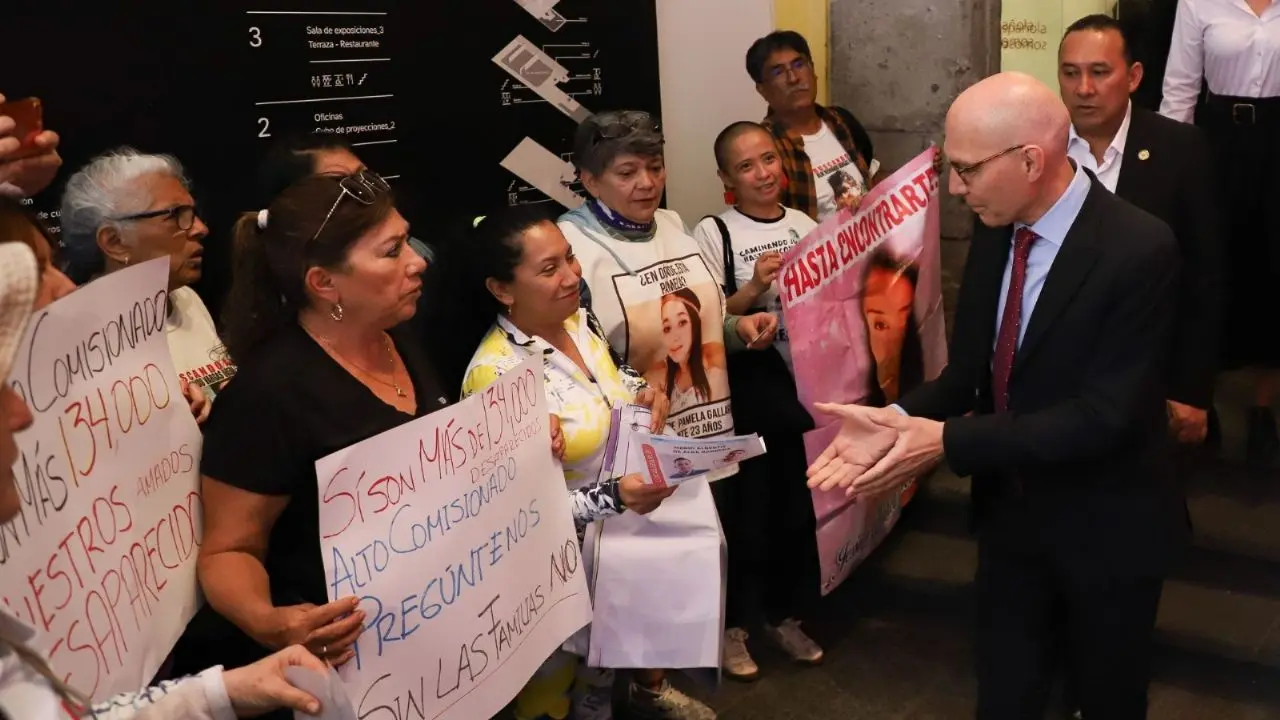
The United Nations High Commissioner for Human Rights, Volker Türk, assured that the search for truth and justice supported by relatives of missing persons in Mexico must be addressed urgently. After a meeting with groups that lasted ninety minutes, the official expressed the difficulty of describing the exchanges and understanding the depth of the pain and suffering of the victims.
On the eve of his meeting with President Claudia Sheinbaum, Türk made explicit recognition of the courage, strength and resilience of those who search for their loved ones. This approach allowed twelve collective platforms, representing thousands of families, to expose the general situation and the systemic obstacles they face in their daily work.
Ominous delays and lack of political will
Nadin Reyes Maldonado, representative of groups and daughter of a missing person from the Popular Revolutionary Army, explained that each platform had a limited time to expose critical axes such as access to justice and impunity in cases of forced disappearance. It was reported that the few sentences obtained do not translate into concrete search actions or effective investigations by prosecutors or specialized commissions.
- Investigations of the dirty war: Significant delays persist in historic cases that remain unresolved.
- Forensic identification: An institutional crisis is faced in the absence of a DNA data bank and adequate structures.
- State recognition: The organizations emphasized the lack of political will to admit the true dimension of the problem.
The platforms highlighted the current government’s rejection of the decision of the UN Committee against Forced Disappearances (CED) to refer the situation in Mexico to the General Assembly. According to testimonies, neither the will nor the reduction in figures that the authorities officially indicate are perceived in the facts.
It is hard to find the words to describe my exchanges today in Mexico with the families of people who have disappeared.
It is harder still to fathom their grief and pain.
Their unshakeable courage, strength, and resilience deeply inspire me; their quest for truth and justice… pic.twitter.com/d89HB4WnM9
— UN Human Rights (@UNHumanRights) April 21, 2026
Obstacles in the justice system and the international arena
Systematic impunity allows cases of disappearance to be repeated. The families explained to Türk that the absence of exemplary cases where those directly responsible are punished facilitates the continuity of these crimes. Although the High Commissioner was receptive, he clarified that his visit will not lead to a specific report and that his presence coincided with the CED resolution on the application of article 34 of the International Convention.
Despite this precision, the groups insisted that the Mexican State must accept the request for international help given the evident inability to confront the scourge. A manifestation of global concern is sought that forces the authorities to advance real policies and not just declarations of intent.
Questions about the impact of the international visit
The Movement for Our Disappeared in Mexico (MNDM), which brings together more than 80 groups, directly questioned Türk about the legacy of his stay: “How do you want your visit to Mexico to be remembered?” During the meeting, the official was informed about the omission, delay and collusion of authorities with criminal groups, factors that allow disappearances to remain permanent over time.
Institutional failures detected
- Case fragmentation: Prosecutors’ offices omit macrocriminality perspectives and contextual analysis.
- Militarization and migration: Lack of clear policies to protect people in transit and absence of a special commission for massacres of migrants.
- Support Mechanism (MAEBI): Created in 2021, the Foreign Search and Investigation Support Mechanism remains unimplemented.
The MNDM stated that, despite having a robust legal framework, it is not applied. Likewise, they denounced that specific sectors such as children, indigenous communities and LGBTI populations remain invisible in the care processes. The final call of the groups highlights the need to move from diplomatic protocols to tangible results that put an end to the humanitarian crisis.