ONE. There was a time when the name of Prussia fell upon Europe as a sword falls upon a walnut table. Wagner saw this with a clarity that his contemporaries found unbearable. In The Ring of the Nibelungenthe monumental cycle premiered in Bayreuth in 1876, power is forged. Siegfried melts down the pieces of a broken sword and makes it whole before facing the dragon. There is something in that image that Bismarck would have recognized without hesitation. The German Empire, proclaimed at Versailles in 1871 upon French humiliation, was born from three wars in seven years, and from a chancellor cold enough to know that history only opens the door when someone pushes it from the outside.
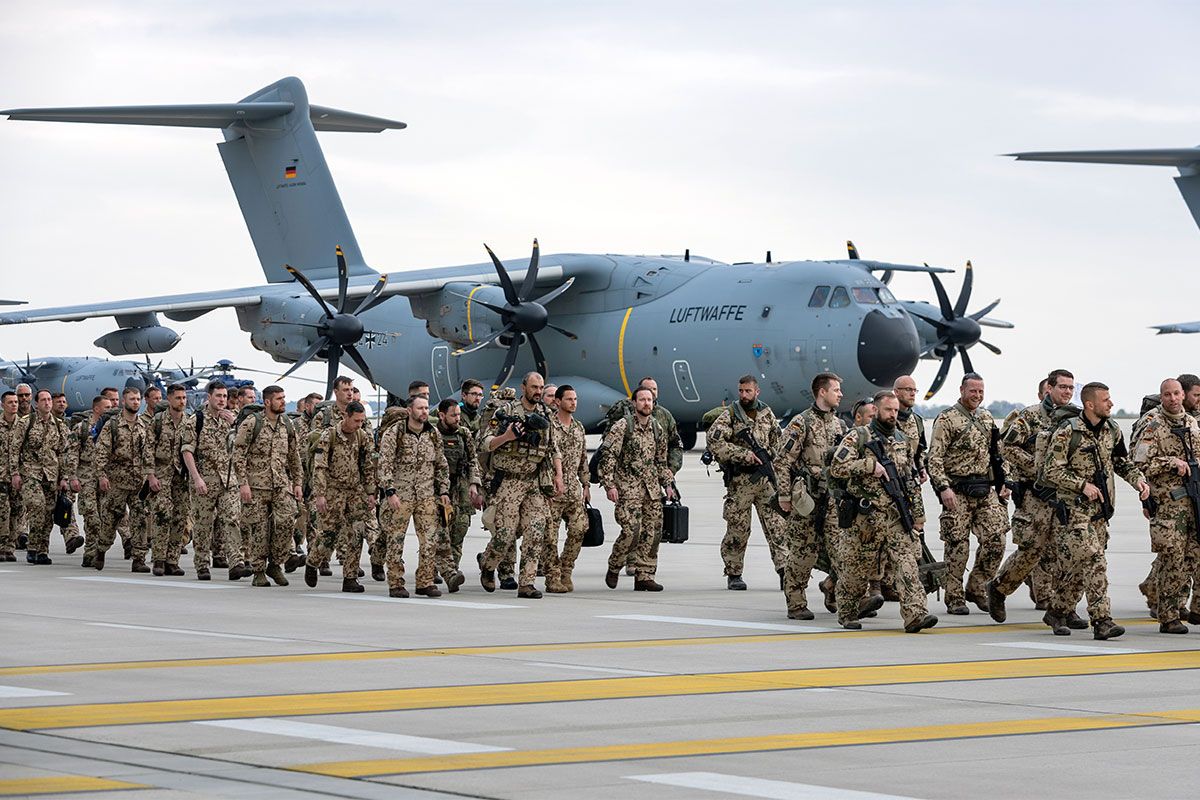
That ancient breath, which seemed archived among ruins, museums and institutional guilt, now returns as certain family memories return. Without scandal, with forms. Since this year, the country has been implementing a military service reform to expand the reserve and swell the active corps of the Bundeswehr. The number has its own brutality. More than 260 thousand soldiers on active duty and 200 thousand reservists on the horizon of the next decade. Today the army is around 184 thousand troops. Between one figure and the other there is a gap of flesh, age and obedience that Berlin needs to fill before the music changes tempo.
Empires, even repentant ones, sooner or later recognize the sound of their own drums. History, resting on the back of the neck again, whispers in the ear with a barracks voice.
TWO. The German novelty goes beyond recruitment in terms of volume. Get back into the habit of classifying bodies. The new system provides that all 18-year-olds receive a questionnaire on aptitude, willingness and motivation to serve. The administrative friendliness ends there. Only men will be required to answer it, and starting next year there will be mandatory medical exams. The State invites everyone. It forces some. Gender equality reaches the mailbox and then forks.
The government presents the program in the language of civic modernity. Beneath that clean prose, the true gesture of power is legible to whoever wants to read it. The State asks who is available and who could wear a uniform. And if the security situation worsens, the mandatory conscription whistle can be taken out of your pocket.
Within the new scheme, a less spectacular detail appears and, for that reason, more revealing. Men under 45 may need military authorization for absences of more than one quarter abroad.
In that small wrinkle of bureaucracy, the literature of German power appears in its most authentic version, with the impulse to record, order and locate. A well-established custom: Frederick William I, the Sergeant King, kept such an exhaustive census of his potential recruits in the 18th century that officials had to report each eligible male as if they were crops.
The war in Ukraine did the rest. He shattered that social democratic superstition, so elegant and so fragile, according to which commerce tames everyone and a gas pipe well laid over the meadow is worth more than a battalion. The bill for this conversion is paid in expensive energy, in nervous industries, in irritated voters and in a leadership class that discovers that geopolitics is the expensive name of reality.
In Europe there are already ten NATO countries with some form of reactivated conscription. Denmark, Poland and Croatia top the list. With Trump’s second term, Europe discovered late that peace also needs someone to guard it, and that someone, when push comes to shove, has black boots and an olive-colored uniform.
THREE. If Germany achieves its objectives, by 2035 it will exceed the size of the French army, although France retains its nuclear advantage and a looser strategic culture for external projection, especially in Africa.
The irony has an almost cruel clarity. For decades, Europe feared a Germany that was too strong. Then he got used to a Germany that was too comfortable. Now he is witnessing a Germany that abandons comfort because strength once again seemed like a virtue in the schoolyard.
There is a difference between a country that has an army and a country that needs it again. The difference is called fear, and fear, well managed, is the only bureaucracy that never loses its budget. In this context, the new form loses all innocence. It becomes a mirror. In this reflection, the European Union once again recognizes an ancient face, similar to the one that Dorian Gray perceived in his portrait. And there in the background of the image you can see the silhouette of Siegfried with the newly forged sword and the dragon that the news reports call “conflict” and that the generals call, instead, by its name.
Mission in Ukraine
The case of Gianni Dante Bettiga from Fuegian on the Donbas war front, reported months ago by his family from Ushuaia, remains without independent official confirmation about his situation in the 121st Regiment of the 68th Russian Motorized Rifle Division.
The lack of consistent sources opened two simultaneous questions. One about the initial strength of the case. Another about the work of the Argentine Foreign Ministry against the Kremlin, which in this matter demonstrated the same energy with which it usually faces Mondays.
The obvious question then remains. Is it time to summon Chiqui Tapia for another rescue mission? Since the case of the gendarme Nahuel Gallo released in Venezuela, the AFA accumulates more successes in foreign policy than the entire red circle of Pato Bullrich combined.